Tag: IPO Investing

  • Highway Infrastructure IPO: Is the 27x Rush a Trap?

    Highway Infrastructure IPO: Is the 27x Rush a Trap?

    The Highway Infrastructure IPO has investors talking, and it’s easy to see why. This offering was oversubscribed by a spectacular 27 times, creating a frenzy. But before you get swept up in the euphoria, a word of caution: powerful market momentum doesn’t always guarantee a safe investment, as we’ve seen in other cases where 100x oversubscription tells only half the story. Let’s dissect both the dazzling hype and the hidden risks of this infrastructure story.

    The Numbers That Turned Heads

    The Highway Infrastructure IPO commanded attention from the moment it launched. The ₹130-crore public offering, which opened on August 5, 2025, showcased a remarkable appetite from the market.

    Key Subscription Metrics:

    • Overall Subscription: 27 times oversubscribed (meaning demand was 27 times higher than the shares available).
    • Retail Investors: 29 times subscription rate.
    • Non-institutional Investors: 33 times booking.
    • Institutional Buyers: 5 times subscription.
    • Grey Market Premium (GMP): Over 57% (GMP is the price at which IPO shares are traded in an unofficial market before they are listed on the stock exchange. A high GMP often suggests a strong listing is expected. You can learn more about GMP here at Investopedia).

    Even before the public offering, the company secured ₹23.40 crore from anchor investors (investors who are offered shares in an IPO before it opens to the public), including HDFC Bank and Abans Finance Pvt. Ltd. This early backing signals institutional confidence, but it’s no guarantee of success for retail investors.

    What Highway Infrastructure Actually Does

    Highway Infrastructure Ltd. (HIL) is more than just a construction company. The Indore-based firm, incorporated in 1995, has strategically diversified its operations across several key verticals.

    Business Verticals:

    • Tollway collection operations.
    • Engineering, Procurement, and Construction (EPC) projects.
    • Real estate development.
    • Road, highway, and bridge construction.
    • Residential project development.

    The company reported a total income of ₹504.48 crore with a profit after tax of ₹22.40 crore. The IPO proceeds are earmarked for working capital requirements (₹65 crore) and general corporate purposes.

    The Bullish Case: Why Investors Are Excited

    Several factors fuel the positive sentiment around this IPO. First and foremost, India’s massive infrastructure push creates a fertile ground for companies like HIL.

    Growth Catalysts:

    • Government Spending: The government’s unwavering focus on highway development provides a robust pipeline of potential projects, similar to the growth seen in other government-backed sectors.
    • Diversified Revenue: Multiple income streams across toll collection, EPC, and real estate reduce dependency on a single segment.
    • Established Presence: Nearly three decades of operational experience builds credibility.
    • Strong Subscription: The overwhelming market response reflects high investor confidence in the Highway Infrastructure IPO.

    5 Critical Risks to Consider Before Investing

    Excitement must be balanced with a sober assessment of the risks. Here are five red flags that demand your attention before you make an investment decision.

    1. Revenue Concentration Concerns

    The company is heavily dependent on contracts from the National Highways Authority of India (NHAI) for its tollway business. You can visit the official NHAI website here to see the scale of their projects. Similarly, most of its EPC revenue comes from public sector clients. Losing a single major contract could significantly harm its financial performance.

    2. Geographical Limitations

    HIL’s operations are heavily concentrated in specific regions of India. This lack of geographical diversification means that any adverse local developments—such as economic slowdowns, regional policy changes, or political instability—could disproportionately impact the entire business.

    3. Short-Term Contract Challenges

    NHAI tolling contracts typically run for only one year, with limited possibilities for extension. This short-term structure creates constant pressure on the company to continuously bid for and win new projects, introducing uncertainty into its revenue stream.

    4. The Capital-Intensive Reality

    Infrastructure is a cash-hungry business. It requires massive capital for equipment, materials, and labor. If HIL faces cash flow problems or struggles to manage its debt, its operations could be severely hampered. Strong liquidity management is non-negotiable, as the performance of infrastructure companies can be complex; sometimes even becoming debt-free isn’t enough to boost the stock.

    5. Potential Conflicts of Interest

    Investors must be vigilant about related-party transactions. The company’s promoters have business interests in other, similar companies. Furthermore, HIL engages in projects with these related parties, which could create potential conflicts of interest that may not always align with shareholder value.

    The Final Verdict

    The Highway Infrastructure IPO presents a classic case of opportunity versus risk. The strong subscription numbers and HIL’s established presence are compelling, but they don’t tell the whole story.

    Key Takeaways:

    • Positives: Proven track record, diversified business model, strong sector tailwinds from government spending, and a fantastic market reception.
    • Risks: High dependency on government contracts, regional concentration, short contract tenures, a capital-intensive model, and potential conflicts of interest.

    Making Your Investment Decision

    Instead of chasing the crowd, your decision should be based on your personal financial goals and risk tolerance. It’s crucial to look past the initial excitement, just as investors must be cautious when a stock jumps 1600% in a single day.

    Ask Yourself:

    • Does my portfolio need exposure to the infrastructure sector?
    • Can I tolerate the volatility tied to government contract cycles?
    • Am I comfortable with a company whose fortunes are tied to specific regions?

    The Bottom Line

    The Highway Infrastructure IPO is a reflection of the broader optimism in India’s growth story. The company operates in a vital sector with long-term potential. However, the risks tied to contract dependency, geographical concentration, and high capital needs are very real.

    Ultimately, thorough due diligence will always trump market hype. Similar to our analysis of the HDB Financial IPO, a smart investment is one made with a clear-eyed view of both the shining opportunities and the critical risks.


    Disclaimer: This analysis is purely for informational and educational purposes based on publicly available information. It should not be construed as financial advice or a recommendation to buy or sell securities. IPO investments carry inherent risks, and readers should conduct independent research and consult qualified financial advisors before making investment decisions.


  • HDB Financial IPO: Why Smart Money is Buzzing About This ‘Half-Price’ Mega NBFC Listing

    HDB Financial IPO: Why Smart Money is Buzzing About This ‘Half-Price’ Mega NBFC Listing

    The Indian stock market rarely witnesses such intriguing pricing dynamics, but HDB Financial Services has managed to create exactly that buzz. As India’s largest NBFC IPO prepares to hit the market, investors are scratching their heads over one compelling question: Is a stock trading at nearly half its grey market peak actually a steal, or is there more to this story? The HDB Financial IPO has certainly captured the attention of many.

    The Great Pricing Puzzle That Has Everyone Talking

    Here’s what’s got the market talking: HDB Financial’s IPO is priced between ₹700-740 per share, while the same stock once commanded a staggering ₹1,550 in the grey market. That’s more than double the current IPO price! Even today, grey market prices hover around ₹740, perfectly aligned with the IPO’s upper band.

    This isn’t your typical IPO pricing story. When a company’s shares trade at such premium levels in unofficial markets, IPOs usually try to capture some of that enthusiasm with higher pricing. But HDB Financial and its bankers have taken a completely different approach.

    With all eyes on the HDB Financial IPO, analysts are keenly assessing its potential for long-term growth.

    The strategy becomes clearer when you listen to the decision-makers. Sonia Dasgupta from JM Financial, one of the lead bankers, revealed the thinking: “If we left more on the table, it would give more confidence to investors.” It’s a calculated move to ensure strong institutional participation and positive listing performance.

    Why Grey Market Prices Don’t Tell the Complete Story

    Before you assume this is an obvious bargain, consider what market veterans are saying about grey market valuations. Industry experts are quick to point out that these prices don’t emerge from serious institutional investor presentations or fundamental analysis.

    As one senior banker noted, grey market trading happens in an unregulated space where the same set of investors often trade among themselves. While not illegal, it’s primarily a sentiment indicator rather than a true price discovery mechanism. The “retail euphoria” in unlisted spaces doesn’t always align with actual business fundamentals.

    This perspective suggests that the ₹1,550 peak might have been more about speculation than genuine valuation. The current IPO pricing, arrived at through extensive roadshows with global and domestic institutional investors, likely reflects a more grounded assessment of the company’s worth.

    The Mega Numbers Behind This Ambitious Offering

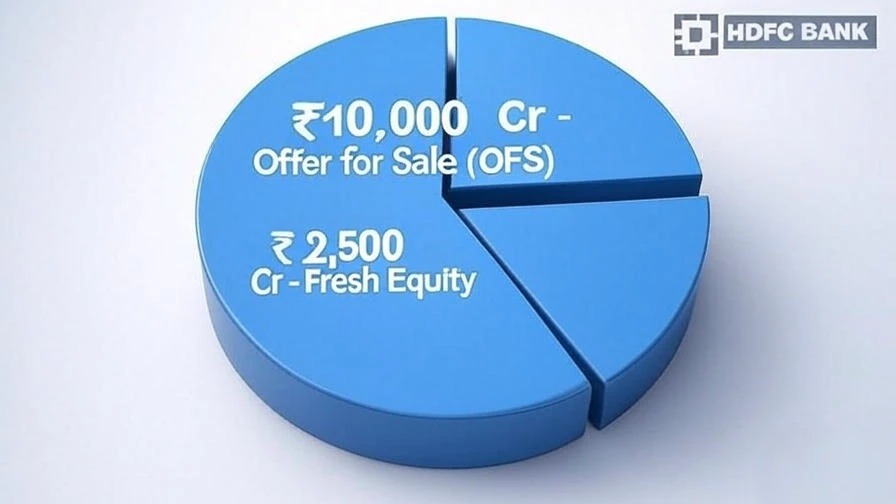
    Let’s talk scale. HDB Financial is raising ₹12,500 crore, making it the largest NBFC IPO in Indian history. The structure is particularly interesting: ₹2,500 crore comes from fresh equity, while a massive ₹10,000 crore represents an Offer for Sale (OFS) by existing shareholders.

    HDFC Bank, the parent company, is the biggest beneficiary here. By selling 135.13 million shares, it stands to pocket approximately ₹9,373 crore in profits. Currently holding 94.6% of HDB Financial, the bank will still retain a commanding 75% stake post-listing, ensuring continued control while optimizing its capital structure.

    For HDFC Bank, this move serves multiple strategic purposes: regulatory compliance, capital optimization, and unlocking value from a subsidiary that’s been performing exceptionally well.

    The Independent Growth Engine Story

    What makes HDB Financial particularly attractive is its operational independence despite being an HDFC Bank subsidiary. The company has built its customer base organically, without relying on parent bank referrals. Its 1,770 branches across 1,100 cities operate independently, with separate risk management systems and technology infrastructure.

    The numbers speak volumes about the company’s growth trajectory. Customer base has exploded from 9 million in FY22 to 19 million by FY25. The loan book is highly granular, with top 20 customers accounting for less than 0.4% of total Assets Under Management (AUM). This diversification reduces concentration risk significantly.

    Having been profitable since its second year of operations, HDB Financial has demonstrated consistent performance over 17 years. The company focuses exclusively on retail lending, targeting underbanked and underserved segments that complement rather than compete with HDFC Bank’s traditional customer base.

    The Positive Investment Case

    Several factors make HDB Financial an attractive proposition. The company operates in India’s growing consumer finance space, benefiting from increasing financial inclusion and rising consumer aspirations. Its proven track record, strong parentage, and independent operational model create a compelling combination.

    The significant discount to grey market peaks could indeed represent value for investors who believe in the company’s long-term prospects. With fresh capital of ₹2,500 crore, management expects to fund growth for 3-4 years while remaining ready for expansion opportunities.

    The reserved quota for existing HDFC Bank shareholders (up to ₹1,250 crore worth of shares) shows confidence in cross-selling the investment story to stakeholders who already understand the parent company’s quality.

    The Potential Concerns to Consider

    However, investors should also weigh the risks carefully. The NBFC sector faces regulatory scrutiny, and any tightening of lending norms could impact growth prospects. Rising interest rates could pressure margins, while economic slowdowns typically hurt consumer lending businesses first.

    The massive OFS component means most of the IPO proceeds go to existing shareholders rather than company growth. While ₹2,500 crore in fresh capital is substantial, it’s only 20% of the total raise.

    Competition in the consumer finance space is intensifying, with new-age fintech companies and established players fighting for market share. HDB Financial will need to continuously innovate to maintain its competitive edge.

    Key Dates and Investment Details

    For those considering participation, mark these dates: anchor book opens June 24, public issue runs June 25-27, with listing scheduled for July 2. Retail investors can apply for 20-260 shares, with current grey market estimates suggesting a potential 10% listing premium.

    The Bottom Line: Opportunity or Hype?

    HDB Financial’s IPO presents a rare combination of scale, established business model, and attractive pricing. The discount to grey market levels could represent genuine value, especially for long-term investors betting on India’s consumer finance growth story.

    However, remember that IPO investing always carries risks. The company’s future performance will depend on execution, market conditions, and regulatory environment. While the pricing appears attractive, investors should evaluate their risk tolerance and investment horizon carefully.

    Disclaimer: This analysis is for informational purposes only and should not be considered as investment advice. The author does not recommend buying, selling, or holding any securities mentioned. Investors should conduct thorough research and consult qualified financial advisors before making investment decisions. Past performance does not guarantee future results, and all investments carry inherent risks including potential loss of principal.