Tag: ipo analysis

  • GNG Electronics IPO: Will This Refurbished Tech Stock Polish Your Portfolio or Just Collect Dust?

    GNG Electronics IPO: Will This Refurbished Tech Stock Polish Your Portfolio or Just Collect Dust?


    The subscription window for the GNG Electronics IPO (Initial Public Offering) opened on July 23, 2025, and closed on July 25, 2025, creating quite a stir in the investment community. With a price band of ₹225-237 per share and an overall issue size of ₹460.43 crore, this refurbished electronics specialist has caught the attention of both retail and institutional investors. But here’s the million-rupee question: does the GNG Electronics IPO deserve your hard-earned money, or is it a potential market trap similar to what investors question in other hyped stocks?

    What Exactly Does GNG Electronics Do?

    GNG Electronics operates under the brand “Electronics Bazaar” and has carved out a niche in the refurbished electronics space. The company’s business model is straightforward yet comprehensive:

    • Global Operations: Present across India, US, Europe, Africa, and UAE
    • Product Range: Refurbishes laptops, desktops, tablets, servers, smartphones, and accessories
    • Value Chain Control: Manages everything from sourcing to after-sales service
    • Price Advantage: Offers refurbished laptops at one-third the price of new ones

    The company serves major clients like Vijay Sales, HP, and Lenovo through buyback programs and distributes across 38 countries via 4,154 touch points as of March 31, 2025.

    GNG Electronics IPO Structure: Fresh Money vs Promoter Exit

    The ₹460.43 crore issue breaks down into two components:

    • Fresh Issue: ₹400 crore (87% of total issue)
    • Offer for Sale (OFS): ₹60.43 crore from promoters (13% of total issue) (OFS is a mechanism where promoters sell their own shares to the public, and the money goes to the promoters, not the company).

    This structure sends a mixed signal. While the majority is fresh capital for business expansion, the promoter exit component raises questions about their confidence in future growth prospects. It’s a critical factor to analyze in any public offering, whether it’s the 3B Films IPO or a mega-issue from an established player.

    The Numbers That Matter

    Financial Performance:

    • Revenue: ₹1,411.11 crore (FY25)
    • Net Profit: ₹68.83 crore (FY25)
    • Market Cap at Upper Band: Over ₹2,700 crore

    Valuation Metrics:

    • P/E Ratio (Price-to-Earnings Ratio): 33.43x (based on FY25 earnings) (For more details see here)
    • P/BV Ratio (Price-to-Book Value Ratio): 10.17x

    Here’s where experience teaches caution. A P/E of 33.43x for a refurbishment business seems stretched, especially when you consider that this isn’t a high-growth tech platform but a traditional buy-refurbish-sell operation.

    Day 1 Subscription: The Good and The Concerning

    The IPO saw robust demand with an overall subscription of 8.99 times by 5:00 PM on July 23:

    • Retail Portion: 8.89 times subscribed
    • NII (Non-Institutional Investors) Portion: 18.85 times subscribed
    • QIB (Qualified Institutional Buyers) Portion: 1.68 times subscribed

    While these numbers look encouraging, experienced market watchers know that high subscription rates don’t guarantee post-listing performance. The relatively modest QIB subscription compared to retail frenzy is worth noting, especially when the broader market is witnessing mega block deals that hint at where institutional money is moving.

    Anchor Investor Participation: A Confidence Booster

    GNG Electronics secured ₹138 crore from Anchor Investors (large institutional investors who are allotted shares before the IPO opens to the public, signifying confidence). Participants included:

    • Goldman Sachs Fund
    • Motilal Oswal Mutual Fund
    • Edelweiss Mutual Fund
    • Mirae Asset Mutual Fund

    Quality institutional participation often indicates due diligence approval, but remember – even sophisticated investors can get it wrong.

    Grey Market Premium: What ₹103 Really Means

    The Grey Market Premium (GMP) of ₹103 suggests potential listing gains of 43.46%. (GMP is an unofficial premium at which IPO shares trade before they are listed on the stock exchanges). While this sounds attractive, grey market premiums can be misleading indicators of long-term value.

    Critical Question: If the business fundamentals justify such premiums, why are promoters selling shares in the OFS component?

    The Positive Case: Why Brokerages Say ‘Subscribe’

    Growth Tailwinds:

    • Global Refurbished PC Market expected to grow at 18.9% CAGR (Compound Annual Growth Rate) from CY24-CY29E.
    • Indian Refurbished PC Market projected at 31.3% CAGR from FY25-FY30E.
    • Shift from unorganized to organized players benefits established companies.

    Debt Reduction Plan:
    The company plans to repay ₹320 crore in debt during FY26, which should reduce interest expenses and improve profitability margins.

    Unique Positioning:
    No directly comparable listed peers in India makes valuation benchmarking difficult but also offers scarcity value.

    The Skeptical View: Red Flags Worth Considering

    High Valuation Concerns:
    At over ₹2,700 crore market cap, the company is already valued like an established player. For a business that essentially buys, refurbishes, and resells electronics, this premium seems ambitious.

    Debt Burden Reality:
    While debt repayment is positive, the fact that the company carries ₹320 crore in debt raises questions about past capital allocation decisions. A company’s relationship with debt can be complex; for instance, the perplexing story of Reliance Infra’s stock falling despite becoming debt-free shows that debt reduction alone doesn’t guarantee a positive market reaction.

    Market Dependency:
    The refurbished electronics market is highly dependent on:

    • Supply of used devices
    • Consumer acceptance of refurbished products
    • Technological obsolescence cycles

    Promoter Selling:
    The ₹60.43 crore OFS component means promoters are partially cashing out at IPO prices. This doesn’t align with the narrative of unlimited growth potential.

    Sector Dynamics: The Bigger Picture

    The refurbished electronics sector benefits from:

    • Environmental consciousness driving sustainable consumption
    • Cost-conscious buyers seeking value deals
    • Corporate IT refresh cycles providing steady supply

    However, challenges include:

    • Rapid technological advancement reducing product lifecycles
    • Quality perception issues among consumers
    • Intense competition from e-commerce platforms, whose supply chains are tied to major players. For context, understanding Apple’s India strategy for the iPhone can reveal a lot about the primary device market, which directly feeds the secondary refurbished market.

    Investment Perspective: Who Should Consider the GNG Electronics IPO?

    Suitable For:

    • Investors believing in circular economy trends
    • Those seeking exposure to organized refurbishment market
    • Long-term investors comfortable with moderate growth businesses

    Avoid If:

    • You’re looking for high-growth technology plays
    • Valuation comfort is your primary concern
    • You prefer businesses with clearer competitive moats

    The Verdict: Measured Optimism with Caution

    GNG Electronics operates in a sector with decent growth prospects and has built a comprehensive business model. The company’s global presence and established client relationships provide some competitive advantages.

    However, the valuation for the GNG Electronics IPO appears stretched for what is essentially a traditional buy-refurbish-sell operation. The partial promoter exit through OFS adds to these valuation concerns. While there’s a buzz, it’s wise to be cautious and see if this is truly where smart money is placing its bets, as seen in other major listings.

    For investors considering this IPO, remember that successful investing often lies in buying good businesses at reasonable prices, not just good businesses at any price.

    Final Thought: Just as buying a refurbished laptop requires checking its history, specifications, and warranty terms, investing in the GNG Electronics IPO demands careful evaluation of business fundamentals beyond market excitement.


    Disclaimer: This analysis is for informational purposes only and should not be construed as investment advice. For more details on what an IPO is, please refer to this guide. The author holds no position in GNG Electronics. Readers are advised to consult with qualified financial advisors and conduct their own research before making investment decisions. Past performance and projections do not guarantee future returns.


  • HDB Financial IPO: Why Smart Money is Buzzing About This ‘Half-Price’ Mega NBFC Listing

    HDB Financial IPO: Why Smart Money is Buzzing About This ‘Half-Price’ Mega NBFC Listing

    The Indian stock market rarely witnesses such intriguing pricing dynamics, but HDB Financial Services has managed to create exactly that buzz. As India’s largest NBFC IPO prepares to hit the market, investors are scratching their heads over one compelling question: Is a stock trading at nearly half its grey market peak actually a steal, or is there more to this story? The HDB Financial IPO has certainly captured the attention of many.

    The Great Pricing Puzzle That Has Everyone Talking

    Here’s what’s got the market talking: HDB Financial’s IPO is priced between ₹700-740 per share, while the same stock once commanded a staggering ₹1,550 in the grey market. That’s more than double the current IPO price! Even today, grey market prices hover around ₹740, perfectly aligned with the IPO’s upper band.

    This isn’t your typical IPO pricing story. When a company’s shares trade at such premium levels in unofficial markets, IPOs usually try to capture some of that enthusiasm with higher pricing. But HDB Financial and its bankers have taken a completely different approach.

    With all eyes on the HDB Financial IPO, analysts are keenly assessing its potential for long-term growth.

    The strategy becomes clearer when you listen to the decision-makers. Sonia Dasgupta from JM Financial, one of the lead bankers, revealed the thinking: “If we left more on the table, it would give more confidence to investors.” It’s a calculated move to ensure strong institutional participation and positive listing performance.

    Why Grey Market Prices Don’t Tell the Complete Story

    Before you assume this is an obvious bargain, consider what market veterans are saying about grey market valuations. Industry experts are quick to point out that these prices don’t emerge from serious institutional investor presentations or fundamental analysis.

    As one senior banker noted, grey market trading happens in an unregulated space where the same set of investors often trade among themselves. While not illegal, it’s primarily a sentiment indicator rather than a true price discovery mechanism. The “retail euphoria” in unlisted spaces doesn’t always align with actual business fundamentals.

    This perspective suggests that the ₹1,550 peak might have been more about speculation than genuine valuation. The current IPO pricing, arrived at through extensive roadshows with global and domestic institutional investors, likely reflects a more grounded assessment of the company’s worth.

    The Mega Numbers Behind This Ambitious Offering

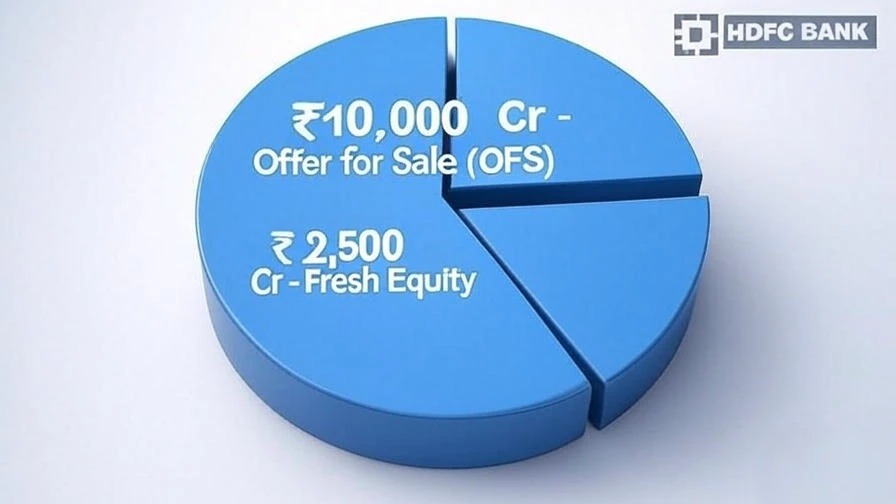
    Let’s talk scale. HDB Financial is raising ₹12,500 crore, making it the largest NBFC IPO in Indian history. The structure is particularly interesting: ₹2,500 crore comes from fresh equity, while a massive ₹10,000 crore represents an Offer for Sale (OFS) by existing shareholders.

    HDFC Bank, the parent company, is the biggest beneficiary here. By selling 135.13 million shares, it stands to pocket approximately ₹9,373 crore in profits. Currently holding 94.6% of HDB Financial, the bank will still retain a commanding 75% stake post-listing, ensuring continued control while optimizing its capital structure.

    For HDFC Bank, this move serves multiple strategic purposes: regulatory compliance, capital optimization, and unlocking value from a subsidiary that’s been performing exceptionally well.

    The Independent Growth Engine Story

    What makes HDB Financial particularly attractive is its operational independence despite being an HDFC Bank subsidiary. The company has built its customer base organically, without relying on parent bank referrals. Its 1,770 branches across 1,100 cities operate independently, with separate risk management systems and technology infrastructure.

    The numbers speak volumes about the company’s growth trajectory. Customer base has exploded from 9 million in FY22 to 19 million by FY25. The loan book is highly granular, with top 20 customers accounting for less than 0.4% of total Assets Under Management (AUM). This diversification reduces concentration risk significantly.

    Having been profitable since its second year of operations, HDB Financial has demonstrated consistent performance over 17 years. The company focuses exclusively on retail lending, targeting underbanked and underserved segments that complement rather than compete with HDFC Bank’s traditional customer base.

    The Positive Investment Case

    Several factors make HDB Financial an attractive proposition. The company operates in India’s growing consumer finance space, benefiting from increasing financial inclusion and rising consumer aspirations. Its proven track record, strong parentage, and independent operational model create a compelling combination.

    The significant discount to grey market peaks could indeed represent value for investors who believe in the company’s long-term prospects. With fresh capital of ₹2,500 crore, management expects to fund growth for 3-4 years while remaining ready for expansion opportunities.

    The reserved quota for existing HDFC Bank shareholders (up to ₹1,250 crore worth of shares) shows confidence in cross-selling the investment story to stakeholders who already understand the parent company’s quality.

    The Potential Concerns to Consider

    However, investors should also weigh the risks carefully. The NBFC sector faces regulatory scrutiny, and any tightening of lending norms could impact growth prospects. Rising interest rates could pressure margins, while economic slowdowns typically hurt consumer lending businesses first.

    The massive OFS component means most of the IPO proceeds go to existing shareholders rather than company growth. While ₹2,500 crore in fresh capital is substantial, it’s only 20% of the total raise.

    Competition in the consumer finance space is intensifying, with new-age fintech companies and established players fighting for market share. HDB Financial will need to continuously innovate to maintain its competitive edge.

    Key Dates and Investment Details

    For those considering participation, mark these dates: anchor book opens June 24, public issue runs June 25-27, with listing scheduled for July 2. Retail investors can apply for 20-260 shares, with current grey market estimates suggesting a potential 10% listing premium.

    The Bottom Line: Opportunity or Hype?

    HDB Financial’s IPO presents a rare combination of scale, established business model, and attractive pricing. The discount to grey market levels could represent genuine value, especially for long-term investors betting on India’s consumer finance growth story.

    However, remember that IPO investing always carries risks. The company’s future performance will depend on execution, market conditions, and regulatory environment. While the pricing appears attractive, investors should evaluate their risk tolerance and investment horizon carefully.

    Disclaimer: This analysis is for informational purposes only and should not be considered as investment advice. The author does not recommend buying, selling, or holding any securities mentioned. Investors should conduct thorough research and consult qualified financial advisors before making investment decisions. Past performance does not guarantee future results, and all investments carry inherent risks including potential loss of principal.

  • ICICI Prudential AMC IPO: India’s Mega ₹10,000 Crore Offering Could Break Records – But Should You Invest?

    ICICI Prudential AMC IPO: India’s Mega ₹10,000 Crore Offering Could Break Records – But Should You Invest?

    I’ve witnessed countless IPO launches, but ICICI Prudential Asset Management Company’s upcoming mega offering has everyone talking. With a potential ₹10,000 crore ($1.2 billion) raise and an unprecedented syndicate of 17 investment banks, this could be 2025’s biggest market story.

    Breaking Records Before Launch

    What makes this IPO truly extraordinary is the sheer scale of preparation. ICICI Prudential AMC has assembled what industry sources call an “all-time record” syndicate of 17 investment banks – a move that dwarfs even the previous record-holder Bharti Infratel’s 13-bank syndicate from 2012.

    This army of financial powerhouses includes heavyweights like ICICI Securities, Goldman Sachs, Morgan Stanley, Citi, Kotak Mahindra Capital, and BofA Securities. When you see this level of coordination, it signals serious ambition and confidence in the offering’s potential.

    The Company Behind the Hype

    ICICI Prudential AMC isn’t just another financial services company – it’s India’s second-largest mutual fund house by assets under management. This 26-year-old joint venture between ICICI Bank (51%) and UK’s Prudential Plc (49%) manages an impressive ₹9.14 lakh crore in assets across 133+ schemes, serving over 1.1 crore investors.

    Under the leadership of MD & CEO Nimesh Shah and CIO Sankaran Naren, the company has built a diversified portfolio spanning mutual funds, portfolio management services, and international advisory mandates across debt, equity, and real estate.

    The IPO Structure: What Investors Need to Know

    Here’s where it gets interesting – and potentially concerning for some investors. This will be a pure “Offer for Sale” (OFS), meaning Prudential Plc is selling its stake while ICICI Bank retains majority control. The crucial point: none of the IPO proceeds will flow into the company’s operations or expansion plans.

    Instead, the money goes directly to Prudential Plc, which plans to return these proceeds to its shareholders. For investors, this means you’re essentially buying shares from an existing owner rather than funding the company’s growth.

    Perfect Timing or Peak Valuation?

    The timing seems almost too perfect. The Nifty 50 is approaching record highs, and listed AMC peers are on fire – HDFC AMC, Nippon Life India AMC, and UTI AMC have surged 13-20% in recent weeks. This sectoral rally reflects growing financialization in India and increasing mutual fund participation.

    The proposed $12 billion valuation for ICICI Prudential AMC places it at a premium, but is it justified? With draft papers expected by June-end and a Q3FY26 launch timeline, market conditions could shift dramatically.

    The Positive Case

    Market Leadership: Being India’s second-largest AMC with a 26-year track record provides significant competitive advantages and brand recognition.

    Growing Market: India’s mutual fund industry is expanding rapidly as more investors embrace systematic investment plans and equity markets.

    Diversified Revenue: Beyond mutual funds, the company’s portfolio management and international advisory services provide additional income streams.

    Strong Partnership: ICICI Bank’s commitment to retain majority shareholding ensures continuity and strategic support.

    Sectoral Tailwinds: The entire AMC sector is benefiting from increased investor participation and favorable market conditions.

    The Concerning Aspects

    Pure OFS Structure: No capital injection means the company doesn’t directly benefit from the IPO proceeds, potentially limiting immediate growth opportunities.

    Peak Market Entry: Launching near market highs could mean investors are paying premium valuations with limited upside potential.

    Intense Competition: SBI Mutual Fund remains the largest player, while numerous established competitors vie for market share.

    Regulatory Risks: The mutual fund industry faces evolving regulations that could impact profitability and operations.

    Market Dependency: AMC revenues are closely tied to market performance and investor sentiment, making them cyclical in nature.

    Global Precedents and Concerns

    Looking at global AMC listings, many have delivered mixed results post-IPO. During market downturns, asset management companies often face dual pressure – declining AUM and reduced fee income. The question becomes whether ICICI Prudential AMC’s pricing adequately reflects these cyclical risks.

    What This Means for Retail Investors

    The massive syndicate suggests heavy institutional interest, which could limit retail allocation. However, given the company’s brand recognition and ICICI Bank’s retail network, there’s likely to be significant retail demand.

    Key considerations for retail investors:

    • This is primarily a liquidity event for Prudential Plc, not a growth capital raise
    • The company’s performance will closely track market conditions and investor sentiment
    • Valuation appears stretched given current market levels
    • Long-term growth depends on India’s continued financial market development

    The Verdict

    ICICI Prudential AMC’s IPO represents a high-quality business with strong fundamentals entering the market at potentially peak valuations. While the company’s market position and growth prospects are compelling, the pure OFS structure and current market conditions warrant careful consideration.

    The unprecedented 17-bank syndicate shows confidence, but it also suggests the need for maximum distribution to achieve pricing targets. For long-term investors believing in India’s financialization story, this could be attractive. However, those seeking immediate gains might find better opportunities elsewhere.

    Timeline to Watch

    • June-end/Early July: Draft papers filing with SEBI
    • Q3FY26: Expected IPO launch
    • Market conditions: Keep watching AMC sector performance and overall market sentiment

    Disclaimer: This analysis is based on publicly available information and market observations. It is not investment advice or a recommendation to buy or sell securities. The IPO’s final terms, pricing, and timing may differ from current expectations. Investors should conduct their own research and consult qualified financial advisors before making investment decisions. Past performance of AMC stocks doesn’t guarantee future results, and market conditions can change rapidly. The author may have positions in mentioned securities.

  • 3B Films IPO: Should You Pack Your Portfolio With This Packaging Play? Complete Analysis

    3B Films IPO: Should You Pack Your Portfolio With This Packaging Play? Complete Analysis

    The Indian SME IPO market has been witnessing significant activity, and 3B Films has emerged as one of the interesting stories in the packaging sector. With the IPO closing on June 3rd, 2025, after opening on May 30th, retail investors are scrambling to understand whether this Gujarat-based plastic films manufacturer deserves a spot in their portfolios.

    I’ve learned that every public offering tells a story – some triumphant, others cautionary. 3B Films’ journey from a 2014 startup to a Rs 33.75 crore IPO candidate presents both compelling opportunities and noteworthy concerns that investors must carefully weigh.

    What Does 3B Films Actually Do?

    At its core, 3B Films specializes in manufacturing Cast Polypropylene (CPP) and Cast Polyethylene (CPE) films – essential components for packaging across food & beverages, garments, floriculture, and consumer goods industries. Think of them as the invisible heroes behind the packaging you see daily in supermarkets and retail stores.

    The company has positioned itself beyond basic commodity production, offering specialized variants including transparent, metalized, white opaque, retort, anti-fog, easy-peel, and EVOH films. This diversification strategy indicates management’s understanding that survival in the packaging industry requires continuous innovation rather than competing solely on price.

    Founded by Chairman & MD Ashokbhai Dhanjibhai Babariya, the company has demonstrated impressive growth metrics. Recent investments in imported machinery have doubled their production capacity to 750 metric tonnes per month (9,000 MT annually), showcasing management’s commitment to scaling operations efficiently.

    The Numbers Game: Financial Performance Snapshot

    3B Films reported operational revenue of Rs 56.8 crores by December 2024, with an EBITDA of Rs 11.96 crores and profit after tax of Rs 4.20 crores. While these figures reflect operational proficiency, investors should benchmark these numbers against industry peers and growth sustainability factors.

    The company’s expansion strategy includes forward integration through printing and lamination lines, allowing them to move up the value chain by offering products closer to end-use requirements. This strategic positioning could potentially improve margins and reduce dependence on commodity-level pricing pressures.

    IPO Structure: Fresh Money vs. Promoter Exit

    The Rs 33.75 crore IPO comprises two components:

    Fresh issue: Rs 17.76 crore (35.52 lakh shares)

    Offer for Sale (OFS):Rs 15.99 crore (31.98 lakh shares)

    The fresh issue proceeds will fund capital expenditures, working capital requirements, and general corporate purposes – direct investments in company growth. However, the significant OFS component means nearly half the IPO proceeds go to promoters rather than company coffers, which investors should factor into their decision-making.

    Market Reception: Strong Retail Interest

    The subscription numbers tell an interesting story. By Day 2, the IPO achieved 1.34 times overall subscription, with retail investors showing remarkable enthusiasm at 1.93 times subscription. This retail confidence often translates into positive listing momentum, though it’s worth noting that Non-Institutional Investors subscribed only 76% of their allocated portion.

    The Grey Market Premium (GMP) of Rs 3 suggests an estimated listing price of Rs 53, representing a 6% premium over the Rs 50 issue price. While modest, this positive GMP indicates market optimism about the company’s near-term prospects.

    The Positive Case: Why 3B Films Could Succeed

    Growing Packaging Demand: India’s packaging industry continues expanding, driven by e-commerce growth, changing consumer preferences, and increasing organized retail penetration. 3B Films is well-positioned to capitalize on this structural growth.

    Innovation Focus: The company’s emphasis on specialized films and sustainable solutions aligns with global trends toward environmentally conscious packaging. Their commitment to “recyclable and sustainable film solutions” could provide competitive advantages as regulatory pressures increase.

    Capacity Expansion: The doubling of production capacity demonstrates management’s growth ambitions and operational capabilities. The addition of forward integration capabilities could improve profitability and customer relationships.

    Strong Retail Backing: Robust retail investor interest often creates positive listing dynamics and provides a supportive shareholder base during initial trading phases.

    The Concerns: Red Flags to Consider

    SME Platform Limitations: Listing on BSE’s SME platform means potentially lower liquidity compared to main board stocks. This could impact ease of buying/selling, especially for larger positions.

    Promoter Selling: The significant OFS component raises questions about promoter confidence in the company’s immediate growth prospects. Why are they reducing stakes if the future looks exceptionally bright?

    Industry Competition: The packaging films industry faces intense competition, with established players and commodity pricing pressures. 3B Films must continuously innovate to maintain margins and market share.

    Limited Track Record: Founded in 2014, the company has a relatively short operating history compared to industry veterans. Economic cycles and market downturns could test management’s crisis navigation capabilities.

    Environmental Concerns: Despite sustainability claims, the company operates in the plastics sector, which faces increasing regulatory scrutiny and potential policy changes that could impact operations.

    Valuation Perspective: Is Rs 50 Fair?

    Without detailed P/E ratios or comparison metrics in the available information, investors must conduct independent valuation analysis. The Rs 50 price point should be evaluated against the company’s growth prospects, industry multiples, and risk factors.

    The modest GMP suggests the market isn’t expecting explosive gains, which could indicate realistic pricing rather than speculative enthusiasm.

    Investment Verdict: Proceed With Caution

    3B Films presents a mixed investment proposition. The company operates in a growing sector with demonstrated operational capabilities and expansion plans. Strong retail interest and positive (though modest) grey market indicators suggest reasonable near-term prospects.

    However, concerns about promoter selling, SME platform limitations, and competitive industry dynamics warrant careful consideration. The investment case depends heavily on individual risk tolerance and portfolio diversification needs.

    For aggressive investors seeking SME exposure in the packaging sector, 3B Films could merit consideration as a small portfolio allocation. Conservative investors might prefer waiting for more track record or seeking established packaging companies on main exchanges.

    Final Thoughts

    Every IPO represents both opportunity and risk. 3B Films has built a solid foundation in specialized packaging films with clear expansion plans. Whether this translates into shareholder value depends on execution, market conditions, and competitive dynamics.

    The packaging industry’s structural growth story remains intact, but individual company success requires continuous innovation, operational excellence, and strategic positioning. 3B Films appears to understand these requirements, but proof lies in future performance rather than IPO presentations.

    Disclaimer: This analysis is based on publicly available information and represents market commentary, not investment advice. The author has over 25 years of experience covering financial markets but strongly recommends consulting certified financial advisors and conducting independent research before making investment decisions. Past performance doesn’t guarantee future results, and all investments carry inherent risks including potential loss of principal.