Tag: Digital Transformation

  • India’s Tax Paradox Unveiled: 5 Surprising Reasons the Surge in India Tax Refunds is a Win

    India’s Tax Paradox Unveiled: 5 Surprising Reasons the Surge in India Tax Refunds is a Win

    For anyone tracking India’s economic engine, the recent data on India tax refunds has thrown up a fascinating paradox. On one side, we have a staggering, almost five-fold surge in refunds being disbursed to citizens and businesses. On the other, there are whispers of a “marginal dip” in the government’s net direct tax collections, sparking debate about revenue momentum.

    This seeming contradiction has left many wondering: Is this a sign of trouble in the government’s finances, or is it something else entirely?

    The truth is, this isn’t a story of weakness. It’s a story of a profound, tech-driven transformation in India’s tax machinery, a digital leap mirroring how Reliance Industries is breaking into the global tech elite. This narrative, much like the one explored in our ultimate guide to 8 years of GST, points to a healthier, more mature, and ultimately more robust economic ecosystem. Let’s cut through the noise and decode what’s really happening.

    A Flood of India Tax Refunds: The Numbers Don’t Lie

    First, let’s grasp the sheer scale of this change. The speed and volume of income tax refunds being processed today are nothing short of revolutionary.

    • 1. A Five-Fold Leap in Payouts: In the last decade, the value of income tax refunds has skyrocketed by an incredible 474%, jumping from ₹83,008 crore in FY 2013-14 to a massive ₹4.77 lakh crore by early FY 2024-25. This growth has significantly outpaced the (still very impressive) 274% rise in gross tax collections over the same period.
    • 2. From a 3-Month Wait to a Fortnight: Perhaps more importantly for the average taxpayer, the waiting game is over. The average time to get your refund has been slashed from a tedious 93 days in 2013 to just 17 days in 2024. That’s an 81% reduction in processing time, a direct result of a system that is finally putting the taxpayer first.

    These aren’t just incremental improvements; they represent a fundamental shift in how India’s tax administration operates.

    The Digital Revolution Fueling the Change

    So, how did this happen? This efficiency wasn’t an accident. It’s the result of a deliberate, multi-year strategy to build a world-class digital backbone for India’s tax system. Key initiatives have completely overhauled the legacy processes:

    • 3. Faceless and Paperless System: The move to faceless assessments (a system where tax assessments are done by a randomly selected officer through a digital interface, removing direct taxpayer-officer contact) has been a game-changer. By removing direct interaction, the system has become faster, more transparent, and less prone to disputes. The entire process, from filing to refund, is now handled digitally.
    • Smarter, Pre-filled Returns: The introduction of pre-filled tax returns has been a boon for filers. By automatically populating data like salary, interest income, and TDS details (Tax Deducted at Source, which is tax collected by an entity at the time of making specified payments like salary, rent, or professional fees), the system minimizes errors that were a major cause of refund delays in the past.
    • Automated, Real-Time Processing: Behind the scenes, powerful automation now drives the refund process. TDS is adjusted in near real-time, and once a return is verified, the refund is processed with minimal human intervention. This seamless cycle is the engine behind the 17-day turnaround.

    This digital overhaul has created a virtuous cycle: an easier filing process leads to higher compliance, and faster India tax refunds build greater trust in the system.

    The Elephant in the Room: What About the Dip in Net Collections?

    This brings us to the nuance—the “catch” that has analysts talking. Despite record gross collections, the net direct tax collection figure (Gross Collections minus Refunds) showed a marginal dip as of early July 2024. How can the government be collecting more money than ever, yet have its net figure soften?

    According to sources within the tax department, this is a “statistical” dip, not a structural one. It’s a direct byproduct of the system’s newfound efficiency.

    • 4. The Front-Loading Effect: Think of it like this: in the past, refunds were often processed slowly, sometimes deliberately, to keep the net collection figures looking robust. Today, the opposite is happening. Refunds are being sent out almost as fast as taxes are coming in. This front-loading of refunds naturally presses down the net figure in the initial months of the fiscal year.

    A Conscious Policy Choice: Prioritizing Economic Health Over Optics

    This isn’t a bug; it’s a feature. The government has made a conscious policy decision to prioritize the financial health of taxpayers over propping up short-term statistics.

    • 5. Injecting Liquidity into the Economy: Holding back legitimate refunds means blocking crucial cash flow for individuals and businesses. A company waiting for a large tax refund has less capital to invest, expand, or pay vendors. By returning this money promptly, the government is injecting liquidity directly back into the economy, fueling consumption, investment, and even the kind of mega block deals that can rock D-Street.

    The data supports this policy shift. In FY 2013-14, refunds accounted for 11.5% of gross collections. By FY 2024-25, that share has climbed to 17.6%. A larger slice of the pie is being returned faster, which is what tax officials mean when they call it a “feature of a maturing system.”

    The Bottom Line: A Feature, Not a Flaw

    The story of India’s surging tax refunds is a powerful indicator of a system coming of age. This surge, powered by digital transformation, signals a move towards greater transparency, efficiency, and taxpayer facilitation.

    While the resulting statistical dip in net collections might provide fodder for debate, the underlying reality is positive. It reflects a strategic choice to build trust, encourage voluntary compliance, and support economic activity by ensuring money gets back into the hands of people and businesses. This is a sign of a confident administration that values long-term economic vitality over short-term revenue optics.

    In the grand scheme of things, this is not a story about weakening revenues. It is a story about a stronger, more responsive, and more mature tax regime—one that is finally working for the taxpayer.


    Disclaimer: This article is for informational and educational purposes only. The views expressed are based on publicly available data and are not intended to be financial advice. It should not be construed as a recommendation to make any financial decisions. Please consult with a qualified financial advisor for personalized advice.

  • The Capgemini WNS Acquisition: 7 Ultimate Reasons It’s an AI Masterstroke

    The Capgemini WNS Acquisition: 7 Ultimate Reasons It’s an AI Masterstroke


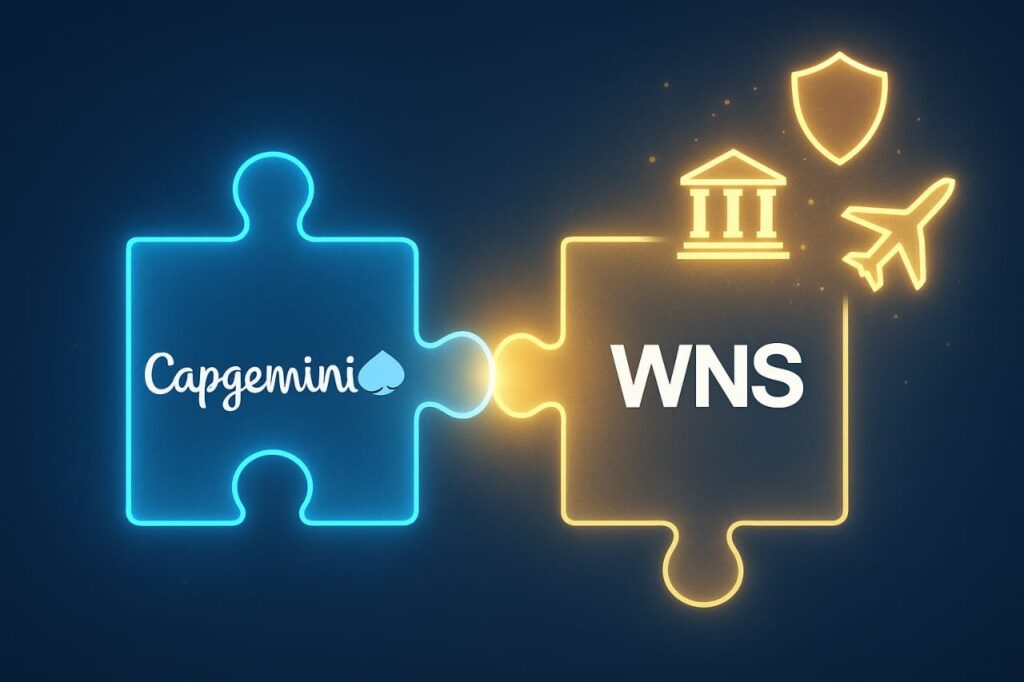
    The Capgemini WNS acquisition marks a seismic shift in the corporate world. Announced on July 7, 2025, the French consulting giant’s blockbuster $3.3 billion takeover of WNS is a defining moment. This all-cash deal represents one of the largest consolidations in the IT-BPM (Information Technology and Business Process Management) sector. But is this a strategic masterpiece designed for the future, or a massive, high-stakes gamble?

    The Deal That’s Making Headlines

    Capgemini is acquiring U.S.-listed WNS for $76.50 per share, representing a hefty premium that underscores its commitment:

    • 28% above WNS’s 90-day average share price
    • 27% premium over the last 30 days
    • 17% premium to its July 3, 2025 closing price

    With both companies’ boards unanimously approving the transaction, the deal is expected to close by year-end, solidifying the Capgemini WNS acquisition as a landmark event.

    Why This Acquisition Makes Perfect Sense

    1. AI-Powered Transformation Strategy

    Capgemini CEO Aiman Ezzat’s vision is crystal clear: capitalize on the “paradigm shift from traditional BPS to Agentic AI-powered Intelligent Operations.” (Agentic AI refers to AI systems that can proactively and autonomously perform complex tasks, make decisions, and interact with their environment to achieve specific goals, much like a human agent would. For more detail, see this Gartner analysis on autonomous systems). This isn’t just buzzword bingo – it’s a strategic pivot toward autonomous, intelligent business processes.

    2. Deep Domain Expertise Acquisition

    WNS brings specialized knowledge in high-value sectors, immediately strengthening Capgemini’s offerings in:

    • The complex insurance industry
    • Banking and financial services (BFS)
    • Resilient travel and hospitality sectors
    • Established relationships with blue-chip clients

    3. A Premium Client Portfolio

    The acquisition provides instant access to WNS’s impressive client roster, including industry leaders like United Airlines, Aviva, and Centrica. These aren’t just any clients – they’re established brands with substantial budgets for digital transformation.

    4. The Foundation for AI Excellence

    Business Process Services serve as the backbone for AI deployment. By acquiring WNS, Capgemini is essentially buying the critical infrastructure and process data needed to build and scale advanced AI solutions effectively.

    5. The Services-as-Software Evolution

    Large enterprises are shifting from traditional Business Process Outsourcing (BPO) models to technology-driven “Services-as-Software” solutions. This deal positions Capgemini perfectly to lead this transition.

    The Financial Projections Look Promising

    Capgemini’s financial outlook for the Capgemini WNS acquisition appears robust:

    • 4% EPS accretion expected in 2026 (before synergies)
    • 7% EPS boost projected for 2027 (post-synergies)
    • Immediate revenue growth and operating margin improvements anticipated

    (EPS accretion is an increase in a company’s earnings per share resulting from an acquisition. It’s a key metric used to judge the financial merit of an M&A [Mergers and Acquisitions] deal. You can learn more about it on Investopedia).

    These aren’t modest projections – they represent significant value creation if executed properly.

    The Concerning Red Flags

    6. Integration Complexity

    Merging two large organizations is notoriously challenging. The $3.3 billion price tag doesn’t include WNS’s net financial debt, making the actual financial commitment even higher. The pressure is on to avoid common integration pitfalls.

    7. The Double-Edged Sword of AI Disruption

    While Capgemini is betting on AI, the technology’s rapid evolution could undermine existing business models. Investors often fear that AI might cannibalize traditional service offerings faster than new ones can be built. Achieving the projected 4-7% EPS accretion depends entirely on seamless integration and navigating this disruption successfully.

    The Broader Market Context

    This acquisition isn’t happening in isolation. Companies are in an “AI arms race,” scrambling to develop, acquire, or integrate AI capabilities. Capgemini’s bold move signals its intention to dominate the AI-powered business process services market. The shift from automation to autonomy represents a fundamental change, where organizations that have already digitized now seek to “reimagine their operating models by embedding AI at the core.”

    What This Means for Stakeholders

    • For Capgemini Shareholders: The deal could deliver substantial returns if integration succeeds. However, the cash outlay and execution risks are significant.
    • For WNS Investors: The 17-28% premium offers immediate value, locking in a substantial gain.
    • For the Industry: This consolidation could trigger more M&A activity as competitors race to gain scale and expertise in the AI-driven landscape.

    The Verdict: Calculated Risk, Not a Reckless Bet

    The Capgemini WNS acquisition appears to be a well-calculated strategic move. The rationale is sound, targeting market timing, strategic fit, and financial growth. However, success is not guaranteed. Flawless integration and rapid adaptation to technological change are paramount.

    Key Takeaways

    • This is one of the largest IT-BPM sector consolidations in recent history.
    • The deal positions Capgemini to lead in AI-powered business process services.
    • Financial projections suggest significant value creation potential.
    • Major risks include integration complexity and AI sector volatility.
    • The Capgemini WNS acquisition reflects a broader industry trend toward AI-driven operations.

    The real test will be execution. If Capgemini integrates WNS seamlessly while delivering on its AI vision, this will be remembered as a defining moment. If not, it becomes a cautionary tale about betting big on rapidly evolving technology.


    Disclaimer: This analysis is based on publicly available information and market trends. It should not be construed as investment advice or a recommendation to buy, sell, or hold any securities. Investors should conduct their own due diligence and consult with qualified financial advisors before making investment decisions. Past performance does not guarantee future results, and all investments carry inherent risks.