Tag: Digital India

  • Cash is King Again? Why Bengaluru’s Shops Are Saying ‘No UPI’ and What It Spells for India’s Digital Dream

    Cash is King Again? Why Bengaluru’s Shops Are Saying ‘No UPI’ and What It Spells for India’s Digital Dream

    In the heart of India’s Silicon Valley, a curious and slightly old-fashioned trend is taking root. Amidst the QR codes that have become a permanent fixture, a new set of signs is popping up in small shops across Bengaluru, a city no stranger to headline-making local debates: “No UPI, Only Cash.” This isn’t a tech glitch; it’s a deliberate choice, a small-scale rebellion fueled by fears of a UPI GST crackdown. For a nation pushing hard for a “less-cash” economy, this return to paper money in its tech capital is a signal we can’t afford to ignore. What’s driving this sudden digital detox, and what does it reveal about the future of business in India?

    THE FEAR FACTOR: WHEN CONVENIENCE MEETS COMPLIANCE

    For years, the Unified Payments Interface (UPI), has been a game-changer for small businesses. It’s fast, cheap, and seamless. But for many vendors, this convenience has recently curdled into anxiety. The root cause? The Goods and Services Tax (GST), a system with its own set of successes and challenges.

    The chatter on the streets began after some unregistered businesses reportedly received GST notices, triggering alarm about a potential UPI GST crackdown. Here’s the breakdown of their apprehension:

    The Digital Trail: Every UPI transaction creates a permanent, traceable record. For businesses that have traditionally operated in the cash-based informal economy, this digital footprint suddenly felt like an unavoidable spotlight, highlighting every rupee earned.

    The GST Threshold: The law is clear. Businesses with an annual turnover exceeding Rs 40 lakh from goods or Rs 20 lakh from services must register for GST. The notices were reportedly triggered when the tax department analyzed UPI data and found vendors whose transaction volumes had crossed these limits.

    The Sticker Shock: For a small vendor, receiving a tax demand that could run into lakhs of rupees was a jolt. The immediate, instinctive reaction was to cut off the source of this scrutiny: UPI. By putting up “No UPI” signs, they hoped to fly back under the radar, away from the taxman’s watchful eye.

    This is the negative side of the coin. For these entrepreneurs, the push towards digital formalization felt less like an opportunity and more like a trap.

    THE OFFICIAL RESPONSE: IT’S NOT UPI, IT’S THE LAW

    As the “No UPI” movement gained traction, the commercial tax department in Karnataka moved swiftly to clear the air. Their message was unequivocal: this isn’t an anti-UPI campaign; it’s a pro-compliance drive. The government’s clarification on the supposed UPI GST crackdown was firm.

    Officials stressed that their focus isn’t on the method of payment, but on the income itself.

    GST is Payment-Agnostic: The department clarified that GST is levied on the total business turnover, regardless of whether the payment is received via UPI, cards, bank transfers, or even hard cash. Avoiding UPI will not magically erase a business’s tax liability.

    Data from All Sources: Tax authorities are collating data from all digital platforms, including point-of-sale (PoS) machines and payment aggregators, to build a complete picture of a business’s revenue. They aren’t just looking at UPI transactions.

    A Push, Not a Punishment: The intent, they claim, is not to penalize but to formalize. The notices were sent to businesses legally required to register for GST but had not. The goal is to bring them into the tax net, ensuring a level playing field for all.

    FINDING A MIDDLE GROUND: THE PATH TO FORMALIZATION

    Recognizing the genuine fear among small traders, the tax department has initiated measures to soften the transition. This isn’t just about enforcement; it’s also about education.

    Assistance and Guidance: Officials have been instructed to assist and educate vendors on how to become compliant, rather than simply issuing demands.

    The Composition Scheme Lifeline: For smaller businesses, the government is actively promoting the Composition Scheme, a simpler tax scheme for small businesses with reduced compliance and lower tax rates. Traders with an annual turnover below Rs 1.5 crore can opt for this, paying a much lower, fixed-rate tax with simpler filing requirements.

    Verification Before Taxation: Vendors who received notices are being asked to submit documents for verification. The final tax will only be levied on the actual taxable turnover, after excluding any exempt goods or services.

    THE BIGGER PICTURE: A NATION AT A CROSSROADS

    The Bengaluru episode is a micro-illustration of a much larger national story: the formalization of India’s massive informal economy. Digital payments, led by UPI, have punched a hole in the opaque wall of cash-based trade, making transactions visible. The fallout from the UPI GST crackdown highlights a major growing pain in this transition.

    This is the great balancing act for India’s economy. On one hand, you have the government’s legitimate need to increase revenue and curb tax evasion. On the other, you have millions of small entrepreneurs who are the backbone of the economy, grappling with the challenges of the formal system even as they hold the potential to transform entire sectors.

    The “No UPI” signs may be temporary, but they are a powerful symbol of this transition anxiety. The future of India’s digital dream depends on how we manage its human impact. The path forward requires a dance of firm enforcement, clear communication, and empathetic hand-holding, ensuring the digital economy is a platform for growth, not a reason for fear.

    DISCLAIMER

    This blog post is for informational purposes only and is based on publicly available news reports. It does not constitute financial or tax advice. Readers should conduct their own research and consult with a qualified professional before making any financial or business decisions.

  • India’s Tax Paradox Unveiled: 5 Surprising Reasons the Surge in India Tax Refunds is a Win

    India’s Tax Paradox Unveiled: 5 Surprising Reasons the Surge in India Tax Refunds is a Win

    For anyone tracking India’s economic engine, the recent data on India tax refunds has thrown up a fascinating paradox. On one side, we have a staggering, almost five-fold surge in refunds being disbursed to citizens and businesses. On the other, there are whispers of a “marginal dip” in the government’s net direct tax collections, sparking debate about revenue momentum.

    This seeming contradiction has left many wondering: Is this a sign of trouble in the government’s finances, or is it something else entirely?

    The truth is, this isn’t a story of weakness. It’s a story of a profound, tech-driven transformation in India’s tax machinery, a digital leap mirroring how Reliance Industries is breaking into the global tech elite. This narrative, much like the one explored in our ultimate guide to 8 years of GST, points to a healthier, more mature, and ultimately more robust economic ecosystem. Let’s cut through the noise and decode what’s really happening.

    A Flood of India Tax Refunds: The Numbers Don’t Lie

    First, let’s grasp the sheer scale of this change. The speed and volume of income tax refunds being processed today are nothing short of revolutionary.

    • 1. A Five-Fold Leap in Payouts: In the last decade, the value of income tax refunds has skyrocketed by an incredible 474%, jumping from ₹83,008 crore in FY 2013-14 to a massive ₹4.77 lakh crore by early FY 2024-25. This growth has significantly outpaced the (still very impressive) 274% rise in gross tax collections over the same period.
    • 2. From a 3-Month Wait to a Fortnight: Perhaps more importantly for the average taxpayer, the waiting game is over. The average time to get your refund has been slashed from a tedious 93 days in 2013 to just 17 days in 2024. That’s an 81% reduction in processing time, a direct result of a system that is finally putting the taxpayer first.

    These aren’t just incremental improvements; they represent a fundamental shift in how India’s tax administration operates.

    The Digital Revolution Fueling the Change

    So, how did this happen? This efficiency wasn’t an accident. It’s the result of a deliberate, multi-year strategy to build a world-class digital backbone for India’s tax system. Key initiatives have completely overhauled the legacy processes:

    • 3. Faceless and Paperless System: The move to faceless assessments (a system where tax assessments are done by a randomly selected officer through a digital interface, removing direct taxpayer-officer contact) has been a game-changer. By removing direct interaction, the system has become faster, more transparent, and less prone to disputes. The entire process, from filing to refund, is now handled digitally.
    • Smarter, Pre-filled Returns: The introduction of pre-filled tax returns has been a boon for filers. By automatically populating data like salary, interest income, and TDS details (Tax Deducted at Source, which is tax collected by an entity at the time of making specified payments like salary, rent, or professional fees), the system minimizes errors that were a major cause of refund delays in the past.
    • Automated, Real-Time Processing: Behind the scenes, powerful automation now drives the refund process. TDS is adjusted in near real-time, and once a return is verified, the refund is processed with minimal human intervention. This seamless cycle is the engine behind the 17-day turnaround.

    This digital overhaul has created a virtuous cycle: an easier filing process leads to higher compliance, and faster India tax refunds build greater trust in the system.

    The Elephant in the Room: What About the Dip in Net Collections?

    This brings us to the nuance—the “catch” that has analysts talking. Despite record gross collections, the net direct tax collection figure (Gross Collections minus Refunds) showed a marginal dip as of early July 2024. How can the government be collecting more money than ever, yet have its net figure soften?

    According to sources within the tax department, this is a “statistical” dip, not a structural one. It’s a direct byproduct of the system’s newfound efficiency.

    • 4. The Front-Loading Effect: Think of it like this: in the past, refunds were often processed slowly, sometimes deliberately, to keep the net collection figures looking robust. Today, the opposite is happening. Refunds are being sent out almost as fast as taxes are coming in. This front-loading of refunds naturally presses down the net figure in the initial months of the fiscal year.

    A Conscious Policy Choice: Prioritizing Economic Health Over Optics

    This isn’t a bug; it’s a feature. The government has made a conscious policy decision to prioritize the financial health of taxpayers over propping up short-term statistics.

    • 5. Injecting Liquidity into the Economy: Holding back legitimate refunds means blocking crucial cash flow for individuals and businesses. A company waiting for a large tax refund has less capital to invest, expand, or pay vendors. By returning this money promptly, the government is injecting liquidity directly back into the economy, fueling consumption, investment, and even the kind of mega block deals that can rock D-Street.

    The data supports this policy shift. In FY 2013-14, refunds accounted for 11.5% of gross collections. By FY 2024-25, that share has climbed to 17.6%. A larger slice of the pie is being returned faster, which is what tax officials mean when they call it a “feature of a maturing system.”

    The Bottom Line: A Feature, Not a Flaw

    The story of India’s surging tax refunds is a powerful indicator of a system coming of age. This surge, powered by digital transformation, signals a move towards greater transparency, efficiency, and taxpayer facilitation.

    While the resulting statistical dip in net collections might provide fodder for debate, the underlying reality is positive. It reflects a strategic choice to build trust, encourage voluntary compliance, and support economic activity by ensuring money gets back into the hands of people and businesses. This is a sign of a confident administration that values long-term economic vitality over short-term revenue optics.

    In the grand scheme of things, this is not a story about weakening revenues. It is a story about a stronger, more responsive, and more mature tax regime—one that is finally working for the taxpayer.


    Disclaimer: This article is for informational and educational purposes only. The views expressed are based on publicly available data and are not intended to be financial advice. It should not be construed as a recommendation to make any financial decisions. Please consult with a qualified financial advisor for personalized advice.

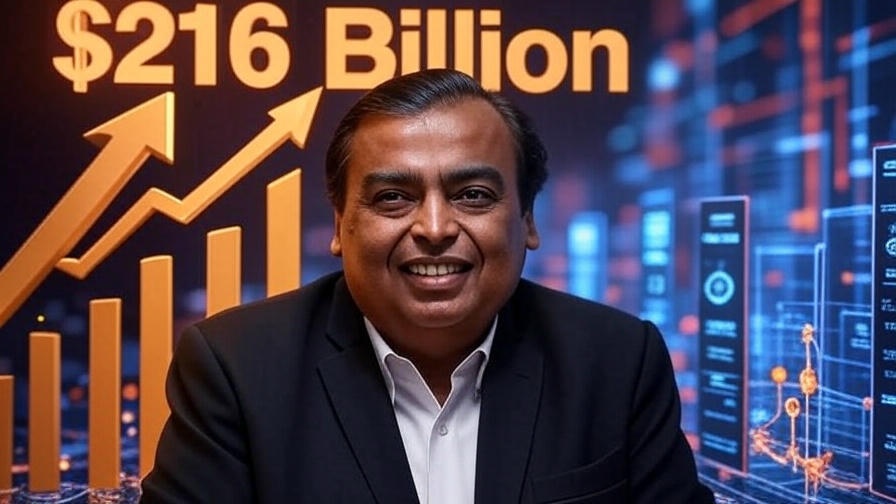
  • Reliance Industries Breaks Into Global Tech Elite: What This $216 Billion Milestone Means for India’s Future

    Reliance Industries Breaks Into Global Tech Elite: What This $216 Billion Milestone Means for India’s Future

    India’s largest conglomerate achieves historic feat, but can it sustain its position against global tech titans?

    I’ve witnessed many corporate milestones, but few as significant as what Reliance Industries has just accomplished. Mukesh Ambani’s industrial empire has achieved something no Indian company has done before – cracking the top 30 list of the world’s most valuable technology companies.

    The Historic Achievement

    According to a comprehensive 340-page report on artificial intelligence trends, Reliance Industries now sits at the 23rd position globally among the most highly valued tech companies, with a market capitalization of $216 billion (approximately Rs 18.22 lakh crore). This makes it the only Indian company to feature on this prestigious list, dominated by American tech giants.

    This isn’t just about numbers on a spreadsheet. It represents India’s emergence as a serious player in the global technology race, with Reliance serving as the country’s standard-bearer.

    The Strategic Pillars Behind Success

    Digital Infrastructure Revolution Reliance’s transformation from a traditional oil-to-chemicals company into a tech powerhouse didn’t happen overnight. The foundation was laid through Jio, which revolutionized India’s telecom landscape with its 4G rollout and is now building the country’s largest 5G network. This digital backbone has become the launchpad for everything else.

    Digital Infrastructure Revolution Reliance’s transformation from a traditional oil-to-chemicals company into a tech powerhouse didn’t happen overnight. The foundation was laid through Jio, which revolutionized India’s telecom landscape with its 4G rollout and is now building the country’s largest 5G network. This digital backbone has become the launchpad for everything else.

    Retail Technology Integration Reliance Retail’s digital commerce push has been equally impressive. By seamlessly blending online and offline retail experiences, the company has created one of India’s most comprehensive retail ecosystems, reaching hundreds of millions of consumers across urban and rural markets.

    Artificial Intelligence at the Core What sets Reliance apart is its serious commitment to AI. This isn’t just corporate buzzword bingo – the company has made substantial investments in data centers, networking infrastructure, and AI applications across customer support, software development, and scientific research. These aren’t peripheral experiments but core business operations.

    Energy Transition Strategy While building its tech credentials, Reliance hasn’t abandoned its energy roots. Instead, it’s positioning itself at the forefront of India’s renewable energy transition, creating synergies between its traditional and new-age businesses.

    India’s Broader AI Momentum

    Reliance’s success reflects India’s growing appetite for artificial intelligence. The same report reveals that India leads the world in ChatGPT mobile app usage, accounting for 13.5% of monthly active users – significantly ahead of the USA (8.9%) and other major markets. Indians are also among the top users of Chinese AI application DeepSeek, with 6.9% of global users.

    This widespread AI adoption indicates a tech-savvy population ready to embrace new technologies, providing a massive domestic market for companies like Reliance to test and scale their innovations.

    The Reality Check: Challenges Ahead

    The Scale Gap While $216 billion is impressive, it’s important to maintain perspective. The top American tech companies – Microsoft, Nvidia, and Apple – command market capitalizations exceeding $2 trillion. That’s nearly 10 times Reliance’s current valuation, highlighting the enormous gap that still exists.

    US Market Dominance American companies continue to dominate the global tech landscape more than ever. The USA’s share of the most valuable tech companies has increased from 53% in 1995 to 70% in 2025. The top eight positions are exclusively held by US giants: Microsoft, Nvidia, Apple, Amazon, Alphabet, Meta, Tesla, and Broadcom.

    Historical Volatility The tech industry’s history offers sobering lessons. Of the top 30 most valuable tech companies from 1995, only five – Microsoft, Oracle, Cisco, IBM, and AT&T – have maintained their positions consistently. Japan, which held 30% of top tech companies in 1995, has zero representation today. This volatility suggests that maintaining elite status requires continuous innovation and adaptation.

    Capital Expenditure Sustainability The current AI boom is driving massive capital expenditure in chips, data centers, and networking infrastructure. The sustainability of this investment cycle remains questionable, and any slowdown could impact companies heavily invested in AI infrastructure.

    What This Means for Investors

    The Positive Case Reliance’s tech transformation represents a compelling growth story. The company has successfully diversified from cyclical energy businesses into secular growth areas like telecom, retail, and AI. Its integrated approach – combining digital infrastructure, consumer services, and enterprise solutions – creates multiple revenue streams and competitive moats.

    The domestic market opportunity is enormous. With India’s digital economy expected to grow exponentially, Reliance is well-positioned to capture this growth across multiple sectors.

    The Cautionary Notes However, investors should be mindful of execution risks. Building and maintaining a top-tier tech company requires continuous innovation, significant capital allocation, and the ability to attract top talent – all challenging in a competitive global environment.

    Valuation concerns also persist. While Reliance’s tech pivot justifies a premium valuation, the stock needs to deliver consistent growth to justify its current market cap.

    The Road Ahead

    Reliance’s entry into the global tech elite is undoubtedly a proud moment for India Inc. It demonstrates that Indian companies can compete globally when they invest strategically in emerging technologies and execute effectively.

    However, the journey from here is arguably more challenging than the one that brought Reliance to this position. Staying in the top 30 requires continuous innovation, substantial capital investment, and the ability to compete with the world’s most resource-rich technology companies.

    The question isn’t whether Reliance can maintain its current position – it’s whether it can continue climbing higher. Given Mukesh Ambani’s track record of ambitious vision and execution, betting against Reliance would be unwise. But investors should approach this opportunity with realistic expectations about the challenges ahead.

    Conclusion

    Reliance Industries’ achievement marks a watershed moment for Indian technology ambitions. While celebrating this milestone, we must recognize it as the beginning of a longer journey rather than a destination. The company’s success will ultimately depend on its ability to continuously innovate and execute in an increasingly competitive global landscape.

    For India, Reliance’s achievement opens doors to greater recognition as a technology hub. For investors, it represents both opportunity and risk in equal measure.

    Disclaimer: This analysis is based on publicly available information and is intended for informational purposes only. It should not be considered as investment advice or a recommendation to buy, sell, or hold any securities. Investors should conduct their own research and consult with qualified financial advisors before making investment decisions. Past performance does not guarantee future results, and all investments carry inherent risks.