Blog

  • Cash is King Again? Why Bengaluru’s Shops Are Saying ‘No UPI’ and What It Spells for India’s Digital Dream

    Cash is King Again? Why Bengaluru’s Shops Are Saying ‘No UPI’ and What It Spells for India’s Digital Dream

    In the heart of India’s Silicon Valley, a curious and slightly old-fashioned trend is taking root. Amidst the QR codes that have become a permanent fixture, a new set of signs is popping up in small shops across Bengaluru, a city no stranger to headline-making local debates: “No UPI, Only Cash.” This isn’t a tech glitch; it’s a deliberate choice, a small-scale rebellion fueled by fears of a UPI GST crackdown. For a nation pushing hard for a “less-cash” economy, this return to paper money in its tech capital is a signal we can’t afford to ignore. What’s driving this sudden digital detox, and what does it reveal about the future of business in India?

    THE FEAR FACTOR: WHEN CONVENIENCE MEETS COMPLIANCE

    For years, the Unified Payments Interface (UPI), has been a game-changer for small businesses. It’s fast, cheap, and seamless. But for many vendors, this convenience has recently curdled into anxiety. The root cause? The Goods and Services Tax (GST), a system with its own set of successes and challenges.

    The chatter on the streets began after some unregistered businesses reportedly received GST notices, triggering alarm about a potential UPI GST crackdown. Here’s the breakdown of their apprehension:

    The Digital Trail: Every UPI transaction creates a permanent, traceable record. For businesses that have traditionally operated in the cash-based informal economy, this digital footprint suddenly felt like an unavoidable spotlight, highlighting every rupee earned.

    The GST Threshold: The law is clear. Businesses with an annual turnover exceeding Rs 40 lakh from goods or Rs 20 lakh from services must register for GST. The notices were reportedly triggered when the tax department analyzed UPI data and found vendors whose transaction volumes had crossed these limits.

    The Sticker Shock: For a small vendor, receiving a tax demand that could run into lakhs of rupees was a jolt. The immediate, instinctive reaction was to cut off the source of this scrutiny: UPI. By putting up “No UPI” signs, they hoped to fly back under the radar, away from the taxman’s watchful eye.

    This is the negative side of the coin. For these entrepreneurs, the push towards digital formalization felt less like an opportunity and more like a trap.

    THE OFFICIAL RESPONSE: IT’S NOT UPI, IT’S THE LAW

    As the “No UPI” movement gained traction, the commercial tax department in Karnataka moved swiftly to clear the air. Their message was unequivocal: this isn’t an anti-UPI campaign; it’s a pro-compliance drive. The government’s clarification on the supposed UPI GST crackdown was firm.

    Officials stressed that their focus isn’t on the method of payment, but on the income itself.

    GST is Payment-Agnostic: The department clarified that GST is levied on the total business turnover, regardless of whether the payment is received via UPI, cards, bank transfers, or even hard cash. Avoiding UPI will not magically erase a business’s tax liability.

    Data from All Sources: Tax authorities are collating data from all digital platforms, including point-of-sale (PoS) machines and payment aggregators, to build a complete picture of a business’s revenue. They aren’t just looking at UPI transactions.

    A Push, Not a Punishment: The intent, they claim, is not to penalize but to formalize. The notices were sent to businesses legally required to register for GST but had not. The goal is to bring them into the tax net, ensuring a level playing field for all.

    FINDING A MIDDLE GROUND: THE PATH TO FORMALIZATION

    Recognizing the genuine fear among small traders, the tax department has initiated measures to soften the transition. This isn’t just about enforcement; it’s also about education.

    Assistance and Guidance: Officials have been instructed to assist and educate vendors on how to become compliant, rather than simply issuing demands.

    The Composition Scheme Lifeline: For smaller businesses, the government is actively promoting the Composition Scheme, a simpler tax scheme for small businesses with reduced compliance and lower tax rates. Traders with an annual turnover below Rs 1.5 crore can opt for this, paying a much lower, fixed-rate tax with simpler filing requirements.

    Verification Before Taxation: Vendors who received notices are being asked to submit documents for verification. The final tax will only be levied on the actual taxable turnover, after excluding any exempt goods or services.

    THE BIGGER PICTURE: A NATION AT A CROSSROADS

    The Bengaluru episode is a micro-illustration of a much larger national story: the formalization of India’s massive informal economy. Digital payments, led by UPI, have punched a hole in the opaque wall of cash-based trade, making transactions visible. The fallout from the UPI GST crackdown highlights a major growing pain in this transition.

    This is the great balancing act for India’s economy. On one hand, you have the government’s legitimate need to increase revenue and curb tax evasion. On the other, you have millions of small entrepreneurs who are the backbone of the economy, grappling with the challenges of the formal system even as they hold the potential to transform entire sectors.

    The “No UPI” signs may be temporary, but they are a powerful symbol of this transition anxiety. The future of India’s digital dream depends on how we manage its human impact. The path forward requires a dance of firm enforcement, clear communication, and empathetic hand-holding, ensuring the digital economy is a platform for growth, not a reason for fear.

    DISCLAIMER

    This blog post is for informational purposes only and is based on publicly available news reports. It does not constitute financial or tax advice. Readers should conduct their own research and consult with a qualified professional before making any financial or business decisions.

  • India’s Tax Paradox Unveiled: 5 Surprising Reasons the Surge in India Tax Refunds is a Win

    India’s Tax Paradox Unveiled: 5 Surprising Reasons the Surge in India Tax Refunds is a Win

    For anyone tracking India’s economic engine, the recent data on India tax refunds has thrown up a fascinating paradox. On one side, we have a staggering, almost five-fold surge in refunds being disbursed to citizens and businesses. On the other, there are whispers of a “marginal dip” in the government’s net direct tax collections, sparking debate about revenue momentum.

    This seeming contradiction has left many wondering: Is this a sign of trouble in the government’s finances, or is it something else entirely?

    The truth is, this isn’t a story of weakness. It’s a story of a profound, tech-driven transformation in India’s tax machinery, a digital leap mirroring how Reliance Industries is breaking into the global tech elite. This narrative, much like the one explored in our ultimate guide to 8 years of GST, points to a healthier, more mature, and ultimately more robust economic ecosystem. Let’s cut through the noise and decode what’s really happening.

    A Flood of India Tax Refunds: The Numbers Don’t Lie

    First, let’s grasp the sheer scale of this change. The speed and volume of income tax refunds being processed today are nothing short of revolutionary.

    • 1. A Five-Fold Leap in Payouts: In the last decade, the value of income tax refunds has skyrocketed by an incredible 474%, jumping from ₹83,008 crore in FY 2013-14 to a massive ₹4.77 lakh crore by early FY 2024-25. This growth has significantly outpaced the (still very impressive) 274% rise in gross tax collections over the same period.
    • 2. From a 3-Month Wait to a Fortnight: Perhaps more importantly for the average taxpayer, the waiting game is over. The average time to get your refund has been slashed from a tedious 93 days in 2013 to just 17 days in 2024. That’s an 81% reduction in processing time, a direct result of a system that is finally putting the taxpayer first.

    These aren’t just incremental improvements; they represent a fundamental shift in how India’s tax administration operates.

    The Digital Revolution Fueling the Change

    So, how did this happen? This efficiency wasn’t an accident. It’s the result of a deliberate, multi-year strategy to build a world-class digital backbone for India’s tax system. Key initiatives have completely overhauled the legacy processes:

    • 3. Faceless and Paperless System: The move to faceless assessments (a system where tax assessments are done by a randomly selected officer through a digital interface, removing direct taxpayer-officer contact) has been a game-changer. By removing direct interaction, the system has become faster, more transparent, and less prone to disputes. The entire process, from filing to refund, is now handled digitally.
    • Smarter, Pre-filled Returns: The introduction of pre-filled tax returns has been a boon for filers. By automatically populating data like salary, interest income, and TDS details (Tax Deducted at Source, which is tax collected by an entity at the time of making specified payments like salary, rent, or professional fees), the system minimizes errors that were a major cause of refund delays in the past.
    • Automated, Real-Time Processing: Behind the scenes, powerful automation now drives the refund process. TDS is adjusted in near real-time, and once a return is verified, the refund is processed with minimal human intervention. This seamless cycle is the engine behind the 17-day turnaround.

    This digital overhaul has created a virtuous cycle: an easier filing process leads to higher compliance, and faster India tax refunds build greater trust in the system.

    The Elephant in the Room: What About the Dip in Net Collections?

    This brings us to the nuance—the “catch” that has analysts talking. Despite record gross collections, the net direct tax collection figure (Gross Collections minus Refunds) showed a marginal dip as of early July 2024. How can the government be collecting more money than ever, yet have its net figure soften?

    According to sources within the tax department, this is a “statistical” dip, not a structural one. It’s a direct byproduct of the system’s newfound efficiency.

    • 4. The Front-Loading Effect: Think of it like this: in the past, refunds were often processed slowly, sometimes deliberately, to keep the net collection figures looking robust. Today, the opposite is happening. Refunds are being sent out almost as fast as taxes are coming in. This front-loading of refunds naturally presses down the net figure in the initial months of the fiscal year.

    A Conscious Policy Choice: Prioritizing Economic Health Over Optics

    This isn’t a bug; it’s a feature. The government has made a conscious policy decision to prioritize the financial health of taxpayers over propping up short-term statistics.

    • 5. Injecting Liquidity into the Economy: Holding back legitimate refunds means blocking crucial cash flow for individuals and businesses. A company waiting for a large tax refund has less capital to invest, expand, or pay vendors. By returning this money promptly, the government is injecting liquidity directly back into the economy, fueling consumption, investment, and even the kind of mega block deals that can rock D-Street.

    The data supports this policy shift. In FY 2013-14, refunds accounted for 11.5% of gross collections. By FY 2024-25, that share has climbed to 17.6%. A larger slice of the pie is being returned faster, which is what tax officials mean when they call it a “feature of a maturing system.”

    The Bottom Line: A Feature, Not a Flaw

    The story of India’s surging tax refunds is a powerful indicator of a system coming of age. This surge, powered by digital transformation, signals a move towards greater transparency, efficiency, and taxpayer facilitation.

    While the resulting statistical dip in net collections might provide fodder for debate, the underlying reality is positive. It reflects a strategic choice to build trust, encourage voluntary compliance, and support economic activity by ensuring money gets back into the hands of people and businesses. This is a sign of a confident administration that values long-term economic vitality over short-term revenue optics.

    In the grand scheme of things, this is not a story about weakening revenues. It is a story about a stronger, more responsive, and more mature tax regime—one that is finally working for the taxpayer.


    Disclaimer: This article is for informational and educational purposes only. The views expressed are based on publicly available data and are not intended to be financial advice. It should not be construed as a recommendation to make any financial decisions. Please consult with a qualified financial advisor for personalized advice.

  • India’s Tech Leap: 2 Revolutionary Events Defining Its Future

    India’s Tech Leap: 2 Revolutionary Events Defining Its Future


    India’s Tech Leap is unfolding with two historic moments happening simultaneously—Tesla’s long-awaited market entry and a space mission that almost went terribly wrong. These developments could reshape how we think about India’s technological future, but the reality is more complex than the headlines suggest.

    Tesla’s Grand Entry: High Hopes and Higher Prices

    After years of speculation and regulatory battles, Tesla has officially opened its first Indian showroom in Mumbai. The electric vehicle giant is offering the Model Y SUV with prices ranging from Rs 60 lakh to Rs 70 lakh, positioning itself firmly in the luxury segment.

    The Positive Side

    Tesla’s arrival brings several advantages to India’s electric mobility landscape:

    • Brand Recognition: Tesla’s global reputation could inspire more Indians to consider electric vehicles seriously.
    • Technology Transfer: The company’s advanced features, including self-driving capabilities (available for an additional Rs 6 lakh), introduce cutting-edge automotive technology to Indian consumers.
    • Market Validation: Tesla’s presence validates India as a significant emerging market for premium EVs.

    The Reality Check

    However, several challenges cast a shadow on this milestone for India’s Tech Leap:

    • Pricing Concerns: At Rs 60-70 lakh, Tesla vehicles remain accessible only to a tiny fraction of Indian consumers.
    • Manufacturing Hesitation: Despite government incentives offering duty relief for local manufacturing, Elon Musk hasn’t committed to establishing production facilities in India.
    • Infrastructure Gaps: India’s charging infrastructure still needs significant development to support widespread EV adoption, a part of the hidden battle for EV components that could define the industry’s success.

    The big question remains: Can Tesla’s premium positioning actually accelerate India’s transition to electric mobility, or will it remain a niche player for the affluent?

    ISRO’s Critical Save: The Unsung Story of India’s Space Heroism

    While Tesla made headlines, a more significant story for India’s Tech Leap unfolded in space—one that showcased our nation’s growing expertise in international space operations.

    Shubhanshu Shukla’s Historic Journey

    Group Captain Shubhanshu Shukla became the first Indian to visit the International Space Station in 41 years, completing a successful 20-day mission. His Dragon spacecraft ‘Grace’ safely splashed down in the Pacific Ocean, marking a crucial milestone.

    This mission provides vital experience for India’s upcoming Gaganyaan human spaceflight program. Shukla is currently undergoing a seven-day medical evaluation and recovery protocol, including cardiovascular assessments and psychological debriefs.

    ISRO’s Unsung Heroics

    The real story lies in what almost went wrong. ISRO’s 13-member team at Kennedy Space Centre potentially saved lives by refusing to authorize a launch with a compromised Falcon-9 rocket.

    The Crisis: A day before the scheduled June 10 lift-off, a liquid oxygen leak was discovered on the booster rocket. Despite SpaceX’s initial attempts to proceed, ISRO’s Dr. V Narayanan—a liquid engine expert—insisted on thorough safety checks.

    The Stand: ISRO firmly stated they wouldn’t authorize the launch until the problem was completely resolved, emphasizing that astronaut safety was non-negotiable. This decisive action led to identifying and replacing the cracked portion of the rocket.

    Global Recognition

    This incident highlights ISRO’s growing influence in international space operations and its unwavering commitment to global safety standards. The collaborative experience has also provided ISRO’s Mission Operations Team with invaluable insights into international crewed mission coordination.

    Development Challenges: Progress vs. Preservation

    India’s ambitious development projects continue to face the classic dilemma between modernization and community displacement.

    The Banke Bihari Corridor Project

    The Rs 1,000 crore Banke Bihari Corridor in Vrindavan, approved by the Supreme Court, mirrors the Kashi Vishwanath Temple initiative. While aimed at improving infrastructure, it faces opposition from local residents.

    The Dilemma: Traditional sevayats who have lived near the temple for generations will be relocated 7 km away. Their concerns about losing their traditional way of life highlight the complex trade-offs in large-scale infrastructure projects.

    Other Developments Shaping India’s Narrative

    • Educational Revisions: NCERT’s latest Class 8 Social Science textbook revisions now highlight “religious intolerance” during the Delhi Sultanate and Mughal era, while noting that “no one should be held responsible today for events of the past.”
    • Grassroots Activism: In Madhya Pradesh’s Sidhi district, 22-year-old influencer Leela Sahu’s campaign for basic road connectivity demonstrates how infrastructure gaps continue to affect rural lives.
    • Geopolitical Concerns: Trump’s increasing closeness with Pakistan and potential disruption of India’s oil trade with Russia have sparked discussions about re-evaluating India’s foreign policy approach.

    What This Means for India’s Future

    These developments paint a picture of a nation simultaneously reaching for the stars while grappling with ground realities. Tesla’s entry, while symbolically significant, may not immediately transform the transportation landscape.

    Meanwhile, ISRO’s achievements and safety standards are a powerful testament to India’s Tech Leap, showcasing our growing capabilities. This progress isn’t isolated; it’s happening in the private sector as well, with milestones like Reliance Industries breaking into the global tech elite. The successful completion of Shukla’s mission and ISRO’s critical safety intervention prove India’s readiness for more ambitious space programs.

    The Road Ahead

    India’s journey toward becoming a technology superpower involves navigating complex challenges—from making advanced technology accessible to balancing development with community concerns. The Tesla launch and ISRO’s success represent significant milestones, but they also highlight the work still needed to make India’s Tech Leap truly inclusive for all.

    Whether Tesla can adapt its strategy to a price-sensitive market and whether ISRO can leverage its expertise for commercial success will determine the long-term impact of these developments.


    Disclaimer: This article is for informational purposes only and should not be considered as investment advice or a recommendation to buy or sell any securities. Please consult with a qualified financial advisor before making any investment decisions.

  • TCS Q1 Results: Profit Jumps 6% But Revenue Tells a Different Story – What Investors Need to Know

    TCS Q1 Results: Profit Jumps 6% But Revenue Tells a Different Story – What Investors Need to Know


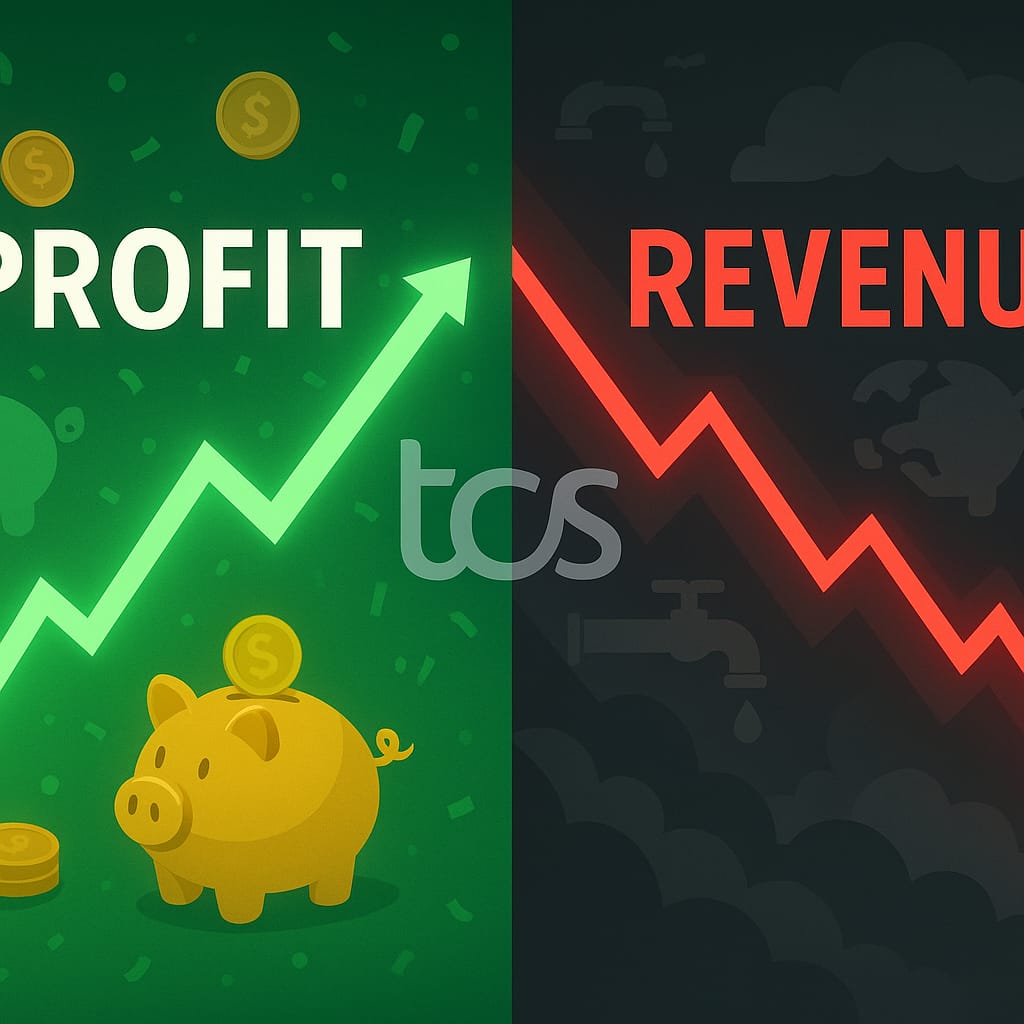
    This in-depth TCS Q1 results analysis unpacks the numbers behind the headlines from July 10, 2025. The Street had its eyes glued to Tata Consultancy Services’ Q1 FY26 earnings, and as India’s IT crown jewel, TCS rarely fails to deliver surprises. This quarter was no exception. While the profit numbers had analysts celebrating, the revenue story painted a more complex picture that demands closer scrutiny from every investor.

    The Profit Party: TCS Beats Street Expectations

    TCS delivered a stellar performance on the bottom line, reporting a net profit of Rs 12,760 crore for the April-June quarter. This represents a solid 6% year-on-year growth that caught analysts off guard in the best possible way.

    The consensus was expecting a much more modest performance. Bloomberg’s analyst poll had projected just 1.9% growth, estimating profits at Rs 12,263 crore. An ET report was even more conservative at Rs 12,205 crore. TCS didn’t just meet these expectations – it sailed past them with room to spare.

    Adding sweetness to the deal, the company declared an interim dividend of Rs 11 per share. Shareholders can mark their calendars for August 4, 2025, as the payout date, with July 16 set as the record date.

    The Revenue Reality Check: Growth Hits a Speed Bump

    While profit margins celebrated, the revenue story tells a tale of caution. TCS posted revenue of Rs 63,437 crore, marking a modest 1.3% year-on-year growth. This figure fell short of the Bloomberg consensus estimate of Rs 64,636 crore.

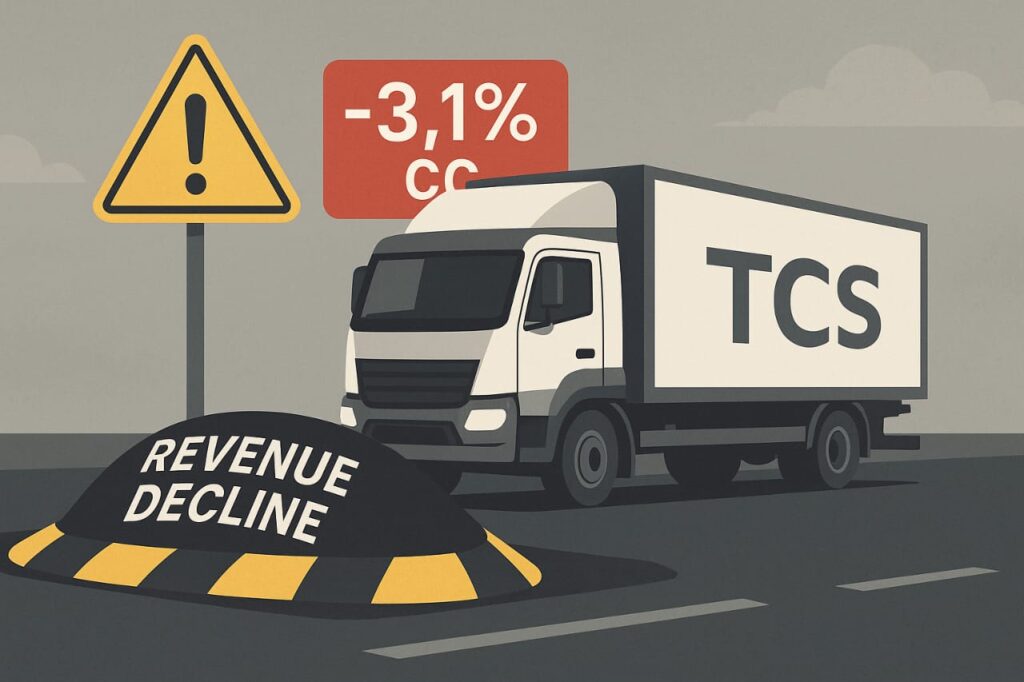
    The real concern in our TCS Q1 results analysis emerges when we examine the Constant Currency (CC) performance. (This metric removes the effect of currency exchange rate fluctuations to show a company’s underlying business performance). Here, revenue actually declined by 3.1% year-on-year – a red flag that suggests underlying demand weakness.

    Quarter-on-quarter, the picture isn’t much brighter. Revenue dropped 1.6% from Q4 FY25’s Rs 64,479 crore, indicating that the challenges aren’t just year-over-year comparisons but reflect current market conditions.

    CEO Speaks: Macro Headwinds Take Center Stage

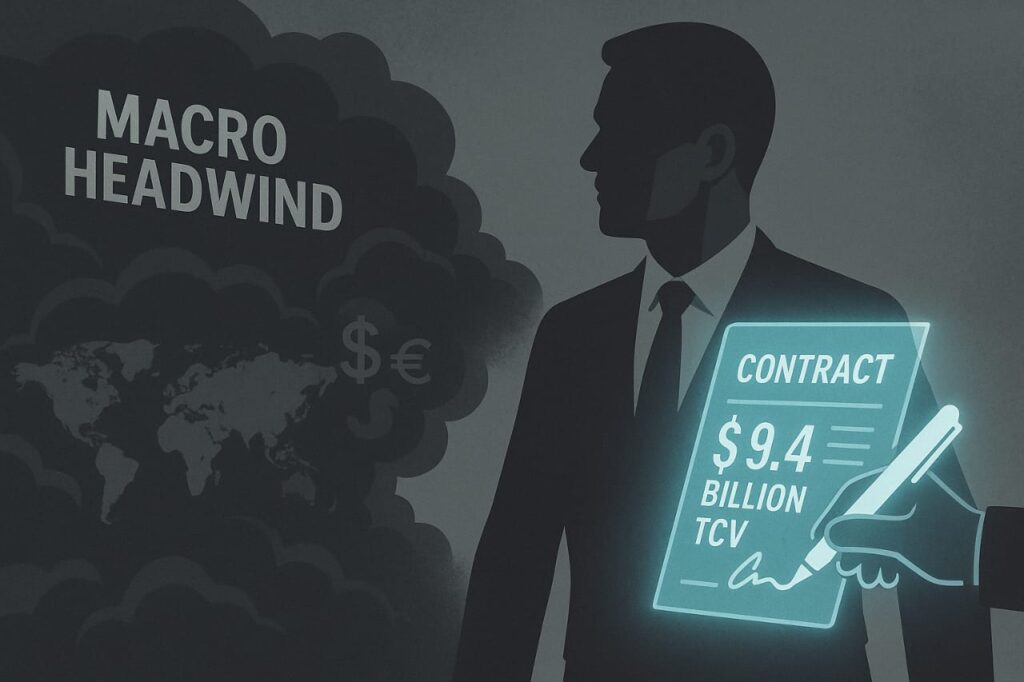
    TCS CEO K Krithivasan didn’t mince words about the challenging environment. “The continued global macro-economic and geo-political uncertainties caused a demand contraction,” he stated, acknowledging the elephant in the room.

    However, it wasn’t all doom and gloom. The CEO highlighted that new services demonstrated strong growth and the company secured “robust deal closures during this quarter” with a Total Contract Value (TCV) of $9.4 billion. (TCV represents the total value of a contract, and strong TCV can be an indicator of future revenue. For more on this, see this Gartner TCV explanation).

    Sector Performance: Winners and Losers Emerge

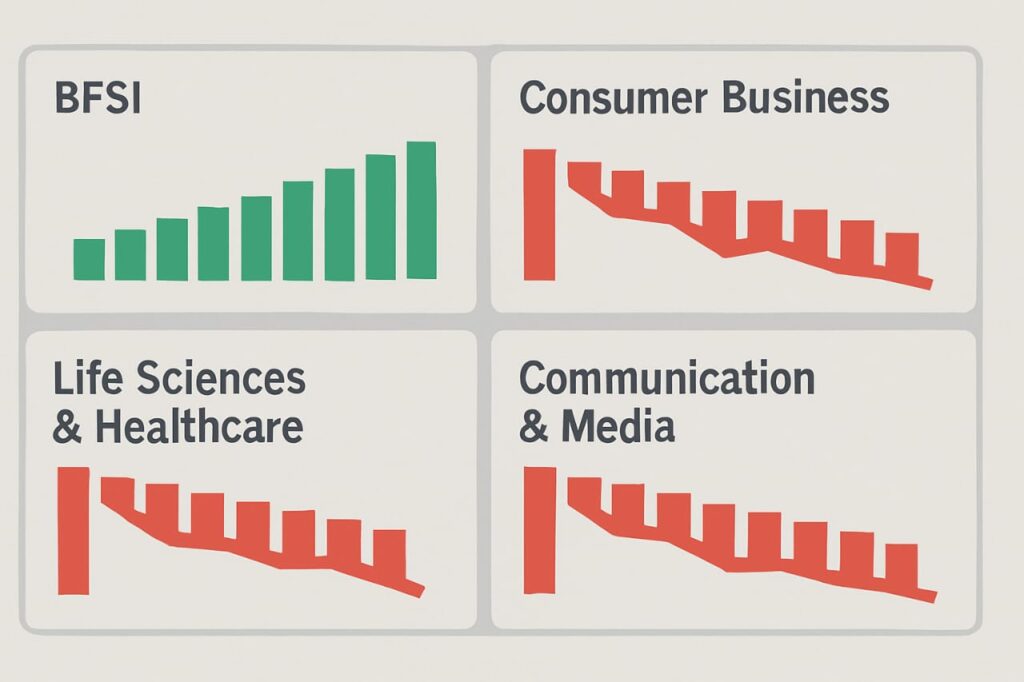
    The segmental breakdown reveals a mixed bag of performance across different industries:

    The Steady Performers

    • BFSI (Banking, Financial Services, and Insurance): The backbone of TCS showed resilience with 1% YoY growth in CC terms, contributing 32% to total revenue.
    • Technology & Services and Energy sectors: Both recorded positive year-over-year growth.

    The Struggling Segments

    • Consumer Business: The second-largest revenue contributor saw a 3.1% YoY decline, accounting for 15.6% of Q1 FY26 revenue.
    • Life Sciences & Healthcare: Recorded the steepest decline at 9.6% year-over-year.
    • Communication & Media: Matched the healthcare sector’s decline at 9.6% YoY.

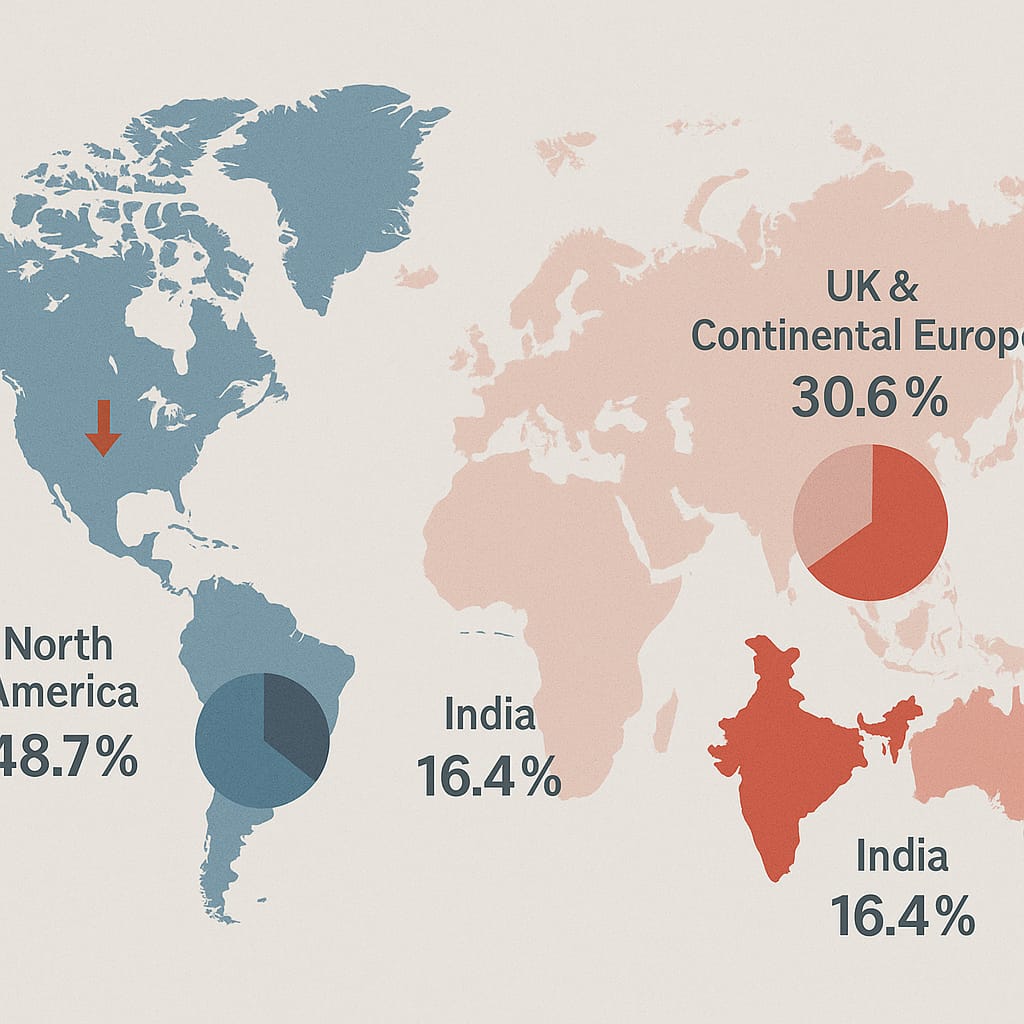
    Geographic Mix: North America Remains Dominant but Shrinks

    The geographical revenue distribution shows North America’s continued dominance, though with some concerning trends:

    • North America: Market share decreased to 48.7% (down 2.7% YoY).
    • UK: Operations declined by 1.3%, reaching 18% of total revenue.
    • Continental Europe: Fell by 3.1% to 15% of total revenue.
    • India: Domestic share reduced to 5.8%, showing a significant 21.7% YoY decline in CC.

    The People Factor: Attrition Rises, Salary Hikes on Hold

    TCS’s workforce reached 613,069 employees as of June 30, 2025, with a net addition of 6,071 year-over-year. The company hired over 5,000 employees during the quarter, showing confidence in future growth.

    However, the attrition rate climbed to 13.8% from 13.3% in Q4 FY25. (Attrition rate measures the percentage of employees who leave a company over a specific period). This is above TCS’s comfort level of 13%, with Chief Human Resources Officer Milind Lakkad acknowledging efforts to bring it down.

    Perhaps more telling is the continued delay in wage hikes. Lakkad confirmed that TCS “has not made any decisions so far on the potential salary increase” – a decision that reflects the cautious approach management is taking given the uncertain business environment.

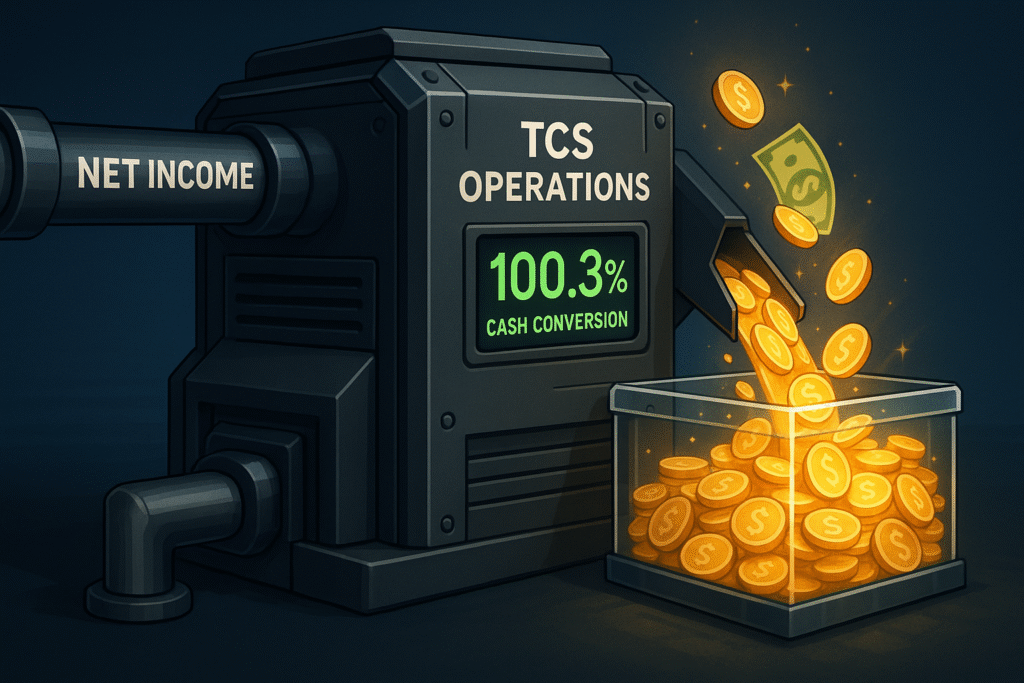
    Financial Strength: Cash Generation Remains Robust

    Despite revenue challenges, TCS demonstrated impressive operational efficiency:

    • Net Margin reached 20.1% during the quarter.
    • Generated Net Cash of Rs 12,804 crore, representing 100.3% of net income.
    • Strong cash conversion provides financial flexibility for future investments.

    The Road Ahead: Strategy in Uncertain Times

    CEO Krithivasan outlined the company’s strategic focus: “We remain closely connected to our customers to help them navigate the challenges impacting their business, through cost optimization, vendor consolidation and AI-led business transformation.”

    This approach suggests TCS is positioning itself as a partner for clients looking to manage costs while investing in digital transformation and AI adoption. (To understand how IT services help with cost optimization, read this Deloitte perspective).

    The Verdict: Resilience Amid Headwinds

    This TCS Q1 results analysis presents a classic case of operational excellence meeting market challenges. The strong profit performance and dividend declaration showcase the company’s ability to manage costs and maintain shareholder value. However, the persistent revenue headwinds, particularly in constant currency terms, highlight the impact of global uncertainties on demand.

    The mixed segmental performance and rising attrition rates add layers of complexity to the narrative. For investors, the takeaway from this TCS Q1 results analysis is that while the company remains a fundamentally strong company, the revenue challenges suggest near-term growth may remain muted until global economic conditions improve.

    The company’s focus on AI-led transformation offers hope for future growth, but the timeline for recovery depends largely on factors beyond TCS’s control.


    Disclaimer: This analysis is based on publicly available information and is intended for informational purposes only. It should not be construed as financial advice or a recommendation to buy, sell, or hold any securities. Readers are advised to consult with qualified financial advisors and conduct their own research before making any investment decisions. Past performance does not guarantee future results.
  • Apple’s India Strategy: The $22 Billion Secret Behind Sabih Khan’s Rise

    Apple’s India Strategy: The $22 Billion Secret Behind Sabih Khan’s Rise


    Apple’s India Strategy is officially in the spotlight after a move that’s sending shockwaves through Silicon Valley and beyond. The tech giant’s decision to elevate Sabih Khan to Chief Operating Officer isn’t just another corporate reshuffle – it’s a strategic chess move that validates its manufacturing pivot and could reshape global power dynamics.

    The Architect of Apple’s Supply Chain Revolution

    Sabih Khan’s story reads like a modern American dream with a global twist. Born in Moradabad, Uttar Pradesh, this 59-year-old executive has quietly become one of the most powerful figures in global technology. His journey from a small Indian city to the C-suite [The C-suite refers to a corporation’s most senior executive titles, often starting with “Chief,” like CEO, COO, and CFO] of the world’s most valuable company is nothing short of remarkable.

    After moving to Singapore during his school years, Khan landed in the United States for higher education. Armed with dual bachelor’s degrees in Economics and Mechanical Engineering from Tufts University and a master’s from Rensselaer Polytechnic Institute, he began his career at GE Plastics before joining Apple in 1995.

    What makes Khan’s appointment particularly significant is his three-decade tenure. He’s not an outsider; he is an insider who was instrumental in building the very global supply chain empire that he now officially leads. You can learn more about his role on Apple’s official leadership page.

    Why This Appointment Cements Apple’s India Strategy

    Khan steps into the shoes of Jeff Williams, who’s retiring after nearly 30 years. The COO role at Apple is arguably the second most powerful position in the company. This isn’t just about managing operations – it’s about orchestrating a $3.28 trillion company’s global footprint, with Apple’s India Strategy now a central pillar of that plan.

    Tim Cook’s praise for Khan as a “brilliant strategist” and “one of the central architects of Apple’s supply chain” isn’t corporate speak. It’s a testament to Khan’s role in pioneering the manufacturing technologies that make this massive shift possible.

    The Core of Apple’s India Strategy: A Game-Changing Shift

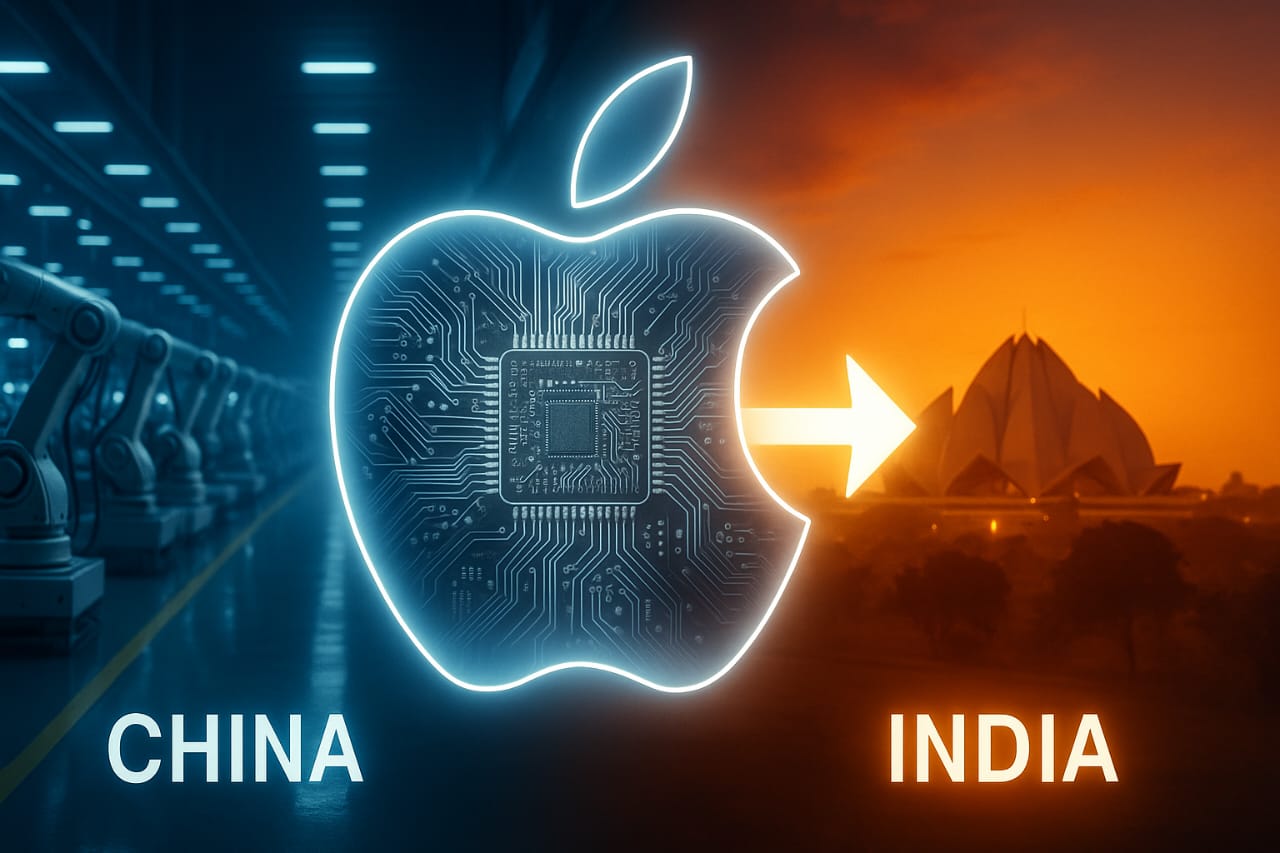
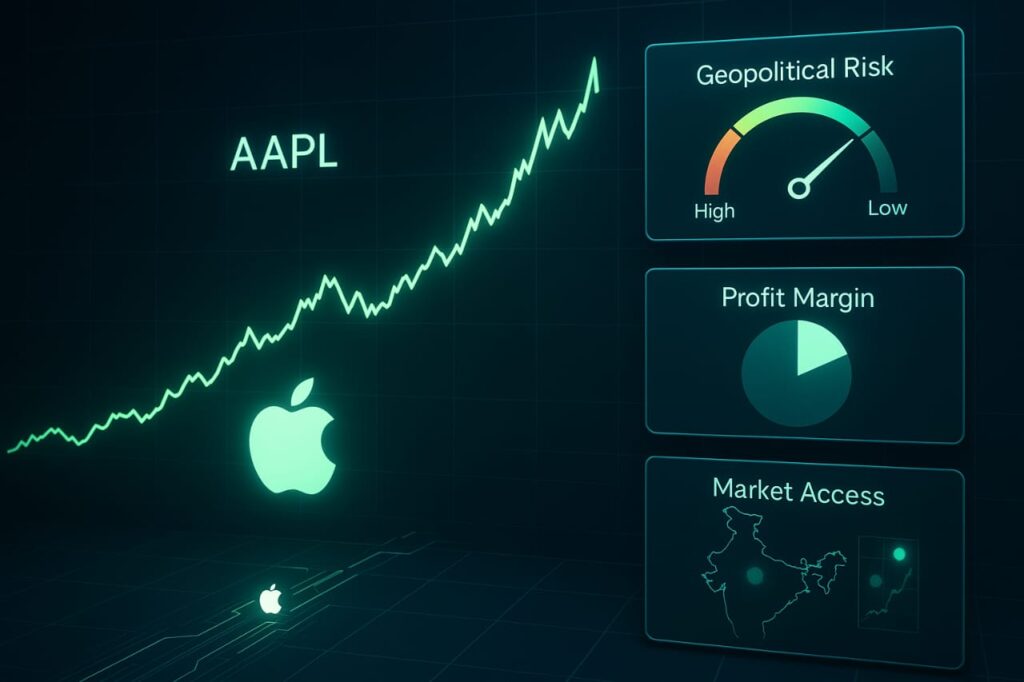
    Here’s where things get interesting. Khan’s elevation comes at a crucial moment when Apple’s India Strategy is in full swing, aggressively shifting significant iPhone production from China to India. The numbers are staggering.

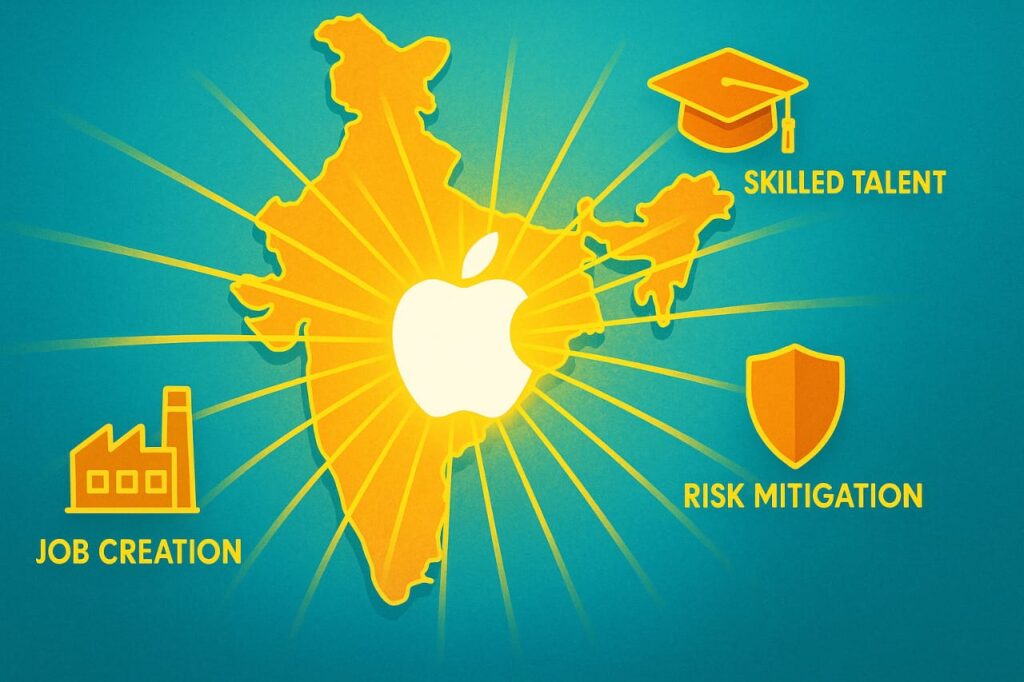
    The Upside of Apple’s India Push

    • Diversification Benefits: Currently, about 20% of Apple’s global iPhone production comes from India, up from 14% in 2024. That’s roughly $22 billion worth of production value.
    • Risk Mitigation: By reducing dependence on China, Apple is building supply chain resilience [The ability of a supply chain to withstand, adapt to, and recover from disruptions] against potential geopolitical and economic disruptions.
    • Economic Impact: This shift aligns perfectly with India’s “Make in India” initiative [A major government initiative launched in 2014 to encourage companies to manufacture their products in India. You can read more at the official portal: https://www.makeinindia.com/home], bringing substantial investments and job creation.
    • Talent Pool: India offers a massive, skilled workforce and a rapidly developing manufacturing ecosystem.

    3 Hidden Challenges Nobody Talks About

    But this transition isn’t without its hurdles, and they’re significant for the success of Apple’s India Strategy.

    1. China’s Continued Component Dominance

    Despite the shift in final assembly, China still maintains a “stranglehold” on component manufacturing. This means India’s operations are largely focused on assembly, with heavy reliance on Chinese parts. This dependency is a recurring theme in India’s industrial ambitions, a challenge seen clearly in the ongoing battle between India’s EV Dreams vs China’s Magnet Monopoly. It’s like moving the final stage of a race while keeping the entire track in the same location.

    2. Political Headwinds in the US

    The move faces vocal opposition from certain political quarters in the United States. There’s pressure on Apple to bring manufacturing back to American soil instead of shifting it to another foreign country. This creates a complex political balancing act, with ongoing debates about global trade that you can explore in-depth via institutions like the Council on Foreign Relations.

    3. Immense Logistical Complexities

    Rerouting vast, intricate supply chains isn’t like changing a shipping address. It requires massive investments, time, and the delicate task of building new infrastructure and supplier networks from the ground up.

    The Indian-Origin Executive Phenomenon

    Khan joins an elite club of Indian-origin executives leading major global corporations. Alongside Satya Nadella at Microsoft and Sundar Pichai at Google/Alphabet, he represents a growing trend of Indian talent at the helm of tech giants. This phenomenon speaks volumes about the global recognition of Indian leadership, strategic thinking, and operational excellence. It’s a trend that mirrors the rise of Indian corporations on the world stage, with giants like Reliance Industries breaking into the global tech elite.

    What This Means for Investors and Markets

    From a market perspective, Khan’s appointment signals Apple’s deep commitment to supply chain diversification. This could have several implications:

    • Reduced Geopolitical Risk: Less dependence on any single country could make Apple more resilient to trade wars.
    • Potential Cost Benefits: India’s competitive manufacturing costs could improve Apple’s margins over time.
    • Market Access: Stronger Indian operations could help Apple better penetrate the massive Indian consumer market.

    The Risks Nobody Wants to Discuss

    However, investors should also consider the potential downsides:

    • Transition Costs: Moving supply chains is expensive and could impact short-term profitability.
    • Quality Concerns: New manufacturing locations might face initial quality control challenges.
    • Political Pressure: Ongoing pressure from various governments could force further costly relocations.

    Looking Ahead: A Complex Balancing Act

    Khan’s success as COO will depend on his ability to navigate these complex forces. He must balance strategic diversification with operational efficiency, political pressures with business realities, and short-term costs with long-term benefits.

    The coming years will be crucial in determining whether Apple’s India Strategy pays off. Under Khan’s leadership, the company must prove this shift enhances, rather than complicates, its global operations.

    The Bottom Line

    Sabih Khan’s promotion is more than a leadership change – it’s Apple’s bet on a diversified, resilient future, with Apple’s India Strategy at its core. His experience makes him uniquely qualified to lead this transformation.

    While the shift to India offers significant long-term advantages, the immediate path will be challenging. This delicate balance is at the heart of what some are calling Apple’s India gamble, a high-stakes game where geopolitical moves could have massive consequences. How Apple manages these dual forces will be a critical storyline to watch. For now, one thing is certain: Apple isn’t just changing its supply chain – it’s reshaping the future of global manufacturing.


    Disclaimer: This analysis is for informational purposes only and should not be considered as investment advice or a recommendation to buy or sell any securities. Always consult with a qualified financial advisor before making any investment decisions. Market conditions can change rapidly, and past performance doesn’t guarantee future results.

  • India’s Fighter Jet Crisis: Why This Russian Deal Could Make or Break Our Air Power

    India’s Fighter Jet Crisis: Why This Russian Deal Could Make or Break Our Air Power


    The potential India Su-57 Deal stands at a crossroads that could define the nation’s military might for the next three decades. The country’s desperate search for a fifth-generation fighter jet has taken an unexpected turn, with Russia’s Su-57 emerging as a potential game-changer. But is this the strategic masterstroke India needs, or a dangerous gamble that could backfire spectacularly?

    The Ticking Clock of National Security

    Pakistan’s growing interest in Chinese fifth-generation jets has set alarm bells ringing in New Delhi. With our indigenous Advanced Medium Combat Aircraft (AMCA) still years away from reality, India faces a critical capability gap that enemies could exploit. The Indian Air Force is caught between immediate threats and long-term strategic goals.

    The numbers paint a stark picture. While India’s AMCA won’t see action before 2035, regional adversaries are rapidly modernizing their air forces. This 10-year window represents a dangerous vulnerability that could compromise our aerial dominance in South Asia.

    • Why the Su-57 Suddenly Makes Sense

    The Russian Su-57 wasn’t always on India’s radar. In fact, we walked away from the joint development program in 2018, citing serious concerns about the aircraft’s capabilities. But three key developments have changed the equation for a potential India Su-57 Deal:

    1. Combat-Proven Performance: Unlike paper promises, the Su-57 has now been operationally deployed in conflict zones. Both Russian and Western military analysts acknowledge its credible combat performance, addressing earlier skepticism about its real-world effectiveness.
    2. Engine Breakthrough: The aircraft’s second-stage engine, Izdeliye 30, is undergoing flight testing. This upgrade directly addresses India’s previous concerns about supercruise capability (the ability to fly at supersonic speeds without using fuel-guzzling afterburners).
    3. Technology Transfer Promise: Russia has offered complete technology transfer and co-production at Hindustan Aeronautics Limited’s Nashik facility. This aligns perfectly with India’s “Make in India” initiative while providing industrial participation opportunities.

    The Game-Changing Two-Seat Variant

    Russia’s renewed focus on a dual-seat Su-57 variant specifically targets Indian requirements. This isn’t just about adding an extra seat – it’s about transforming the aircraft into a force multiplier that could revolutionize Indian air combat doctrine.

    Simplified Training: The two-seat configuration makes pilot transition significantly easier, crucial for complex fifth-generation systems. The Indian Air Force has historically preferred twin-seat trainers, making this a natural fit.

    Enhanced Mission Management: A second crew member reduces pilot workload, enabling more efficient management of complex systems, data fusion, and electronic warfare operations. In modern network-centric warfare (a military doctrine that translates an information advantage into a competitive advantage through the robust networking of well-informed forces), this advantage cannot be overstated.

    Drone Command Capability: The two-seat Su-57 can control unmanned aerial vehicles like the S-70 Okhotnik. This ability to command unmanned wingmen in contested airspace provides exponential force multiplication. For more details on this advanced drone, you can read about the S-70 Okhotnik-B.

    • The Geopolitical Balancing Act

    India’s defense procurement decisions have become a delicate 360-degree geopolitical balancing act. Maintaining good relations with the United States while preserving strategic autonomy creates complex challenges for the India Su-57 Deal.

    Any potential deal with America for F-35A fighters would likely come with strings attached – most notably, abandoning Russian S-400 air defense systems in favor of American THAAD (Terminal High Altitude Area Defense, an American anti-ballistic missile defense system) batteries. India’s limited fiscal capacity to deploy THAAD across its vast borders makes this economically unfeasible.

    Washington may have implicitly allowed New Delhi to consider the Su-57 instead, recognizing India’s resistance to abandoning existing Russian partnerships. This creates a unique window of opportunity for the India Su-57 Deal to proceed.

    The Self-Reliance Counter-Argument

    Not everyone in India’s defense establishment supports importing another foreign fighter jet. A powerful counter-narrative advocates for complete rejection of all imported fifth-generation fighters, prioritizing indigenous development instead.

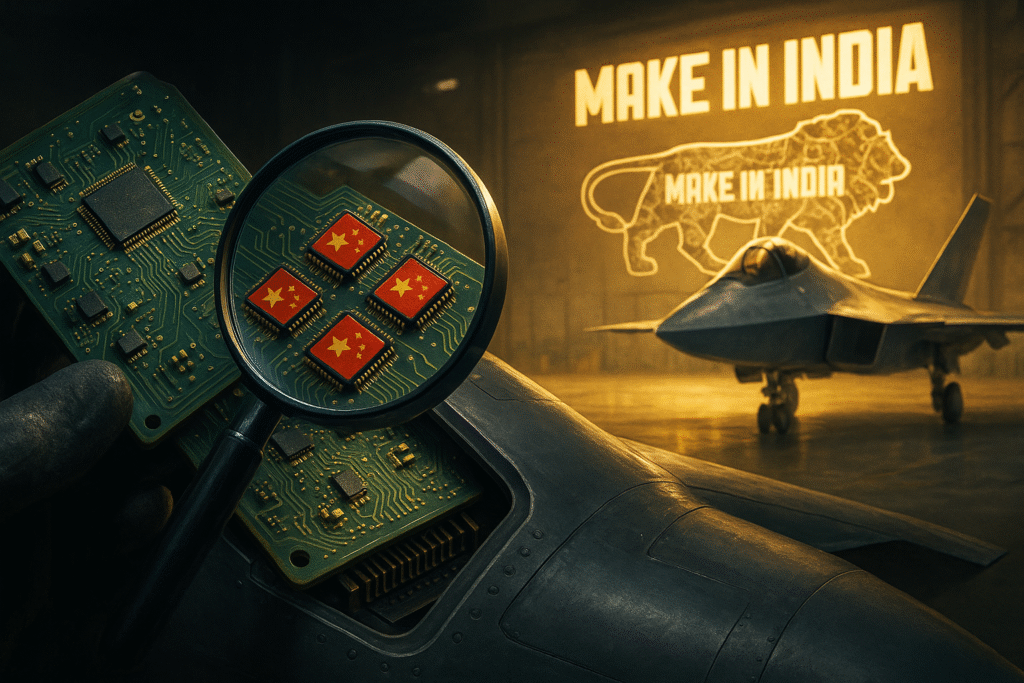
    Security Concerns: Critics highlight that a significant portion of Su-57 electronics, avionics components, and chips are sourced from China. Former Air Force officer Ajay Ahlawat warns: “Imagine being in a shooting war with your equipment vendor.”

    Dependency Risks: Veterans like former Air Chief Marshal RKS Bhadauria argue that India must break free from foreign dependency to achieve true air power. They view the AMCA program as a fundamental test of India’s ability to build what it needs without external help.

    Strategic Patience: Proponents of self-reliance argue against “panic buys,” emphasizing that India’s answer lies in stronger air defenses and strategic measures to counter threats while indigenous capabilities mature.

    • The Economic Reality Check

    The financial implications of this decision extend beyond mere procurement costs. A small batch of 18-24 twin-seat Su-57s could serve as a strategic interim solution, providing advanced capabilities while longer-term programs mature.

    The Russian proposal includes full technology transfer and co-production collaboration, potentially creating thousands of jobs and building indigenous manufacturing capabilities. This industrial participation could significantly offset the initial investment through export opportunities and domestic value creation.

    However, critics question whether resources should be diverted from the AMCA program, potentially delaying India’s path to complete self-reliance in fighter aircraft development.

    The Verdict: A Decision That Will Define Decades

    India faces a choice between pragmatic interim solutions and idealistic long-term goals. The India Su-57 Deal offers immediate capability enhancement with significant industrial benefits, but it conflicts with the powerful drive for complete self-reliance.

    The next few months will reveal which path India chooses. This decision will shape our air power capabilities for decades while setting precedents for future defense procurement strategies.

    The stakes couldn’t be higher. Get it right, and India emerges as a regional air power with advanced indigenous capabilities. Get it wrong, and we risk prolonged dependency or dangerous capability gaps.

    • What This Means for India’s Future

    Regardless of the final decision, this debate highlights India’s evolving defense priorities. The push for indigenous capabilities is gaining momentum, but immediate security needs cannot be ignored.

    The AMCA program represents more than aircraft development – it’s a test of India’s technological ambitions and industrial capabilities. Success would position India among elite nations capable of developing advanced military aircraft independently. You can follow its progress on the official DRDO AMCA page.

    However, the timeline realities mean that interim solutions may be necessary to maintain strategic balance in the region. The India Su-57 Deal, particularly the two-seat variant, offers unique advantages that align with India’s operational requirements and industrial goals.


    Disclaimer: This analysis is for informational purposes only and should not be construed as a recommendation for any defense procurement decisions. Readers should consult qualified defense experts and official sources for specific policy guidance.

  • The Capgemini WNS Acquisition: 7 Ultimate Reasons It’s an AI Masterstroke

    The Capgemini WNS Acquisition: 7 Ultimate Reasons It’s an AI Masterstroke


    The Capgemini WNS acquisition marks a seismic shift in the corporate world. Announced on July 7, 2025, the French consulting giant’s blockbuster $3.3 billion takeover of WNS is a defining moment. This all-cash deal represents one of the largest consolidations in the IT-BPM (Information Technology and Business Process Management) sector. But is this a strategic masterpiece designed for the future, or a massive, high-stakes gamble?

    The Deal That’s Making Headlines

    Capgemini is acquiring U.S.-listed WNS for $76.50 per share, representing a hefty premium that underscores its commitment:

    • 28% above WNS’s 90-day average share price
    • 27% premium over the last 30 days
    • 17% premium to its July 3, 2025 closing price

    With both companies’ boards unanimously approving the transaction, the deal is expected to close by year-end, solidifying the Capgemini WNS acquisition as a landmark event.

    Why This Acquisition Makes Perfect Sense

    1. AI-Powered Transformation Strategy

    Capgemini CEO Aiman Ezzat’s vision is crystal clear: capitalize on the “paradigm shift from traditional BPS to Agentic AI-powered Intelligent Operations.” (Agentic AI refers to AI systems that can proactively and autonomously perform complex tasks, make decisions, and interact with their environment to achieve specific goals, much like a human agent would. For more detail, see this Gartner analysis on autonomous systems). This isn’t just buzzword bingo – it’s a strategic pivot toward autonomous, intelligent business processes.

    2. Deep Domain Expertise Acquisition

    WNS brings specialized knowledge in high-value sectors, immediately strengthening Capgemini’s offerings in:

    • The complex insurance industry
    • Banking and financial services (BFS)
    • Resilient travel and hospitality sectors
    • Established relationships with blue-chip clients

    3. A Premium Client Portfolio

    The acquisition provides instant access to WNS’s impressive client roster, including industry leaders like United Airlines, Aviva, and Centrica. These aren’t just any clients – they’re established brands with substantial budgets for digital transformation.

    4. The Foundation for AI Excellence

    Business Process Services serve as the backbone for AI deployment. By acquiring WNS, Capgemini is essentially buying the critical infrastructure and process data needed to build and scale advanced AI solutions effectively.

    5. The Services-as-Software Evolution

    Large enterprises are shifting from traditional Business Process Outsourcing (BPO) models to technology-driven “Services-as-Software” solutions. This deal positions Capgemini perfectly to lead this transition.

    The Financial Projections Look Promising

    Capgemini’s financial outlook for the Capgemini WNS acquisition appears robust:

    • 4% EPS accretion expected in 2026 (before synergies)
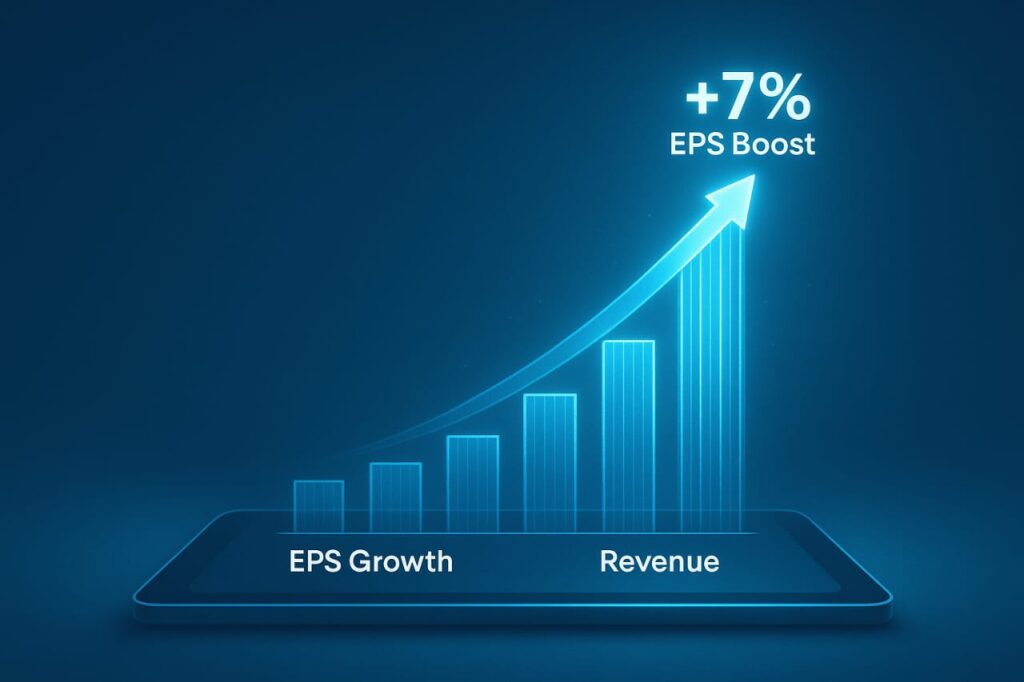
    • 7% EPS boost projected for 2027 (post-synergies)
    • Immediate revenue growth and operating margin improvements anticipated

    (EPS accretion is an increase in a company’s earnings per share resulting from an acquisition. It’s a key metric used to judge the financial merit of an M&A [Mergers and Acquisitions] deal. You can learn more about it on Investopedia).

    These aren’t modest projections – they represent significant value creation if executed properly.

    The Concerning Red Flags

    6. Integration Complexity

    Merging two large organizations is notoriously challenging. The $3.3 billion price tag doesn’t include WNS’s net financial debt, making the actual financial commitment even higher. The pressure is on to avoid common integration pitfalls.

    7. The Double-Edged Sword of AI Disruption

    While Capgemini is betting on AI, the technology’s rapid evolution could undermine existing business models. Investors often fear that AI might cannibalize traditional service offerings faster than new ones can be built. Achieving the projected 4-7% EPS accretion depends entirely on seamless integration and navigating this disruption successfully.

    The Broader Market Context

    This acquisition isn’t happening in isolation. Companies are in an “AI arms race,” scrambling to develop, acquire, or integrate AI capabilities. Capgemini’s bold move signals its intention to dominate the AI-powered business process services market. The shift from automation to autonomy represents a fundamental change, where organizations that have already digitized now seek to “reimagine their operating models by embedding AI at the core.”

    What This Means for Stakeholders

    • For Capgemini Shareholders: The deal could deliver substantial returns if integration succeeds. However, the cash outlay and execution risks are significant.
    • For WNS Investors: The 17-28% premium offers immediate value, locking in a substantial gain.
    • For the Industry: This consolidation could trigger more M&A activity as competitors race to gain scale and expertise in the AI-driven landscape.

    The Verdict: Calculated Risk, Not a Reckless Bet

    The Capgemini WNS acquisition appears to be a well-calculated strategic move. The rationale is sound, targeting market timing, strategic fit, and financial growth. However, success is not guaranteed. Flawless integration and rapid adaptation to technological change are paramount.

    Key Takeaways

    • This is one of the largest IT-BPM sector consolidations in recent history.
    • The deal positions Capgemini to lead in AI-powered business process services.
    • Financial projections suggest significant value creation potential.
    • Major risks include integration complexity and AI sector volatility.
    • The Capgemini WNS acquisition reflects a broader industry trend toward AI-driven operations.

    The real test will be execution. If Capgemini integrates WNS seamlessly while delivering on its AI vision, this will be remembered as a defining moment. If not, it becomes a cautionary tale about betting big on rapidly evolving technology.


    Disclaimer: This analysis is based on publicly available information and market trends. It should not be construed as investment advice or a recommendation to buy, sell, or hold any securities. Investors should conduct their own due diligence and consult with qualified financial advisors before making investment decisions. Past performance does not guarantee future results, and all investments carry inherent risks.

  • Jio-BlackRock vs Zerodha: The Battle That Will Shape India’s Trading Future

    Jio-BlackRock vs Zerodha: The Battle That Will Shape India’s Trading Future


    The arrival of Jio BlackRock broking is a seismic shift for the Indian stock market. The industry is buzzing with anticipation now that Jio BlackRock Broking Pvt Ltd has received approval from SEBI (Securities and Exchange Board of India, the country’s capital markets regulator) to start operations as a full-fledged brokerage firm. But what does this mean for existing players like Zerodha? And more importantly, what does it mean for you as an investor?

    The New Giant Enters the Ring

    On June 27, 2024, the new Jio BlackRock broking venture received the green light from SEBI to commence operations. This isn’t just another brokerage firm – it’s a powerhouse combination of Jio’s massive distribution network and BlackRock’s global investment expertise. The company is a wholly owned subsidiary of Jio BlackRock Investment Advisers, which itself is a 50:50 joint venture between Jio Financial Services: A Sleeping Giant Ready To Roar? and BlackRock Inc.

    The timing couldn’t be more strategic. India’s retail investment participation remains limited to roughly 10 crore people out of a population of over 1.4 billion. There’s enormous untapped potential waiting to be unlocked.

    Zerodha’s Surprising Reaction: “Great News”

    Here’s where it gets interesting. Nithin Kamath, CEO of Zerodha – one of India’s largest discount brokerages – welcomed this development with open arms. His reaction? “Great news for Indian markets.”

    But why would a competitor’s entry be good news? Kamath’s reasoning is refreshingly mature and market-focused.

    The Participation Problem

    Kamath identifies a critical issue plaguing Indian markets: lack of breadth in participation. Currently, Indian markets are “largely limited to the top 10 crore Indians.” This narrow participation base limits market depth and liquidity.

    The entry of Jio BlackRock broking could be the catalyst needed to expand this base significantly. As Kamath puts it, “If anyone can expand the markets beyond the top 10 crore Indians, it’s probably Jio with all its distribution might.”

    The Positive Side: Market Expansion Benefits Everyone

    Massive Distribution Network

    Jio’s reach is unparalleled in India. With hundreds of millions of customers across telecom, digital services, and now financial services, they have the infrastructure to reach investors who were previously outside the formal investment ecosystem. This strategy of tapping a vast user base mirrors the ambitions of other financial giants, like Bajaj Finserv, which is also targeting a massive customer base for its diverse offerings.

    Digital-First Approach

    The joint venture emphasizes “easily accessible and digital-first solutions,” which aligns perfectly with India’s digital transformation journey. This could make investing more accessible to tech-savvy younger generations.

    Increased Market Liquidity

    More participants mean more market liquidity (the ease with which an asset can be bought or sold without causing a significant change in its price). This benefits all market participants through better price discovery and reduced volatility. For more details, you can explore the concept on Investopedia.

    Competition Drives Innovation

    The entry of a well-funded player like Jio BlackRock broking will likely accelerate innovation across the industry, ultimately benefiting investors through better products and services.

    The Flip Side: Potential Challenges and Concerns

    Deep Pockets, Aggressive Pricing

    With BlackRock’s global resources and Jio’s financial backing, the new entrant could engage in aggressive pricing strategies that might pressure existing players’ margins.

    Market Concentration Risks

    While Jio’s distribution is an advantage, it also raises questions about market concentration. If one player becomes too dominant, it could reduce competition in the long run.

    Regulatory Scrutiny

    Large conglomerates entering multiple financial services sectors often attract regulatory attention, which could impact operational flexibility.

    Customer Acquisition Battles

    The industry might witness intense customer acquisition battles, potentially leading to unsustainable business practices. This isn’t happening in a vacuum; the financial services space is already heating up with other players also vying for investor attention, as seen with the buzz around the upcoming HDB Financial IPO.

    Kamath’s Contrarian View: Why He’s Not Worried

    It’s Not About Deep Pockets

    Kamath makes a fascinating observation: “This is not a business where having deep pockets means you have a large moat.” Unlike capital-intensive industries, broking success depends more on execution, customer service, and innovation than pure financial muscle.

    The Real Competition

    According to Kamath, the real threat comes from “first-generation founders who are running, breathing, and always thinking about broking.” These are the passionate entrepreneurs who understand the nuances of the business and can adapt quickly to changing market conditions.

    Zerodha’s Philosophy: Beyond Vanity Metrics

    Kamath used this opportunity to reinforce Zerodha’s core principles:

    • No pressure to trade: Unlike traditional brokerages that profit from high trading volumes, Zerodha avoids pushing customers to trade unnecessarily.
    • Ethical design: No dark patterns (user interface tricks designed to mislead users into doing things they didn’t intend to, like making unintended purchases or trades). You can read about the impact of dark patterns in finance on The Economic Times.
    • Long-term focus: “Most of our product decisions are based on the idea that customers do better in the long run when they trade less.”
    • Transparent pricing: No bait-and-switch tactics with pricing plans.

    The Unanswered Question: Do Indians Have Money to Invest?

    Kamath raises a crucial point often overlooked in expansion discussions: “As for how many new Indian investors have the money to invest in the market, I don’t know.”

    This highlights a fundamental challenge. While expanding access is important, the success of mass-market expansion depends on the financial capacity of new participants. India’s per capita income, savings rates, and disposable income patterns will ultimately determine how many new investors can meaningfully participate.

    What This Means for Investors

    More Choices, Better Services

    Increased competition from players like Jio BlackRock broking typically leads to better services, lower costs, and more innovative products for investors.

    Potential for Market Volatility

    As new participants enter the market, we might see increased volatility as these investors learn the ropes.

    Educational Opportunities

    New entrants often invest heavily in investor education, which could improve overall market literacy.

    Technology Innovation

    Competition will likely accelerate technological innovation in trading platforms and investment tools.

    The Road Ahead

    The Indian broking industry is entering an exciting phase. While Jio BlackRock broking brings formidable resources and distribution capabilities, established players like Zerodha have operational experience and customer loyalty.

    The ultimate winners will likely be those who can balance growth with customer-centricity, innovation with stability, and scale with personalization.

    As Kamath humbly admits, “But yeah, I might be wrong.” The market has a way of surprising even the most experienced observers.

    Key Takeaways for Investors

    • Expect Fierce Competition: This new era, kicked off by Jio BlackRock broking, could lead to better services and potentially lower costs for you.
    • Stay Focused on Fundamentals: Don’t get swayed by flashy marketing or promotional offers from any broker.
    • Leverage Educational Resources: Take advantage of the increased focus on investor education that will likely emerge.
    • Maintain a Long-term Perspective: Remember that successful investing is about long-term wealth creation, not frequent trading.

    The Indian investment landscape is set for transformation. Whether this expansion benefits individual investors will depend on how well these new players balance growth ambitions with genuine customer value creation.


    Disclaimer: This analysis is based on publicly available information and should not be considered as investment advice or a recommendation to buy or sell any securities. Past performance is not indicative of future results. Readers should consult with qualified financial advisors before making any investment decisions. The views expressed are for informational purposes only and do not constitute professional financial advice.

  • Apple’s India Gamble: Has Beijing Just Pulled a Lever on the iPhone 17?

    Apple’s India Gamble: Has Beijing Just Pulled a Lever on the iPhone 17?

    The Apple India vs China rivalry has reached a critical flashpoint, sending shockwaves through the world of global manufacturing. At its epicentre lies Apple’s audacious bet on India. For years, we’ve watched the Cupertino behemoth strategically pivot its mammoth supply chain away from its long-standing China base. India, with its vast potential and government backing, has been the undisputed star of this new script. The narrative has been one of relentless growth, staggering investments, and a win-win for both Apple and the ‘Make in India’ initiative.

    However, a recent, quiet development has introduced a dramatic new chapter. The recall of hundreds of key Chinese engineers from Foxconn’s Indian facilities has ignited a fierce debate: Is this a mere operational shuffle, or is it a calculated geopolitical power play designed to slam the brakes on Apple’s Indian odyssey?

    The Billion-Dollar Bet on India

    Let’s first set the stage. Apple’s diversification from China wasn’t a whim; it was a strategic imperative. A perfect storm of escalating US-China trade friction, stark supply chain vulnerabilities revealed during the pandemic, and a need to de-risk from geopolitical headwinds (the process of reducing reliance on a single country or region to avoid being impacted by its political or economic instability) forced a rethink of the “efficiency at all costs” model.

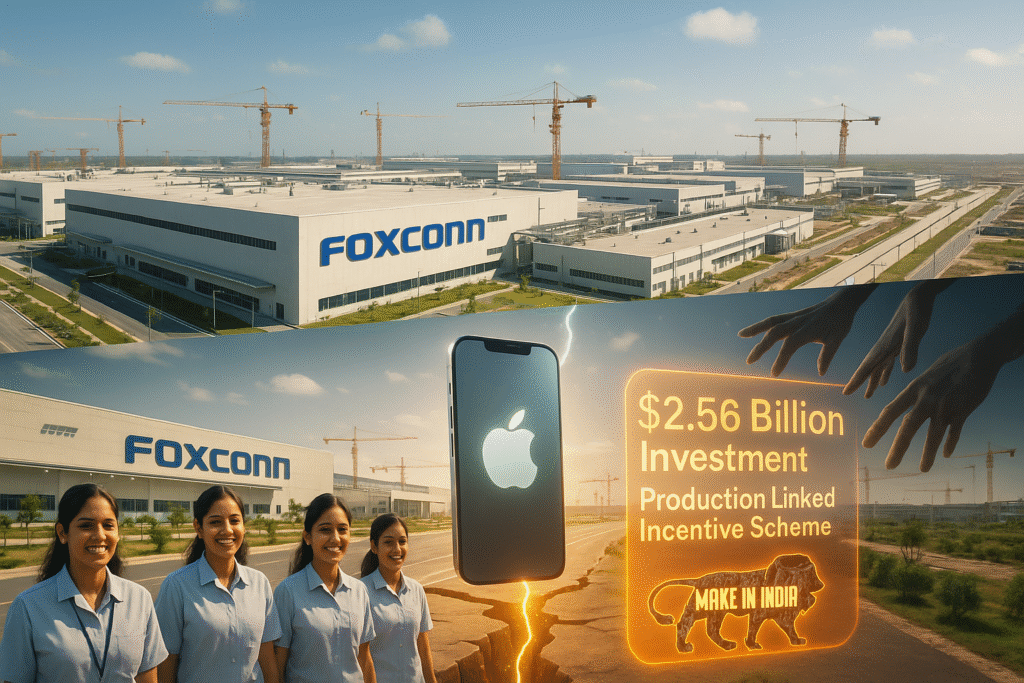
    • Why India? A Perfect Match: India rolled out the red carpet with its Production Linked Incentive (PLI) scheme (a form of government subsidy where companies receive financial rewards for increasing their domestic manufacturing and sales. Learn more about the PLI Scheme here). Foxconn, Apple’s primary partner, has been a major beneficiary. This, coupled with India’s burgeoning manufacturing ecosystem and its strategic location, made it the logical next frontier.
    • Putting Money Where the Mouth Is: The commitment has been anything but tentative. Foxconn is pouring a colossal $2.56 billion into its sprawling 300-acre Devanahalli plant near Bengaluru. This isn’t just an assembly plant; it’s a mini-city, complete with dormitories to house tens of thousands of its predominantly female workforce.
    • The Numbers Don’t Lie: The results have been nothing short of spectacular. In a remarkably short span, India has scaled up to account for an estimated 20% of global iPhone production. The export figures are even more telling. Between March and May of this year, a staggering $3.2 billion worth of iPhones were exported from India, with an astonishing 97% of these devices heading directly to the United States. This strategic rerouting allows Apple to deftly sidestep the steep US tariffs on Chinese-made goods, cementing India’s role as the primary manufacturing hub for the American market. This rise is not happening in isolation; it mirrors the growing global ambitions of India’s own corporate giants.

    A Sudden Exodus and a Cloud of Doubt

    Just as the India growth story seemed unassailable, the script took an unexpected turn, escalating the Apple India vs China dynamic. Over the past two months, Foxconn has quietly recalled more than 300 of its Chinese engineers and technicians from its Indian iPhone plants.

    • The Expertise Vacuum: These are not just any employees. They are the specialists in setting up complex production lines and overseeing the intricate technical processes required for a device as sophisticated as an iPhone. Their sudden departure creates a potential “talent vacuum” precisely when Apple is gearing up for the critical ramp-up of its next-generation iPhone 17. While the quality of the final product may not be immediately compromised, assembly line efficiency could take a significant hit.
    • Beijing’s Invisible Hand? The timing and nature of this recall have led to strong speculation that this is not an isolated corporate decision. Reports suggest that officials in Beijing have been verbally encouraging a curb on technology and talent transfers to manufacturing rivals like India. This move is being widely interpreted as a form of “subtle, strategic sabotage”—a calculated maneuver to slow down the de-risking of global supply chains, a battle we’re also seeing in the hidde conflict over China’s EV magnet monopoly. It’s a stark reminder of a point Apple’s CEO, Tim Cook, has often made about the “irreplaceable expertise” of the Chinese workforce. This is a clear move in the ongoing Apple India vs China chess match.

    “Negligible Impact” or Wishful Thinking?

    While the headlines paint a grim picture, some of the most seasoned industry watchers are urging caution. Prominent Apple analyst Ming-Chi Kuo (a highly respected analyst at TF International Securities known for his accurate predictions about Apple’s product pipeline and supply chain moves. Follow his analysis here) has publicly stated that the impact of this personnel shift will be “negligible.”

    • The Taiwanese Foundation: Kuo’s crucial point is that the foundational production capabilities at Foxconn’s India facilities were established by its Taiwanese employees, not the Chinese mainland staff. The number of Chinese engineers, while significant, was reportedly not as mission-critical as initially feared.
    • A Planned Transition: Furthermore, Kuo suggests that this was not a sudden, hostile withdrawal. The gradual return of Chinese employees was apparently in the works for some time, and Apple was fully aware of the plan. This paints a picture of a managed, phased transition rather than an abrupt crisis.
    • Follow the Money: Perhaps the most compelling counter-argument is Foxconn’s continued investment. The company has shown no signs of slowing its expansion, with massive capital infusions still flowing into its Indian subsidiary. Actions, in this case, may speak louder than the absence of a few hundred engineers.

    The iPhone 17 Litmus Test

    So, where does the Apple India vs China saga leave Apple’s great Indian adventure? The truth likely lies somewhere between a strategic catastrophe and a minor hiccup. We are witnessing a high-stakes balancing act where corporate strategy, national ambition, and global geopolitics are colliding in real-time.

    The path forward will be the ultimate litmus test. The upcoming production cycle for the iPhone 17 will reveal the true impact of this talent exodus. Will India’s burgeoning ecosystem and its Taiwanese technical leadership prove resilient enough to handle the ramp-up seamlessly? Or will the absence of seasoned Chinese expertise lead to the very delays and inefficiencies that Beijing may have hoped for?

    Apple’s journey in India is more than a business story; it is a defining case study in the Apple India vs China era and the future of global manufacturing. It demonstrates that while the will to diversify is strong, the process will be actively resisted by incumbent powers. The long-term success of the ‘Make in India’ dream, a theme we’ve explored even in the transformation of Bengal’s defence manufacture sector, will hinge not just on building factories, but on rapidly cultivating a deep well of homegrown talent capable of steering the ship independently. The world is watching.


    Disclaimer: This blog post is for informational purposes only and represents an analysis of current events. It should not be construed as financial advice or a recommendation to buy or sell any securities. Always conduct your own thorough research and consult with a qualified financial advisor before making any investment decisions.

  • Bajaj Finserv’s 250 Million Customer Target: 5 Ultimate Reasons It’s a Game-Changer

    Bajaj Finserv’s 250 Million Customer Target: 5 Ultimate Reasons It’s a Game-Changer

    .


    Bajaj Finserv’s 250 million customer target is sending shockwaves through India’s financial sector. This audacious move by the country’s leading NBFC (Non-Banking Financial Company) [a company that provides bank-like financial services but does not hold a banking license] has everyone asking: Is this a masterstroke set to redefine India’s financial landscape, or an overly ambitious dream that could backfire?

    The Big Announcement That Caught Everyone’s Attention

    Bajaj Finserv has just dropped a bombshell in the financial world by setting its sights on 250 million customers within the next four years. To put this in perspective, this isn’t just a minor adjustment to their business plan – it’s a massive leap from their previous target of 200 million customers by 2029, which they had set just months ago in December.

    The company’s confidence stems from impressive recent performance. They’ve managed to add 10 million new customers in just two years, bringing their current active customer base to 92 million across India. Chairman Sanjiv Bajaj’s reasoning is straightforward: they’re winning business faster than expected.

    Why This Target Might Actually Work

    • Strong Market Position and Diversification

    Bajaj Finserv isn’t putting all its eggs in one basket. As a holding company, they operate across multiple segments including life insurance, general insurance, retail financing, asset management, and broking services. Their largest subsidiary, Bajaj Finance, has carved out a strong niche in consumer lending and small business financing. This subsidiary has its own fascinating history, including a recent stock event that, while initially looking like a crash, was actually a cause for celebration among smart investors. This financial strength is crucial for achieving Bajaj Finserv’s 250 million customer target.

    • Massive Untapped Market Potential

    Here’s where things get interesting. Sanjiv Bajaj estimates that the company has only scratched the surface, penetrating merely 30-40% of its potential market. With India’s growing middle class and increasing financial inclusion, there’s enormous room for expansion. This growth is fueled by India’s demographic dividend [the economic growth potential that can result from shifts in a population’s age structure, mainly when the share of the working-age population is larger than the non-working-age share].

    • Impressive Financial Performance

    The numbers speak for themselves. Bajaj Finserv’s profit jumped to $1.1 billion in the 12 months ending March, up from $900 million the previous year. This places them in the top tier of India’s financial giants, a space where even established players like LIC are posting record-breaking profits and rewarding shareholders. This solid financial foundation gives them the muscle to fund aggressive expansion plans needed to reach such a high customer number.

    • Strategic Acquisitions and Technology Integration

    The company is making smart moves, including its March agreement to acquire Allianz’s stake in two insurance joint ventures for approximately 2.6 billion euros. What’s remarkable is that this acquisition will be funded internally, showcasing their strong cash reserves.

    Additionally, they’re embracing artificial intelligence with chatbots for loan processing and customer engagement, positioning themselves at the forefront of fintech innovation.

    The Challenges That Could Derail This Ambitious Plan

    • Economic Growth Dependency

    Here’s the biggest red flag: The success of Bajaj Finserv’s 250 million customer target is intrinsically tied to India maintaining an 8% economic growth rate. If the Indian economy fails to sustain this pace, consumer spending could decline, directly impacting the company’s lending business.

    • State-Level Policy Implementation Risks

    While the central government has ambitious economic plans, the real challenge lies in execution at the state level. Sanjiv Bajaj himself has expressed concerns about whether “politics doesn’t get the better of economics” at the state level. Poor policy implementation could significantly limit expansion opportunities.

    • Credit Quality Concerns

    Despite recent improvements, Bajaj Finance’s net loss ratio [a metric that indicates the percentage of a company’s loans that are not being repaid after accounting for recoveries] reached about 0.7% over the last four to five years, indicating some stress in their loan book. While the company expects normalization within a couple of quarters, this remains an area requiring constant vigilance.
    To understand credit ratios better, you can read this detailed guide from Investopedia.

    • Market Saturation Risks

    With 92 million customers already on board, the question arises: How easy will it be to acquire the next 158 million customers? The low-hanging fruit may already be picked, making future acquisitions more expensive and challenging. This will intensify competition in the already hot NBFC sector, where upcoming IPOs from players like HDB Financial are creating significant buzz among investors.

    The Verdict: Calculated Risk or Reckless Ambition?

    Bajaj Finserv’s 250 million customer target is undoubtedly ambitious, but it’s not entirely unrealistic given India’s increasing financial awareness. The company has the financial strength, market position, and strategic vision to pursue this goal.

    However, success will largely depend on external factors beyond the company’s control – primarily India’s economic growth and effective policy implementation. The company’s ability to maintain credit quality while rapidly scaling operations will also be crucial.

    For investors and market watchers, Bajaj Finserv’s journey over the next four years will serve as a fascinating case study. Whether this bold vision materializes or proves overly optimistic will likely define not just the company’s future, but potentially influence how other financial services companies approach expansion in India.

    The stakes are high, the potential rewards are enormous, but so are the risks. Only time will tell if Bajaj Finserv’s 250 million customer target becomes India’s financial success story or a cautionary tale about overreach in uncertain times.


    Disclaimer: This analysis is based on publicly available information and is intended for informational purposes only. It should not be considered as financial advice or a recommendation to buy, sell, or hold any securities. Investors should conduct their own research and consult with qualified financial advisors before making any investment decisions. Past performance does not guarantee future results.