Category: News Article

  • HDB Financial IPO: Why Smart Money is Buzzing About This ‘Half-Price’ Mega NBFC Listing

    HDB Financial IPO: Why Smart Money is Buzzing About This ‘Half-Price’ Mega NBFC Listing

    The Indian stock market rarely witnesses such intriguing pricing dynamics, but HDB Financial Services has managed to create exactly that buzz. As India’s largest NBFC IPO prepares to hit the market, investors are scratching their heads over one compelling question: Is a stock trading at nearly half its grey market peak actually a steal, or is there more to this story? The HDB Financial IPO has certainly captured the attention of many.

    The Great Pricing Puzzle That Has Everyone Talking

    Here’s what’s got the market talking: HDB Financial’s IPO is priced between ₹700-740 per share, while the same stock once commanded a staggering ₹1,550 in the grey market. That’s more than double the current IPO price! Even today, grey market prices hover around ₹740, perfectly aligned with the IPO’s upper band.

    This isn’t your typical IPO pricing story. When a company’s shares trade at such premium levels in unofficial markets, IPOs usually try to capture some of that enthusiasm with higher pricing. But HDB Financial and its bankers have taken a completely different approach.

    With all eyes on the HDB Financial IPO, analysts are keenly assessing its potential for long-term growth.

    The strategy becomes clearer when you listen to the decision-makers. Sonia Dasgupta from JM Financial, one of the lead bankers, revealed the thinking: “If we left more on the table, it would give more confidence to investors.” It’s a calculated move to ensure strong institutional participation and positive listing performance.

    Why Grey Market Prices Don’t Tell the Complete Story

    Before you assume this is an obvious bargain, consider what market veterans are saying about grey market valuations. Industry experts are quick to point out that these prices don’t emerge from serious institutional investor presentations or fundamental analysis.

    As one senior banker noted, grey market trading happens in an unregulated space where the same set of investors often trade among themselves. While not illegal, it’s primarily a sentiment indicator rather than a true price discovery mechanism. The “retail euphoria” in unlisted spaces doesn’t always align with actual business fundamentals.

    This perspective suggests that the ₹1,550 peak might have been more about speculation than genuine valuation. The current IPO pricing, arrived at through extensive roadshows with global and domestic institutional investors, likely reflects a more grounded assessment of the company’s worth.

    The Mega Numbers Behind This Ambitious Offering
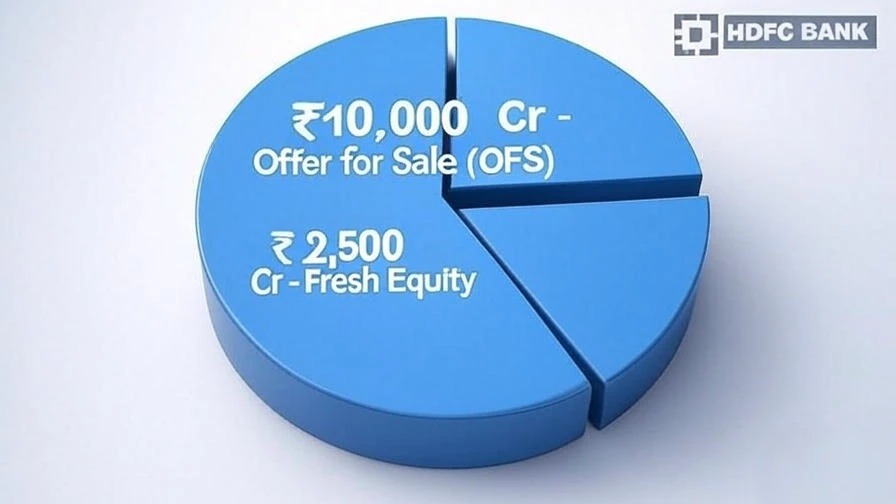
    Let’s talk scale. HDB Financial is raising ₹12,500 crore, making it the largest NBFC IPO in Indian history. The structure is particularly interesting: ₹2,500 crore comes from fresh equity, while a massive ₹10,000 crore represents an Offer for Sale (OFS) by existing shareholders.

    HDFC Bank, the parent company, is the biggest beneficiary here. By selling 135.13 million shares, it stands to pocket approximately ₹9,373 crore in profits. Currently holding 94.6% of HDB Financial, the bank will still retain a commanding 75% stake post-listing, ensuring continued control while optimizing its capital structure.

    For HDFC Bank, this move serves multiple strategic purposes: regulatory compliance, capital optimization, and unlocking value from a subsidiary that’s been performing exceptionally well.

    The Independent Growth Engine Story

    What makes HDB Financial particularly attractive is its operational independence despite being an HDFC Bank subsidiary. The company has built its customer base organically, without relying on parent bank referrals. Its 1,770 branches across 1,100 cities operate independently, with separate risk management systems and technology infrastructure.

    The numbers speak volumes about the company’s growth trajectory. Customer base has exploded from 9 million in FY22 to 19 million by FY25. The loan book is highly granular, with top 20 customers accounting for less than 0.4% of total Assets Under Management (AUM). This diversification reduces concentration risk significantly.

    Having been profitable since its second year of operations, HDB Financial has demonstrated consistent performance over 17 years. The company focuses exclusively on retail lending, targeting underbanked and underserved segments that complement rather than compete with HDFC Bank’s traditional customer base.

    The Positive Investment Case

    Several factors make HDB Financial an attractive proposition. The company operates in India’s growing consumer finance space, benefiting from increasing financial inclusion and rising consumer aspirations. Its proven track record, strong parentage, and independent operational model create a compelling combination.

    The significant discount to grey market peaks could indeed represent value for investors who believe in the company’s long-term prospects. With fresh capital of ₹2,500 crore, management expects to fund growth for 3-4 years while remaining ready for expansion opportunities.

    The reserved quota for existing HDFC Bank shareholders (up to ₹1,250 crore worth of shares) shows confidence in cross-selling the investment story to stakeholders who already understand the parent company’s quality.

    The Potential Concerns to Consider

    However, investors should also weigh the risks carefully. The NBFC sector faces regulatory scrutiny, and any tightening of lending norms could impact growth prospects. Rising interest rates could pressure margins, while economic slowdowns typically hurt consumer lending businesses first.

    The massive OFS component means most of the IPO proceeds go to existing shareholders rather than company growth. While ₹2,500 crore in fresh capital is substantial, it’s only 20% of the total raise.

    Competition in the consumer finance space is intensifying, with new-age fintech companies and established players fighting for market share. HDB Financial will need to continuously innovate to maintain its competitive edge.

    Key Dates and Investment Details

    For those considering participation, mark these dates: anchor book opens June 24, public issue runs June 25-27, with listing scheduled for July 2. Retail investors can apply for 20-260 shares, with current grey market estimates suggesting a potential 10% listing premium.

    The Bottom Line: Opportunity or Hype?

    HDB Financial’s IPO presents a rare combination of scale, established business model, and attractive pricing. The discount to grey market levels could represent genuine value, especially for long-term investors betting on India’s consumer finance growth story.

    However, remember that IPO investing always carries risks. The company’s future performance will depend on execution, market conditions, and regulatory environment. While the pricing appears attractive, investors should evaluate their risk tolerance and investment horizon carefully.

    Disclaimer: This analysis is for informational purposes only and should not be considered as investment advice. The author does not recommend buying, selling, or holding any securities mentioned. Investors should conduct thorough research and consult qualified financial advisors before making investment decisions. Past performance does not guarantee future results, and all investments carry inherent risks including potential loss of principal.


  • This Stock Jumped 1600% in One Day – But Here’s Why You Should Be Careful

    This Stock Jumped 1600% in One Day – But Here’s Why You Should Be Careful

    The Indian stock market has witnessed many dramatic comebacks, but few can match the sheer spectacle of Indosolar’s relisting on June 19, 2025. Trading under the new symbol “WAAREEINDO,” the stock opened at ₹165 and closed at ₹173 – a mind-boggling 1600% jump from its previous indicated price. But before you get swept away by the euphoria, let’s dig deeper into what really happened here.

    The Fall and Rise of a Solar Giant

    Indosolar wasn’t always a penny stock story. Back in 2005, when solar energy was still finding its feet in India, this company was among the pioneers. With a manufacturing capacity of over 450 MW and operations spanning 30 countries, it looked destined for greatness.

    But the solar industry is notoriously volatile, and Indosolar learned this the hard way. By 2018, mounting debts forced the company into insolvency proceedings. The stock, which hadn’t seen double digits since 2015, was trading at a mere ₹3.21 before being suspended in June 2022.

    For investors who held the stock through this dark period, it was a nightmare. Many had written off their investments completely.

    Enter Waaree Energies: The White Knight

    The turnaround story begins with Waaree Energies, one of India’s largest solar panel manufacturers. In April 2022, the National Company Law Tribunal approved a resolution plan that handed over Indosolar to Waaree.

    But here’s where things get interesting – and concerning for original shareholders. The resolution plan involved a massive capital restructuring. Old promoters lost their entire stake, and public shareholders saw their holdings reduced in a 1:100 ratio. Simply put, if you owned 100 shares worth ₹825 before the restructuring, you’d end up with just one share worth approximately ₹173 after relisting – still representing a significant loss.

    Waaree now owns 96.15% of Indosolar, with retail shareholders holding just 3.29% through 58,600 individual investors.

    The Numbers Tell a Story

    The financial turnaround has been remarkable. In Q4 FY25, Indosolar reported revenue of ₹1,925.8 million, nearly double the ₹1,040 million from the same quarter last year. More impressively, net profit jumped to ₹400 million – four times higher than the previous year.

    For the full year FY25, the company posted revenue of ₹3,247.4 million and net profit of ₹550 million, compared to a loss of ₹154.4 million in FY24. These are solid fundamentals backing the stock’s dramatic price movement.

    Why Waaree Made This Move

    For Waaree Energies, acquiring Indosolar isn’t just about rescuing a distressed company. It’s strategic chess. The acquisition allows Waaree to expand its solar cell manufacturing capacity from 4 GW to 5.4 GW, strengthening its position in India’s booming renewable energy sector.

    With the government’s ambitious renewable energy targets and global demand for clean energy solutions growing rapidly, this move positions Waaree to capture a larger share of the market. The company plans to restart manufacturing at Indosolar’s facility within six months, following infrastructure upgrades.

    The Reality Check: What Investors Must Know

    While the 1600% gain makes for exciting headlines, the reality is more nuanced. Here’s what you need to understand:

    The Good:

    • Strong financial turnaround with consistent profitability
    • Backing by Waaree Energies, a established player in solar energy
    • Growing renewable energy market provides long-term growth potential
    • Improved operational efficiency and strategic focus

    The Concerning:

    • Original shareholders still faced massive losses despite the dramatic relisting price
    • The stock trades in the ‘T’ group with 5% daily price limits, restricting liquidity
    • High promoter holding (96.15%) means limited free float
    • True price discovery will take time given the trading restrictions

    Market Dynamics and Valuation Concerns

    At the current price, Indosolar’s market capitalization stands at ₹721 crore. While the fundamentals have improved dramatically, investors need to question whether this valuation is sustainable.

    The renewable energy sector is experiencing a global boom, with countries worldwide committing to net-zero emissions. India’s solar capacity has grown exponentially, and companies like Indosolar, backed by strong promoters, are well-positioned to benefit.

    However, the sector is also highly competitive, with Chinese manufacturers dominating global supply chains and pricing pressures remaining intense.

    What This Means for Retail Investors

    If you’re considering investing in Indosolar, here are key factors to consider:

    Technical Aspects:

    • The stock will trade with 5% upper circuit limits for the first ten sessions
    • No intraday trading allowed
    • Limited liquidity due to high promoter holding

    Fundamental Analysis:

    • Revenue growth trajectory looks promising
    • Profit margins have improved significantly
    • Industry tailwinds are favorable
    • Management backing provides operational confidence

    Risk Factors:

    • Sector volatility remains high
    • Global supply chain disruptions can impact operations
    • Competition from established players
    • Regulatory changes in renewable energy policies

    The Bigger Picture

    Indosolar’s story reflects the broader transformation happening in India’s renewable energy sector. Companies that seemed destined for failure are finding new life through strategic partnerships and industry consolidation.

    The government’s push for energy independence and carbon neutrality is creating opportunities for well-positioned players. However, not every comeback story ends successfully, and investors must differentiate between genuine turnarounds and temporary market euphoria.

    Final Thoughts

    Indosolar’s relisting is undoubtedly one of the most dramatic stock market events of 2025. The combination of strong fundamentals, strategic backing, and favorable industry conditions makes it an interesting case study.

    However, the massive percentage gains shouldn’t overshadow the fact that many original investors still faced significant losses. The true test will be whether the company can sustain its growth momentum and justify current valuations.

    For potential investors, this is a story worth following, but with careful attention to risk management and realistic expectations.


    Disclaimer: This analysis is for informational purposes only and should not be construed as investment advice. Stock investments are subject to market risks, and past performance doesn’t guarantee future results. Readers are advised to consult qualified financial advisors and conduct their own research before making investment decisions. The author and publication do not recommend buying or selling any securities mentioned in this article.

  • Market Mayhem or Strategic Shuffle? Big Money Moves Rock Dalal Street Despite Consolidation Blues

    Market Mayhem or Strategic Shuffle? Big Money Moves Rock Dalal Street Despite Consolidation Blues

    The Indian stock market painted a mixed picture today, with benchmark indices slipping into consolidation mode while boardrooms across corporate India buzzed with deal-making activity. While the Nifty dipped and broader sentiment remained cautious, several marquee companies made headlines with blockbuster acquisitions, massive contract wins, and strategic stake sales that could reshape entire sectors.

    The Big Money Movers

    Vedanta’s ₹7,500 Crore Hindustan Zinc Gambit

    The day’s biggest talking point was Vedanta’s decision to offload shares worth up to ₹7,500 crore in Hindustan Zinc through block deals. The promoter is divesting approximately 1.6% stake (66.7 million shares) at a floor price of ₹452.5 – a steep 7% discount to the previous day’s close.

    The Positive Angle: This move provides Vedanta with significant capital for debt reduction and future investments. For institutional investors, it’s an opportunity to acquire quality mining assets at attractive valuations.

    The Flip Side: Large block deals often create selling pressure in the short term. The steep discount suggests aggressive pricing to ensure deal completion, which could weigh on Hindustan Zinc’s stock performance.

    Consolidation Wave Hits Key Sectors

    Delhivery’s Smart Logistics Play

    The Competition Commission of India’s approval for Delhivery’s ₹1,407 crore acquisition of Ecom Express marks a significant consolidation in the logistics space. This deal positions Delhivery to strengthen its last-mile delivery network significantly.

    Mahindra’s Commercial Vehicle Ambitions

    Mahindra & Mahindra received the green light for its ₹555 crore acquisition of nearly 59% stake in SML Isuzu. The deal includes purchasing 43.96% from Sumitomo Corporation and 15% from Isuzu Motors, followed by an open offer for an additional 26% from public shareholders.

    What This Means: Both deals signal healthy consolidation in their respective sectors. For Delhivery, it’s about scale and network density. For Mahindra, it’s strategic positioning in the commercial vehicle market where growth opportunities remain robust.

    The Caution Flag: Acquisitions always carry integration risks. Success will depend on how effectively these companies can merge operations, cultures, and customer bases.

    Contract Wins That Could Be Game-Changers

    Polycab’s BharatNet Bonanza

    Perhaps the most significant contract win was Polycab India securing a whopping ₹6,447.54 crore BSNL contract for the BharatNet project. The company will handle design, supply, construction, and maintenance of middle-mile networks across Karnataka, Goa, and Puducherry.

    The Upside: Government contracts provide excellent revenue visibility and steady cash flows. This project alone could significantly boost Polycab’s order book and provide stable income for years.

    The Downside: Government projects often face delays and payment issues. Execution risks remain high, and any project delays could impact profitability margins.

    Financial Sector Reshuffling

    UGRO Capital’s Strategic Bet

    The NBFC announced its acquisition of Profectus Capital for ₹1,400 crore in an all-cash deal. This move strengthens UGRO’s position in secured MSME lending – a segment seeing robust growth despite economic uncertainties.

    Meanwhile, Punjab National Bank completed the sale of its 20.9% stake in Mis India SME asset reconstruction company for ₹34 crore, representing a strategic exit from non-core assets.

    Market Headwinds and Tailwinds

    Oil Price Volatility Creates Winners and Losers

    Rising crude oil prices due to Middle East tensions have created a clear divide. Upstream companies like ONGC, Oil India, IOCL, BPCL, and HPCL stand to benefit from higher realization prices.

    The Flip Side: Sectors heavily dependent on crude derivatives – paints, tires, and aviation – face margin pressure as input costs rise. This creates a mixed bag for different parts of the market.

    Operational Updates Worth Watching

    GMR Airports’ Mixed Performance

    GMR Airports reported handling over one crore passengers in May 2025, showing modest 0.8% year-on-year growth. While international traffic grew 2.9%, domestic traffic managed just 0.1% growth due to operational disruptions.

    Electrosteel’s Maintenance Break

    Electrosteel Castings announced a 10-12 day shutdown of its production facility starting June 18 for maintenance work. While necessary for long-term efficiency, this could impact near-term production numbers.

    Technology and Innovation Moves

    Exchange Mechanism Changes

    BSE and NSE announced a swap in their F&O expiry days – NSE derivatives will now expire on Tuesdays while BSE shifts to Thursdays. This technical change could impact trading strategies and volumes.

    Ola Electric’s Zero Commission Model

    Ola Electric announced a nationwide rollout of its 0% commission model, allowing drivers to retain 100% of fare earnings. While driver-friendly, the long-term impact on Ola’s business model remains questionable.

    The Bigger Picture

    Despite individual company success stories, the broader market sentiment remains subdued with benchmark indices ending nearly half a percent lower. GIFT NIFTY futures also point to a cautious opening ahead.

    This consolidation phase isn’t necessarily negative. Markets often need time to digest gains and reset valuations. The individual company developments suggest that while market sentiment may be cautious, corporate India continues to pursue growth aggressively through strategic moves.

    What Investors Should Watch

    1. Deal Execution: How well companies integrate their acquisitions will determine long-term success
    2. Project Implementation: Large government contracts like Polycab’s BharatNet deal need smooth execution
    3. Oil Price Trajectory: Continued crude volatility will impact various sectors differently
    4. Market Consolidation: Whether this phase leads to a broader correction or sets up for the next rally

    The current market environment presents both opportunities and challenges. While consolidation creates near-term uncertainty, the strategic moves by various companies suggest confidence in long-term growth prospects.


  • Amul vs Nandini: The Metro Milk Battle That’s Dividing Bengaluru Commuters

    Amul vs Nandini: The Metro Milk Battle That’s Dividing Bengaluru Commuters

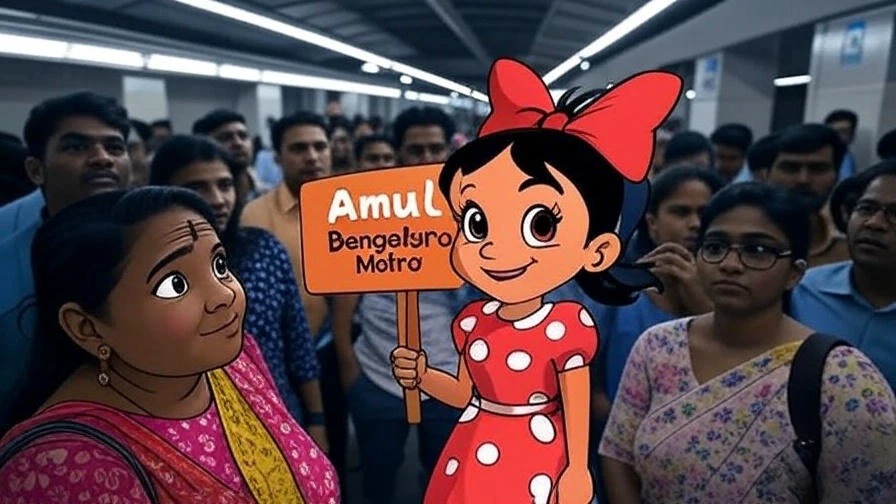
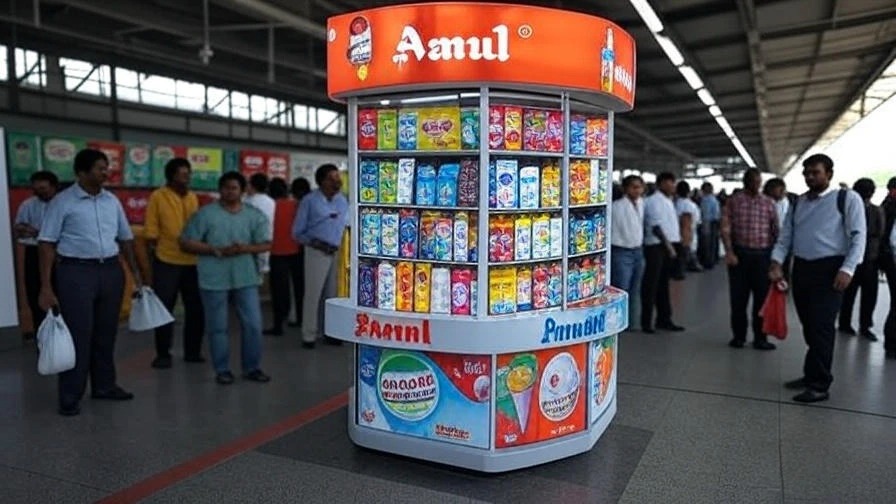
    The bustling corridors of Bengaluru Metro are about to witness something unprecedented – a dairy war that goes far beyond simple product placement. When Amul announced its plans to set up kiosks at ten key metro stations, it didn’t just signal a business expansion; it reignited one of India’s most passionate regional rivalries in the dairy sector.

    The Strategic Chess Move

    The Bengaluru Metro Rail Corporation Limited (BMRCL) made a calculated decision when it welcomed Amul kiosks to high-traffic stations including Indiranagar, Baiyappanahalli, Trinity, Majestic, and Jayanagar. From a pure business lens, this move makes perfect sense. With metro fares recently hiked by up to 71%, alternative revenue streams have become critical for BMRCL’s financial sustainability.

    These Amul outlets will offer everything from fresh milk and ice cream to instant food items and organic products – essentially creating a comprehensive convenience store experience for daily commuters. For time-pressed Bengaluru residents juggling work and long commutes, having access to quality dairy products and snacks right at metro stations represents genuine value addition.

    The revenue diversification strategy is textbook smart. Urban transit systems worldwide rely heavily on non-fare revenue through retail partnerships, advertising, and commercial spaces. BMRCL is simply following this proven playbook, partnering with a brand that commands national recognition and trust.

    The Regional Pride Factor

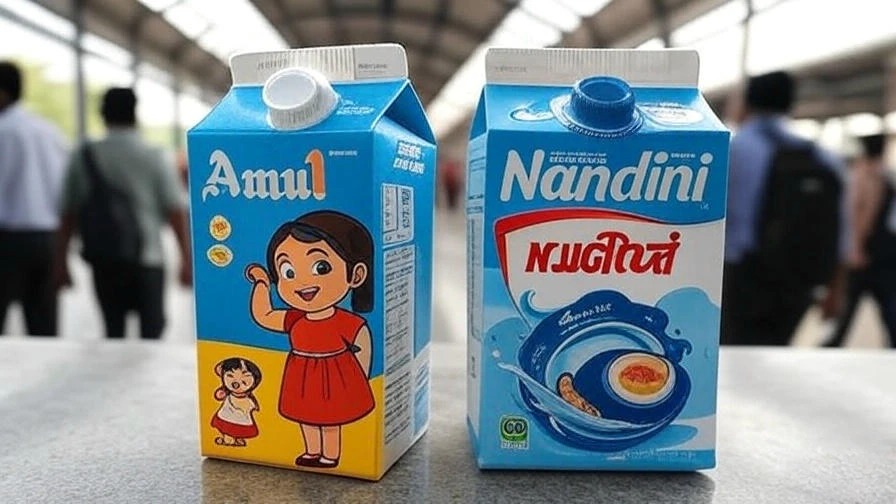
    However, beneath this business rationale lies a complex web of regional sensitivities. Karnataka Milk Federation’s ‘Nandini’ brand isn’t just another dairy cooperative – it’s deeply woven into the state’s agricultural identity and farmer livelihoods. As India’s second-largest dairy cooperative, KMF has built its reputation on supporting local farmers while maintaining product quality that rivals any national brand.

    The political dimensions became evident during the 2023 Karnataka Assembly elections when Congress leaders accused the then BJP government of favoring Gujarat-based Amul over homegrown Nandini. This wasn’t merely election rhetoric; it reflected genuine concerns about economic priorities and regional representation.

    KMF’s strong objection to Amul’s entry stems from a fundamental question: why invite external competition when Karnataka’s dairy sector is not just self-sufficient but actually exports surplus production to other states? Their argument carries weight – the state doesn’t have a supply gap that requires filling from outside.

    The Unwritten Rules Are Changing

    Historically, Amul and KMF maintained an informal understanding, avoiding direct liquid milk sales in each other’s home territories while competing freely in neutral markets like Mumbai, Chennai, and Nagpur. This gentleman’s agreement appears to be dissolving, with both cooperatives now adopting more aggressive expansion strategies.

    KMF hasn’t remained passive, actively expanding into Delhi, Uttar Pradesh, and Rajasthan – effectively taking the competition to Amul’s broader operational territories. This escalation suggests we’re witnessing a fundamental shift in how India’s largest dairy cooperatives view territorial boundaries.

    Consumer Impact: The Silver Lining

    From a consumer perspective, increased competition typically delivers better outcomes. Bengaluru commuters will benefit from:

    Enhanced Convenience: Access to quality dairy products during daily commutes eliminates the need for separate shopping trips.

    Product Variety: Amul’s extensive range, from traditional dairy to innovative snacks, provides more choices.

    Potential Price Benefits: Competition could lead to better pricing and promotional offers, though this remains to be seen.

    Quality Assurance: Both Amul and Nandini maintain high quality standards, ensuring consumers get reliable products regardless of their choice.

    The Challenges Ahead

    The expansion isn’t without risks and concerns:

    Local Farmer Impact: If Amul gains significant market share, it could potentially affect KMF’s procurement from local farmers, impacting rural livelihoods.

    Market Saturation: Karnataka’s dairy market might not have room for significant additional capacity without affecting existing players.

    Supply Chain Complexity: Managing fresh dairy product distribution through metro kiosks presents logistical challenges that could affect product quality or pricing.

    Political Sensitivity: The expansion could remain a politically charged issue, potentially affecting business operations during election cycles.

    Industry Implications

    This development signals broader changes in India’s cooperative sector. Traditional regional boundaries are becoming less relevant as cooperatives seek growth in an increasingly competitive market. The success or failure of Amul’s metro strategy could influence similar expansions by other state cooperatives across India.

    The dairy sector’s evolution reflects India’s broader economic transformation – from regionally protected markets to more open, competitive environments. While this creates opportunities for innovation and efficiency, it also raises questions about balancing growth with local economic interests.

    The Road Ahead

    As Bengaluru commuters soon encounter Amul kiosks alongside existing Nandini options, the market will ultimately decide the winner. Success will depend on factors beyond brand loyalty – pricing, convenience, product freshness, and service quality will all play crucial roles.

    This metro milk war represents more than just corporate competition; it’s a case study in how regional identity, economic development, and market forces intersect in modern India. The outcome will be closely watched by policymakers, industry analysts, and other state cooperatives considering similar expansions.

    For now, Bengaluru’s metro stations are set to become an interesting battleground where commuters will vote with their wallets, potentially reshaping Karnataka’s dairy landscape in the process.


    Disclaimer: This analysis is based on publicly available information and market developments. It does not constitute investment advice or recommendations to purchase any products or services. The views expressed are for informational purposes only. Readers should conduct independent research and consult appropriate advisors before making any business or investment decisions. The dairy cooperative sector involves various economic and political factors that can impact market dynamics unpredictably.

  • Oil Soars 7% as Israel-Iran Conflict Rocks Global Markets: What Investors Need to Know

    Oil Soars 7% as Israel-Iran Conflict Rocks Global Markets: What Investors Need to Know

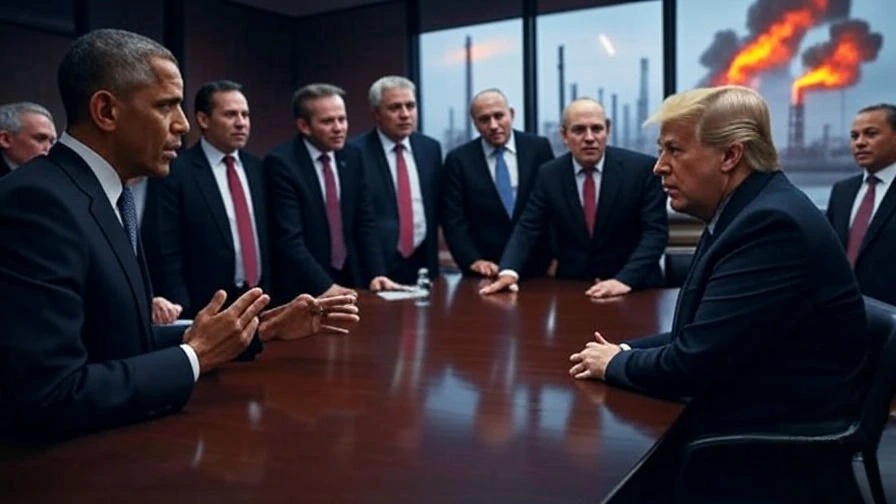
    The fifth day of escalating tensions between Israel and Iran has sent shockwaves through global financial markets, with oil prices surging nearly 7% and major stock indices tumbling across the board. As geopolitical uncertainty grips investors worldwide, the question on everyone’s mind is: how deep will this market turmoil go?

    The Market Carnage: Numbers Don’t Lie

    Tuesday’s trading session painted a grim picture for risk assets. The Dow Jones Industrial Average shed nearly 300 points, closing down 0.70% at 42,215.80. The broader S&P 500 wasn’t spared either, sliding 0.84% to 5,982.72, while the tech-heavy Nasdaq Composite dropped 0.91% to finish at 19,521.09.

    This wasn’t just a stock market story. Even cryptocurrencies, often touted as digital safe havens, couldn’t escape the sell-off. Bitcoin tumbled 3.8%, while Ether and Solana led the crypto decline, highlighting how interconnected global risk sentiment has become in today’s markets.

    Iran’s Energy Muscle: The Heart of Market Fears

    To understand why markets are reacting so violently, you need to grasp Iran’s heavyweight status in global energy markets. The Islamic Republic isn’t just another oil producer – it’s a energy superpower sitting on the world’s second-largest proven natural gas reserves and third-largest crude oil reserves.

    With approximately 157 billion barrels of proven crude oil reserves, Iran controls about a quarter of the Middle East’s oil wealth and 12% of global proven reserves. Despite years of crippling international sanctions, the country still pumps out 3.3 million barrels daily and exports roughly 2 million barrels, making it a crucial cog in the global energy machine.

    Israel’s strategic strikes have specifically targeted Iran’s energy infrastructure, hitting the massive South Pars gasfield (the world’s largest), the Fajr Jam gas plant, multiple oil depots, and refineries including the Shahr Rey facility. These aren’t random targets – they’re calculated moves aimed at Iran’s economic lifeline.

    The Strait of Hormuz: A $100 Trillion Chokepoint

    Here’s where things get really interesting from a market perspective. The Strait of Hormuz, that narrow waterway between Iran and Oman, handles roughly 20% of global oil consumption and more than 20% of seaborne oil traffic. It’s essentially the world’s most important energy highway.

    Investment strategists are now war-gaming scenarios where Iran might attempt to close this vital chokepoint – a move that would send oil prices into the stratosphere. Interestingly, some analysts believe any such disruption would be “fleeting,” with one suggesting investors should be ready to “short oil and go long stocks” if this nuclear option is deployed.

    Already, we’re seeing shipping costs explode. Rates for hauling refined oil from the Persian Gulf to Japan have nearly doubled to over $55,000 per day, signaling intense demand for immediate energy shipments from the region.

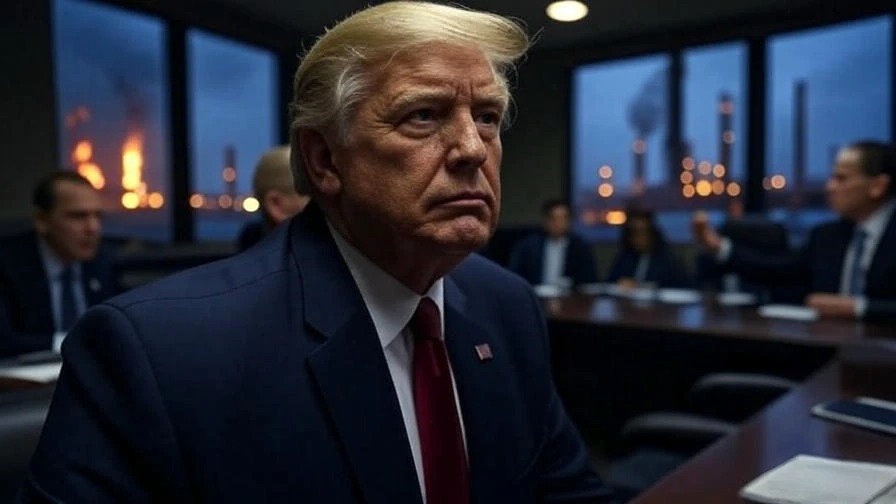
    Trump’s High-Stakes Poker Game

    The geopolitical temperature is rising fast. President Trump’s rhetoric has been particularly aggressive, demanding Iran’s “UNCONDITIONAL SURRENDER!” and claiming knowledge of the Supreme Leader’s hiding place. His cryptic comment about wanting “a real end, not a ceasefire” to Iran’s nuclear ambitions, combined with his early departure from the G7 summit for something “much bigger,” has markets on edge about potential U.S. military involvement.

    The conflict has even spilled into cyberspace, with pro-Israel hackers claiming responsibility for attacks on Iran’s Bank Sepah, a institution previously sanctioned for alleged links to Iran’s nuclear program.

    Beyond the Headlines: Other Market Movers

    While Middle East tensions dominate the narrative, several other developments are quietly shaping market dynamics:

    The Challenging Side: The Congressional Budget Office dropped a bombshell analysis showing the Republican tax bill could add $2.8 trillion to U.S. deficits over the next decade. That’s not exactly music to bond investors’ ears.

    Amazon’s CEO Andy Jassy made waves by suggesting AI will likely shrink the company’s corporate workforce in coming years – a reality check on the AI revolution’s impact on employment. Meanwhile, fashion retailer Groupe Dynamite raised prices 9% over the past year with more increases planned, highlighting persistent inflationary pressures.

    The Opportunity Side: Not everything is doom and gloom. Brazil’s offshore oil auction saw major players like Petrobras, Exxon, and Chevron secure exploration rights in the promising Equatorial Margin region. Canadian renewable energy firm Boralex announced plans to invest up to $5 billion to more than double production capacity by 2030.

    Tech innovation continues its march forward, with Adobe launching its standalone Firefly AI app and Meta planning to expand AI-powered smart glasses under luxury brands like Oakley and Prada. The FDA’s new priority voucher program promises to slash drug review times to just 1-2 months for companies aligned with U.S. interests – a potential game-changer for pharmaceutical innovation.

    What This Means for Your Portfolio

    From a market strategy standpoint, we’re witnessing a classic “risk-off” environment where investors flee to safety. Energy stocks are obviously benefiting from higher oil prices, while defensive sectors like utilities and consumer staples are seeing relative outperformance.

    However, seasoned market watchers know that geopolitical crises, while dramatic, often create more short-term noise than long-term damage to markets. The key is distinguishing between temporary disruptions and fundamental shifts in market dynamics.

    The Positive Case: Energy security concerns could accelerate investment in domestic production and renewable alternatives. Defense contractors might see increased demand. Market volatility often creates attractive entry points for patient investors.

    The Risk Scenario: Prolonged conflict could trigger supply chain disruptions, sustained inflation, and deeper recession fears. Currency markets could become increasingly volatile, impacting international investments.

    The Bottom Line

    Markets hate uncertainty, and the Israel-Iran conflict delivers that in spades. While oil’s 7% surge grabs headlines, the real story is how interconnected our global economy has become. A conflict in the Middle East doesn’t just affect energy prices – it ripples through currencies, commodities, and risk sentiment worldwide.

    For investors, this environment demands careful navigation. Diversification remains crucial, and having some exposure to energy and defensive sectors makes sense. However, panic selling rarely pays off in the long run.

    Disclaimer: This analysis is for informational purposes only and should not be considered investment advice. Markets can be highly volatile during geopolitical events, and past performance doesn’t guarantee future results. Always consult with a qualified financial advisor and conduct your own research before making investment decisions. The author holds no positions in the securities mentioned and receives no compensation from any companies discussed.

  • IGL Stock Surges 4% as Delhi May Ease EV Policy – Should Investors Buy the Dip?

    IGL Stock Surges 4% as Delhi May Ease EV Policy – Should Investors Buy the Dip?

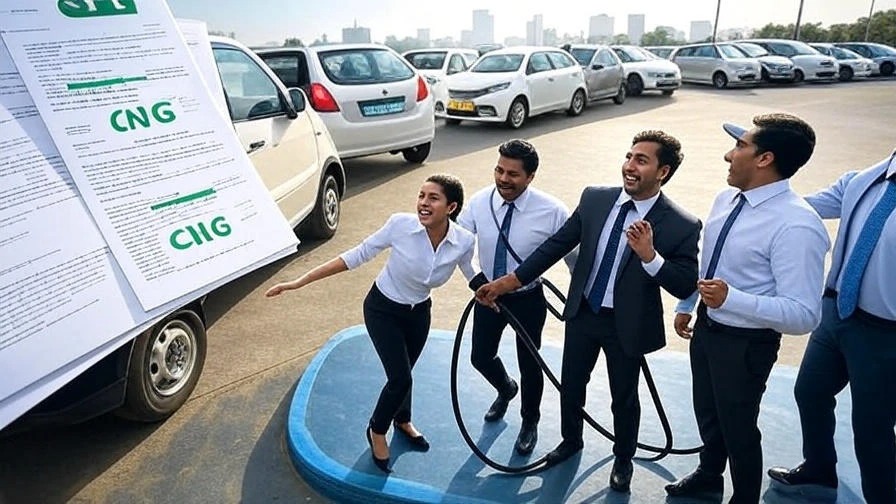
    The gas distribution sector got a surprising boost on Monday as Indraprastha Gas Limited (IGL) shares jumped nearly 5% following reports that Delhi government might soften its aggressive electric vehicle transition timeline. But is this rally sustainable, or just a temporary relief for a company caught in the crosshairs of India’s green energy push?

    The Policy U-Turn That Sparked Market Excitement

    IGL shares witnessed their best single-day performance in recent weeks, surging up to 4.84% to hit an intraday high of ₹208.50 on the NSE. The catalyst? Reports from Hindustan Times suggesting Delhi government is reconsidering its ambitious 2023 Electric Vehicle policy that mandated complete electrification across various transport segments by 2030.

    This isn’t just any policy tweak – it’s potentially a game-changer for IGL’s business model. The original Aam Aadmi Party policy was incredibly aggressive, targeting everything from cabs to three-wheelers for mandatory electric conversion. Market participants, including global brokerage Citi, had called these targets “very hard to achieve realistically.”


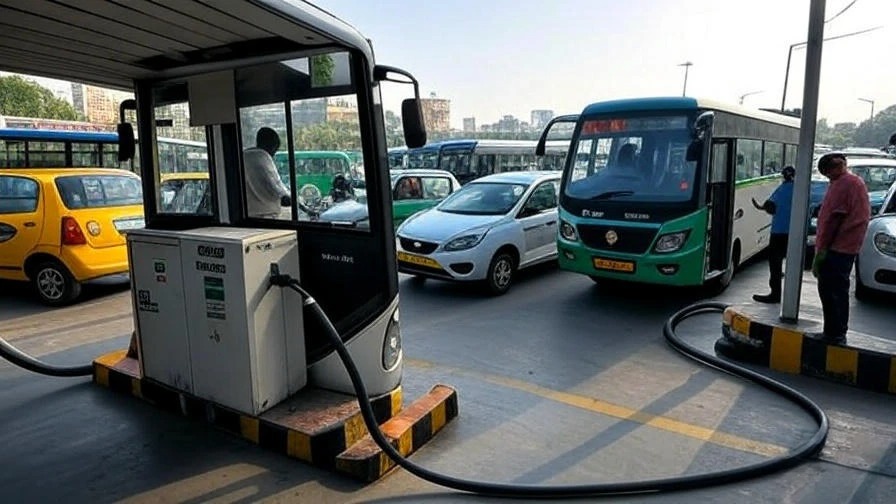
    The proposed revisions reportedly include relaxing EV transition deadlines for cab aggregators and delivery services – two segments that form the backbone of IGL’s CNG volumes. Additionally, the government is considering regulations on surge pricing for ride-hailing platforms, which could indirectly support traditional fuel demand.

    Why This Matters for IGL’s Bottom Line

    To understand the market’s euphoric response, you need to look at IGL’s revenue structure. The cab segment alone contributes 12-15% of IGL’s total CNG volumes – that’s a significant chunk of business that was under threat from forced electrification. Add the three-wheeler segment (contributing 3-4% of volumes), and you’re talking about preserving nearly one-fifth of the company’s gas sales.

    The math is simple: if these segments continue using CNG instead of switching to electric, IGL maintains its volume growth trajectory. Given that the company has already lost ground in the bus segment – where DTC electrification reduced IGL’s share from 7-8% to just 2% – preserving the cab and three-wheeler markets becomes crucial.

    Citi analysts seem convinced, maintaining their “buy” rating with a ₹250 price target. Their logic centers on the belief that pragmatic policy-making will provide substantial support to IGL’s business fundamentals.

    The Financial Reality Check

    However, euphoria aside, IGL’s recent financial performance presents a mixed picture that investors shouldn’t ignore. The March 2025 quarter showed a 1.9% decline in net profit to ₹3,451 million, even as net sales grew 9.5% to ₹43,408 million. This divergence suggests margin pressure – a concerning trend for any business.

    The full-year FY24 numbers tell a more complex story. While net profit jumped 21% to ₹19,834 million, revenue actually declined 1% to ₹125,435 million. This indicates IGL managed to improve profitability through cost optimization rather than top-line growth – a strategy with limited long-term sustainability.

    From a valuation perspective, IGL trades at a P/E ratio of 21.7x, which isn’t exactly cheap for a utility-like business facing structural headwinds from energy transition.

    The Broader Market Context

    IGL’s struggles aren’t happening in isolation. The stock has declined 12.3% over the past year, significantly underperforming the BSE Sensex’s 6.7% gain. The broader BSE Oil & Gas index fell 6.5% during the same period, with gas distribution peers like Adani Total Gas (-30.6%) and Gujarat Gas (-22.2%) facing even steeper declines.

    This sector-wide weakness reflects investor concerns about the long-term viability of fossil fuel-dependent businesses in an increasingly electrified world. Monday’s rally might provide temporary relief, but it doesn’t change the fundamental narrative.

    The Bull Case: Policy Pragmatism Prevails

    Optimists argue that Delhi’s potential policy revision signals a more realistic approach to India’s EV transition. Complete electrification by 2030 was always ambitious – the infrastructure, technology costs, and consumer adoption rates simply weren’t aligned with such aggressive timelines.

    If the policy revision materializes, IGL could see:

    • Sustained CNG demand from cab and delivery segments
    • More predictable volume growth trajectory
    • Better capacity utilization of existing infrastructure
    • Time to diversify into new business areas

    The company has already demonstrated resilience by adapting to bus segment electrification. A more gradual transition timeline would allow IGL to execute similar adaptations across other segments without facing a cliff-edge scenario.

    The Bear Case: Delaying the Inevitable

    Skeptics, however, view this as merely postponing the inevitable. India’s commitment to net-zero emissions by 2070 and various state-level EV incentives suggest the electrification trend is irreversible, regardless of timeline adjustments.

    Key concerns include:

    • Policy uncertainty creating volatile business conditions
    • Continued margin pressure from competitive dynamics
    • Limited growth options in a structurally declining market
    • Potential for future policy reversals as EV infrastructure improves

    Moreover, relying on policy delays rather than fundamental business transformation raises questions about management’s long-term strategy.

    The Verdict: Cautious Optimism with Clear Risks

    Monday’s rally reflects genuine relief among investors who had written off gas distribution companies. The potential policy revision does provide breathing room and could support near-term financial performance.

    However, this shouldn’t be mistaken for a long-term solution. IGL remains a business in transition, caught between today’s reality and tomorrow’s inevitability. The policy revision, if it happens, buys time – but what the company does with that time will determine its future.

    For investors, IGL might offer tactical opportunities during policy-driven rallies, but the long-term investment thesis remains challenging. The stock could see further upside if policy revisions are formally announced, but any investment should account for the sector’s structural headwinds.

    Disclaimer: This analysis is for informational purposes only and should not be considered as investment advice or a recommendation to buy or sell IGL shares. The gas distribution sector faces significant long-term challenges from energy transition policies. Investors should conduct thorough research and consult qualified financial advisors before making investment decisions. Past performance does not guarantee future results.

  • Bajaj Finance Stock ‘Crashes’ 90% – But Here’s Why Smart Investors Are Actually Celebrating

    Bajaj Finance Stock ‘Crashes’ 90% – But Here’s Why Smart Investors Are Actually Celebrating

    The dramatic headline number that fooled many, but rewarded the informed

    June 16, 2025, began with what appeared to be a financial disaster for Bajaj Finance shareholders. News feeds lit up with alarming headlines about a near 90% crash in the stock price. Social media buzzed with panic, and many retail investors likely felt their hearts skip a beat seeing the numbers.

    But seasoned market participants knew better. What looked like a catastrophic meltdown was actually a well-orchestrated corporate action that benefited existing shareholders handsomely.

    The Numbers That Shocked Everyone

    When Bajaj Finance opened at ₹956 per share on June 16, compared to its previous close of ₹9,331, the mathematics were startling. A drop of nearly 90% would typically signal severe trouble – perhaps a major scandal, regulatory action, or catastrophic business failure.

    Instead, this was simply the stock trading “ex-bonus” and “ex-stock split” for the first time. Anyone who bought shares on June 16 wouldn’t receive the corporate benefits that had already been allocated to shareholders who held the stock on June 13, 2025.

    Breaking Down the Corporate Magic

    Bajaj Finance had announced two powerful shareholder-friendly actions:

    The 4:1 Bonus Issue: For every share you owned, the company gifted you four additional shares absolutely free. Think of it as the company saying “thank you” to loyal shareholders by increasing their stake without any additional investment.

    The 1:2 Stock Split: Each existing share was divided into two new shares, with the face value dropping from ₹2 to ₹1 per share. This wasn’t the company’s first rodeo – they had executed a similar 1:5 split back in 2016.

    Let’s walk through a real example. If you owned 100 shares before June 13:

    • The bonus issue would give you 400 additional shares (4 for every 1)
    • Your total would become 500 shares
    • The stock split would then double this to 1,000 shares

    Your 100 shares magically became 1,000 shares, though the per-share price adjusted proportionally to maintain the same total value.

    The Reality Check: Strong Performance Underneath

    Far from collapsing, Bajaj Finance actually performed well on June 16. After adjusting for the corporate actions, the stock traded relatively flat with a slight positive bias. On BSE, it closed 0.59% higher at ₹938.90, while NSE saw similar stable trading around ₹936-939 levels.

    The company’s fundamentals told an even better story. Recent Q4FY25 results showed robust health:

    • Net profit jumped 17% year-on-year to ₹4,480 crore, beating analyst estimates
    • Revenue from operations surged to ₹18,457 crore
    • Assets under management grew an impressive 26%
    • New loan bookings exploded by 36% compared to the previous year
    • Net interest income increased 22% to ₹9,807 crore

    These aren’t the numbers of a company in distress. They’re the metrics of a financial powerhouse operating from a position of strength.

    The Cherry on Top: Generous Dividends

    As if the bonus shares and stock split weren’t enough, Bajaj Finance also declared substantial dividends. Shareholders received ₹44 per share as final dividend plus ₹12 per share as special dividend, totaling ₹56 per share for FY25.

    For someone who held 100 shares originally, they would have received ₹5,600 in dividends alone, plus ended up with 1,000 shares post-adjustment.

    Market Context: A Day of Broader Optimism

    June 16 was generally positive for Indian markets. The Sensex gained 677.55 points (0.84%) to close at 81,796.15, while Nifty 50 advanced 227.90 points (0.92%) to 24,946.50. IT stocks led the rally, with all sectoral indices closing in green.

    This broader market strength provided a supportive backdrop for Bajaj Finance’s adjusted trading debut.

    The Flip Side: What Could Go Wrong

    While the corporate actions were shareholder-friendly, investors should consider potential downsides:

    Liquidity Dilution: With 10 times more shares in circulation, individual share movements might become more volatile in the short term as the market adjusts to the new supply.

    Perception Issues: New investors might be confused by the adjusted price levels, potentially creating temporary demand-supply imbalances.

    Execution Risk: The company now needs to maintain its growth trajectory with a much larger share base, which could pressure per-share metrics if growth slows.

    Market Dynamics: NBFC stocks face ongoing regulatory scrutiny and interest rate sensitivity that could impact future performance regardless of corporate actions.

    The Broader NBFC Landscape

    Bajaj Finance operates in India’s competitive NBFC space, where regulatory changes, credit costs, and economic cycles significantly impact performance. While current numbers look strong, the sector faces headwinds from potential policy changes and economic uncertainty.

    The company’s aggressive growth strategy, while impressive, also carries inherent risks in terms of asset quality and regulatory compliance that investors should monitor closely.

    Key Takeaways for Investors

    This episode offers several crucial lessons:

    1. Headlines Can Mislead: Always understand the context behind dramatic price movements
    2. Corporate Actions Matter: Bonus issues and stock splits can create apparent volatility without real value changes
    3. Fundamentals Trump Noise: Strong business performance ultimately drives long-term returns
    4. Timing Is Everything: Record dates and ex-dates significantly impact who benefits from corporate actions

    The Bottom Line

    Bajaj Finance’s apparent 90% crash was actually a testament to the company’s confidence in its business and commitment to shareholders. The combination of bonus shares, stock splits, and dividends represented a significant wealth transfer to existing shareholders.

    However, this doesn’t automatically make it a buy. The NBFC sector remains cyclical and regulatory-sensitive. Future performance will depend on the company’s ability to maintain its growth momentum while managing credit risks effectively.


    Disclaimer: This analysis is for informational purposes only and should not be considered as investment advice. Stock market investments carry inherent risks and can result in significant losses. The NBFC sector faces regulatory and economic risks that could impact performance. Readers should conduct their own research and consult qualified financial advisors before making investment decisions. Past performance does not guarantee future results. The author may or may not hold positions in the mentioned securities.

  • India’s EV Dreams vs China’s Magnet Monopoly: The Hidden Battle That Could Make or Break Our Electric Future

    India’s EV Dreams vs China’s Magnet Monopoly: The Hidden Battle That Could Make or Break Our Electric Future

    India’s electric vehicle revolution is racing ahead at breakneck speed, but there’s a tiny component – barely the size of your thumb – that could slam the brakes on this ambitious journey. The rare earth magnet crisis unfolding between India and China isn’t just another trade dispute; it’s a wake-up call that exposes the fragile foundations of our EV dreams.

    The Invisible Giant Inside Every EV

    Walk into any showroom today, and you’ll see gleaming electric cars promising a cleaner future. What you won’t see is the small but mighty rare earth magnet buried deep inside each vehicle’s motor. These magnets are the unsung heroes of the EV revolution, powering the Permanent Magnet Synchronous Motors that give electric vehicles their superior torque and efficiency.

    Think of it this way: without these magnets, an EV is like a smartphone without a battery – technically impressive but functionally useless. They’re not just in EVs either. Your car’s power steering, windshield wipers, and dozens of other components depend on these magnetic powerhouses.

    China’s Masterstroke: When Supply Chains Become Weapons

    In April 2025, Beijing dropped a bombshell that sent shockwaves through India’s automotive corridors. New export restrictions on rare earth elements and finished magnets turned what was once a smooth supply chain into a bureaucratic nightmare. The message was clear: China controls the tap, and it can turn it off whenever it wants.

    The numbers tell a sobering story. India imported 540 tonnes of magnets last year, with over 80% coming from China. By May 2025, around 30 Indian companies had filed import requests, but Chinese authorities hadn’t approved a single one. The approval process, once routine, now stretches to 45 days or more.

    Major players like Bosch India, TVS Motor, and Sona Comstar found themselves in an unexpected queue, waiting for Beijing’s nod. It’s like watching a high-stakes game of musical chairs, except the music might never start again.

    The Domino Effect: When Small Parts Create Big Problems

    Here’s where the story gets interesting – and concerning. A single rare earth magnet costs less than ₹1,000, but its absence can shut down an entire production line worth crores. It’s the automotive equivalent of a missing screw grounding a ₹500-crore aircraft.

    The timing couldn’t be worse. India’s automakers are preparing to launch over a dozen new EV models, mostly built on platforms that require these Chinese magnets. With current inventory levels lasting only 4-6 weeks, production disruptions could hit as early as July 2025.

    The ripple effects extend far beyond EVs. Traditional petrol and diesel vehicles also use these magnets for power steering and other systems. Even the booming two-wheeler segment, which forms the backbone of India’s mobility ecosystem, faces potential disruption.

    The Silver Lining: Crisis as Catalyst

    Every crisis carries within it the seeds of opportunity, and India’s rare earth predicament is no exception. The government’s response has been swift and multi-pronged, suggesting that this shock might be exactly what the country needed to break free from Chinese dependence.

    Commerce Minister Piyush Goyal’s characterization of this as a “wake-up call” wasn’t just political rhetoric – it was a strategic acknowledgment that India’s manufacturing ambitions require supply chain sovereignty.

    The immediate response focuses on building strategic inventories and diversifying suppliers. Countries like Vietnam, Brazil, and Australia are emerging as potential alternatives, though scaling up will take time.

    More importantly, India is accelerating domestic capabilities under the Production Linked Incentive scheme. The country’s vast rare earth reserves, particularly in Odisha and Andhra Pradesh, could become the foundation for indigenous magnet manufacturing.

    The Long Game: From Dependence to Independence

    The most promising development might be India’s diplomatic outreach to Central Asian nations. Kazakhstan, Kyrgyzstan, and Uzbekistan possess significant rare earth deposits, and the recent India-Central Asia Dialogue signals a new chapter in resource cooperation.

    This isn’t just about magnets – it’s about building a resilient ecosystem for critical minerals that power the modern economy. From solar panels to wind turbines, smartphones to satellites, rare earths are the building blocks of technological progress.

    India’s automotive sector, which contributes over 7% to GDP and employs millions, cannot afford to remain hostage to a single supplier. The current crisis, painful as it is, might force the structural changes needed for long-term competitiveness.

    The Reality Check: Challenges Ahead

    Let’s be honest about the obstacles. China’s 90% dominance in rare earth processing didn’t happen overnight – it’s the result of decades of strategic investment and environmental trade-offs. Building comparable capabilities will require significant capital, technology transfer, and time.

    The environmental challenges are real too. Rare earth processing is messy business, involving chemicals and processes that require careful handling. India will need to balance its manufacturing ambitions with environmental responsibilities.

    There’s also the question of cost. Chinese magnets are cheap partly because of scale and government subsidies. Indian alternatives might initially cost more, potentially impacting EV affordability – a crucial factor in mass adoption.

    The Road Ahead: Cautious Optimism

    The rare earth magnet crisis reveals both the vulnerabilities and the opportunities in India’s EV journey. While the immediate challenges are real, the long-term response could transform India from a dependent importer to a self-reliant manufacturer.

    The key lies in viewing this not as a temporary trade dispute but as a permanent shift toward supply chain diversification. Companies that invest in alternative sources and domestic capabilities today will be better positioned tomorrow.

    For investors and industry watchers, this crisis underscores the importance of supply chain resilience in evaluating automotive companies. The winners will be those who adapt quickly to the new reality.

    India’s EV revolution might face a temporary speed bump, but it’s far from derailed. Sometimes, the best paths forward are discovered when the familiar routes are blocked.


    Disclaimer: This analysis is for informational purposes only and should not be considered as investment advice. The automotive sector faces multiple challenges and opportunities that can impact company performance. Readers are advised to conduct their own research and consult with financial advisors before making any investment decisions. Past performance does not guarantee future results.

  • Can India Strike Oil Gold? The Andaman Sea Discovery That Could Change Everything

    Can India Strike Oil Gold? The Andaman Sea Discovery That Could Change Everything

    India’s energy story has always been one of dependence – importing over 85% of its crude oil needs while being the world’s third-largest oil importer. But what if that narrative is about to flip dramatically? Recent statements from Union Petroleum Minister Hardeep Singh Puri suggest India might be sitting on a massive oil jackpot in the Andaman Sea, comparable to Guyana’s game-changing discoveries.

    The Big Claim: A Guyana-Sized Oil Bonanza

    Minister Puri’s bold declaration that it’s “only a matter of time” before India discovers major oil reserves in the Andaman Sea isn’t just political rhetoric. The comparison to Guyana is particularly striking – this South American nation transformed from an oil nobody to holding 11.6 billion barrels in reserves, ranking 17th globally in just a few years.

    For context, such a discovery could potentially propel India’s economy from its current $3.7 trillion to an ambitious $20 trillion. That’s not just growth – that’s economic transformation of historic proportions.

    India’s Energy Infrastructure Revolution

    The foundation for this optimistic outlook has been building for over a decade. India’s oil and gas infrastructure has undergone massive expansion:

    Refining Capacity Boom: The country now operates 23 modern refineries with a combined capacity of 257 million metric tonnes annually, producing everything from petrol to LPG.

    Clean Fuel Expansion: Piped Natural Gas now reaches 733 districts nationwide, while CNG stations have expanded to 8,000 retail outlets across the country.

    Biofuel Push: E20 ethanol-blended petrol is now available everywhere, and 106 Compressed Bio-Gas plants are operational with 625 tonnes daily capacity.

    Strategic Reserves: India has built petroleum reserves in Pudur, Visakhapatnam, and Mangalore, creating crucial buffers against global price volatility.

    The Andaman Sea: Why It Matters

    The Andaman Sea represents uncharted territory with enormous potential. Unlike India’s existing oil regions in Assam, Gujarat, Rajasthan, and Mumbai High, the Andaman basin could add an entirely new dimension to domestic production.

    Companies like Oil India and ONGC are actively drilling and surveying in the Andaman and Nicobar Islands. The seriousness of these operations reflects genuine belief in the region’s potential, not just wishful thinking.

    Policy Changes Driving Exploration

    India’s exploration surge isn’t accidental. Post-2016 policy shifts moved from production-sharing to revenue-sharing models, making exploration more attractive for companies. The Open Acreage Licensing Policy (OALP) has opened 1 million square kilometers of India’s 3.5 million square kilometers of sedimentary basins for exploration.

    The current OALP round is the largest ever, offering 250,000 square kilometers for bidding. This represents a fundamental shift from previous “no-go areas” to accessible exploration zones.

    ONGC’s performance reflects this renewed vigor – the company drilled 541 wells in FY24, its highest in 34 years, with capital expenditure reaching ₹37,000 crore.

    The Reality Check: Why Caution is Needed

    While optimism runs high, several sobering realities demand attention:

    Exploration is Expensive and Risky: Guyana’s success story involved drilling 43-44 wells at $100 million each before striking oil on the 41st well. That’s over $4 billion in investment before seeing results.

    No Guarantees: The phrase “only a matter of time” still indicates prediction, not certainty. Exploration is ongoing, but success remains unconfirmed.

    Historical Challenges: Indian oil marketing companies have sometimes prioritized short-term profits over long-term exploration investments, though this attitude appears to be changing.

    Continued Import Dependence: Even with discoveries, India will likely remain import-dependent for years. Global price volatility and geopolitical tensions, as seen during recent Israel-Iran conflicts, continue to pose risks.

    Regulatory Framework Getting Clearer

    The new Oil Fields Regulation and Development Amendment Bill aims to provide much-needed regulatory clarity. This legislation replaces the 1948 vintage law with modern frameworks, addressing private sector concerns about bureaucratic hurdles and unclear processes.

    The bill streamlines No Objection Certificate procedures and was developed through extensive industry consultation, fostering a more collaborative environment between government and private players.

    What This Means for Investors and India

    A major oil discovery in the Andaman Sea would fundamentally alter India’s economic landscape. Reduced import bills, improved current account deficit, and enhanced energy security would benefit the entire economy.

    For oil sector stocks, such discoveries typically create significant value, though the timeline remains uncertain. Companies actively involved in Andaman exploration like ONGC and Oil India could see substantial benefits if discoveries materialize.

    However, investors should remember that oil exploration is inherently speculative. Many promising regions yield nothing despite significant investment and geological optimism.

    The Broader Energy Transition Context

    India’s oil exploration push occurs alongside its commitment to renewable energy and net-zero targets. This isn’t contradictory – oil discoveries would provide economic breathing room while India transitions to cleaner energy sources over decades.

    Domestic oil production could fund renewable energy investments while reducing import dependence during the transition period.

    Looking Ahead

    India’s energy sector is entering a potentially transformative decade. The combination of ambitious exploration, policy reforms, increased investment, and clearer regulations creates conditions for success.

    Whether the Andaman Sea yields a “Guyana-sized” discovery remains uncertain, but India’s systematic approach to exploration provides genuine reason for cautious optimism.

    The stakes couldn’t be higher – energy independence would not only transform India’s economy but also provide strategic autonomy in an increasingly complex geopolitical environment.

    Disclaimer: This analysis is for informational purposes only and should not be considered investment advice. Oil exploration involves significant risks and uncertainties. Potential investors should conduct independent research and consult qualified financial advisors before making investment decisions. Past performance of oil exploration projects does not guarantee future results.

  • Bengal’s Defence Manufacturing Dream: Can 90 Lakh MSMEs Transform India’s Strategic Sector?

    Bengal’s Defence Manufacturing Dream: Can 90 Lakh MSMEs Transform India’s Strategic Sector?

    India’s defence manufacturing sector is witnessing unprecedented momentum, and West Bengal is positioning itself as a major player in this transformation. With an impressive 90 lakh Micro, Small, and Medium Enterprises (MSMEs) forming the backbone of its industrial ecosystem, the state is making bold moves to capture a significant slice of the defence manufacturing pie. But can this eastern powerhouse truly deliver on its ambitious promises?

    The Numbers Game: Bengal’s Industrial Muscle

    The statistics are staggering. West Bengal boasts one of India’s largest MSME bases with 90 lakh units, representing a vast reservoir of entrepreneurial talent and manufacturing capability. To put this in perspective, this single state houses more MSMEs than many countries have businesses altogether. The recent Defence MSME Manufacturing Forum in Kolkata, organized by the Indian Chamber of Commerce, highlighted this untapped potential.

    Rajesh Pandey, Principal Secretary for MSME and Textiles, emphasized how this massive network could serve as a flexible supply chain for defence components, sub-assemblies, and specialized equipment. The timing couldn’t be better – the Ministry of Defence has explicitly stated its intention for MSMEs and startups to participate “in a big way” in the defence sector, creating a perfect storm of opportunity.

    Beyond Numbers: Infrastructure and Commitment

    Bengal’s advantages extend beyond mere statistics. The state already houses significant industrial infrastructure, including one of India’s largest leather parks – a sector that could contribute to various non-metallic defence components. A Rubber Park is under development, and several other industrial parks are operational, providing the necessary ecosystem for defence manufacturing.

    What sets Bengal apart is its government’s proactive approach. A high-powered committee meets every 15 days to monitor project progress, demonstrating serious commitment to facilitating investment. Pandey’s invitation for “across-the-table interactions” to understand investor requirements signals an adaptive, responsive approach to attracting defence manufacturing investment.

    The forum saw participation from senior officials of key defence entities including GRSE, Bharat Dynamics Ltd, Hindustan Aeronautics Ltd, and Titagarh Wagons. This industry presence underscores genuine interest and potential for meaningful collaboration.

    The Eastern Handicap: A Critical Challenge

    However, the path ahead isn’t without significant roadblocks. Former Indian Air Force chief Air Chief Marshal Arup Raha raised a crucial concern at the forum – the absence of a dedicated defence corridor in eastern India. While two such corridors have been approved in regions “which have plenty,” eastern and northeastern India have been “totally ignored” despite their immense potential.

    This imbalance represents more than just geographical unfairness. Defence corridors provide integrated infrastructure, specialized facilities, and policy support that are essential for competitive manufacturing. Without such dedicated central support, Bengal might struggle to attract the scale of investment needed to compete with established defence manufacturing zones in other parts of the country.

    Raha’s call for regional governments to collaborate with the centre for an eastern defence corridor highlights a fundamental policy gap that could limit Bengal’s defence manufacturing aspirations.

    The Technology Trap

    Another significant challenge emerges from India’s broader technological limitations in defence manufacturing. Raha pointed out India’s dependency on foreign suppliers for critical components like jet engines, citing the purchase of General Electric F404 and F414 engines for LCA Tejas variants. Despite contracts, “the Americans wouldn’t give you the core technology,” he noted, highlighting a fundamental weakness in achieving true defence self-reliance.

    While MSMEs may not directly manufacture jet engines, their eventual role in supplying sophisticated components for high-tech defence systems will require advanced capabilities. This national technological gap presents a long-term challenge for MSMEs aspiring to move beyond basic manufacturing into more complex defence production.

    The Micro Challenge

    Perhaps the most significant hurdle lies in the composition of Bengal’s MSME base itself. With 99% of the 90 lakh units classified as micro enterprises, there’s a fundamental scaling challenge. Micro units often face limitations in capital investment, access to advanced machinery, quality control standards, and obtaining necessary certifications for defence manufacturing.

    The rigorous demands of defence production – from precision engineering to stringent quality standards and complex certification processes – require capabilities that most micro units currently lack. Bridging this gap will need substantial policy support, skill development programs, and financial assistance to help these units upgrade and integrate into sophisticated supply chains.

    The Verdict: Promise Versus Reality

    Bengal’s defence manufacturing ambitions represent both tremendous opportunity and significant challenges. The state’s massive MSME base, proactive government approach, and existing industrial infrastructure create a strong foundation. The alignment with national policy and industry interest adds credibility to these aspirations.

    However, the absence of a dedicated eastern defence corridor, technological limitations, and the predominance of micro units present substantial hurdles. Success will depend on addressing these systemic challenges through sustained collaboration between state government, central government, and private industry.

    The transformation won’t happen overnight. Converting micro enterprises into defence-ready manufacturers requires time, investment, and comprehensive support systems. While the potential is undeniable, execution will determine whether Bengal’s defence manufacturing dream becomes reality or remains an ambitious aspiration.

    For investors and industry watchers, Bengal’s defence manufacturing story represents a compelling case study in industrial transformation. The state’s efforts deserve attention, but expectations should be tempered with realistic assessments of the challenges ahead.

    Disclaimer

    This analysis is for informational purposes only and should not be considered as investment advice or recommendation. The defence manufacturing sector involves significant risks and regulatory complexities. Readers are strongly advised to conduct thorough due diligence and consult qualified professionals before making any investment decisions. Past performance and government initiatives do not guarantee future results or success.